


Semarion
A University of Cambridge spin-out tackling unmet drug screening needs by combining materials engineering and cell biology.
About
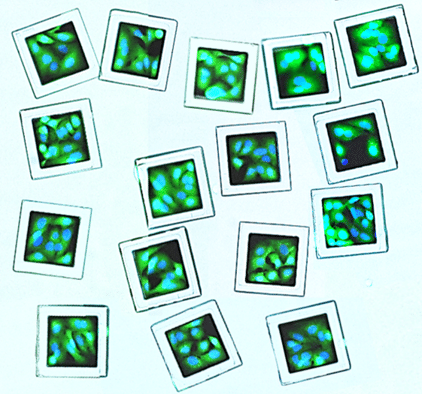
Semarion develops SemaCyte® microcarriers, which are ultra-miniaturised, barcoded micro-wells that enable adherent cells to become assay-ready reagents. This technology allows for the multiplexing of cell models in standard liquid handling workflows, facilitating faster, more scalable, and comparable cell-based experiments for in vitro drug discovery. Semarion serves teams looking to generate better data and accelerate drug discovery by removing bottlenecks in adherent cell screening. Teams look it up for Biotechnology, Drug Discovery, Materials Science.
Frequently asked
What does Semarion do?
Semarion is a Biotechnology company that offers Services. Teams look it up for Drug Discovery, Materials Science, Life Sciences. It is based in Cambridge, England, United Kingdom and was founded in 2018. Public records show about 12 people and $9M raised. Compare it on funding, headcount, reviews and nearby alternatives rather than the marketing line alone.
How much funding has Semarion raised?
Semarion has raised a total of $9M in funding. The most recent round on record is Funding Round.
Where is Semarion headquartered?
Semarion is headquartered in Cambridge, England, United Kingdom.
When was Semarion founded?
Semarion was founded in 2018.
What industry does Semarion operate in?
Semarion operates in Biotechnology, Drug Discovery, Materials Science, Life Sciences, Biotech.
How many employees does Semarion have?
Semarion has approximately 12 people on record.
Strength of the site’s backlink profile, on Ahrefs’ 0-100 Domain Rating scale. Licensed third-party data, not our opinion.
How well an AI agent can read and use this site: structured data, clean markup, and whether key facts are reachable without running JavaScript. We scan the live site.
Google PageSpeed mobile performance for the company’s own site. Measured by Google, not by us.