
Foundation Alloy
 Agent67Agent Readiness: 67/100. Top 25%. Measured by StartupHub.ai. Median 41.Trust80Data Trust: 80/100. Top 25%. Measured by StartupHub.ai. Median 61.
Revolutionizing alloy production through advanced mechanical processing.
About
Foundation Alloy designs and produces advanced engineering alloys, including molybdenum and specialty steels, with properties beyond conventional metallurgy. Utilizing their proprietary MetalsFIRST™ solid-state manufacturing process, they create superior materials for demanding applications in automotive, defense, and consumer sectors. Their offerings range from finished parts to semi-finished stock, with upcoming nickel superalloys.
Similar companies

Developer of continuous metals monitoring technology for raw material value chains.
Shares Materials Science, Industrial Technology
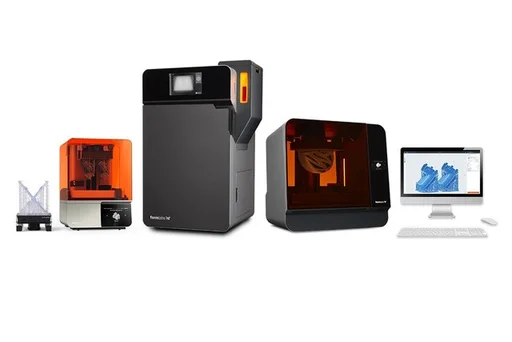
Formlabs designs and manufactures professional 3D printers and materials, making digital fabrication accessible for engineers, designers, and manufacturers.
Shares Advanced Manufacturing, Industrial Automation
“I tested Formlabs Tough 1500 resin on a real motorcycle trip through the desert. I wanted to share a quick experience with Formlabs Tough…” r/3Dprinting

Magnus Metal offers Digital Casting™ technology, a digital, Industry 4.0 solution for metal casting.
Shares Manufacturing, Advanced Manufacturing

Developing a novel 3D printing system for metal components using lasers and AI for high-throughput mass manufacturing.
Shares Manufacturing, Advanced Manufacturing

Revolutionizing EV battery manufacturing with solvent-free dry coating technology for lithium-ion battery electrodes.
Shares Manufacturing, Materials Science

AI for real-time adaptive control in industrial systems.
Shares Industrial Automation, Manufacturing
Key facts
- Website
- foundationalloy.com
- Headquarters
- San Carlos, California, USA
- Founded
- 2021
- Total funding
- $22M (Funding Round)
- Business model
- B2B
Funding rounds
| Date | Round | Amount | Lead investors |
|---|---|---|---|
| 16 Jun 2026 | Funding Round | $22M |
Tech stack
Detected on foundationalloy.com, last scanned 16 Jun 2026. Run your own scan
- Frontend
- jQuery
- Analytics
- Google Analytics 4
- SEO
- Rank Math
- CMS / Builders
- WordPress
- CDN
- Cloudflare
- Email provider
- Google Workspace
Frequently asked
Is Foundation Alloy trustworthy and reputable?
StartupHub's Data Trust & Reputation score for Foundation Alloy is 80 out of 100, a trusted rating, based on site security posture, privacy practices, malware and phishing checks, and public reputation signals.
How much funding has Foundation Alloy raised?
Foundation Alloy has raised a total of $22M in funding. The most recent round on record is Funding Round.
What is Foundation Alloy's current status?
Foundation Alloy's current operating status is: Inactive.
