


Andrew Yang stepped into Jubilee's Surrounded to argue that AI will accelerate inequality at unprecedented scale, facing 20 self-described optimists who said the technology will spread opportunity. No centralized prediction market posted live odds or volume on the outcome of the taping, so there is no tradable price to show which way sentiment moved during the debate. That absence is a limit on reading crowd conviction from prices alone. Not financial advice. Markets move fast.
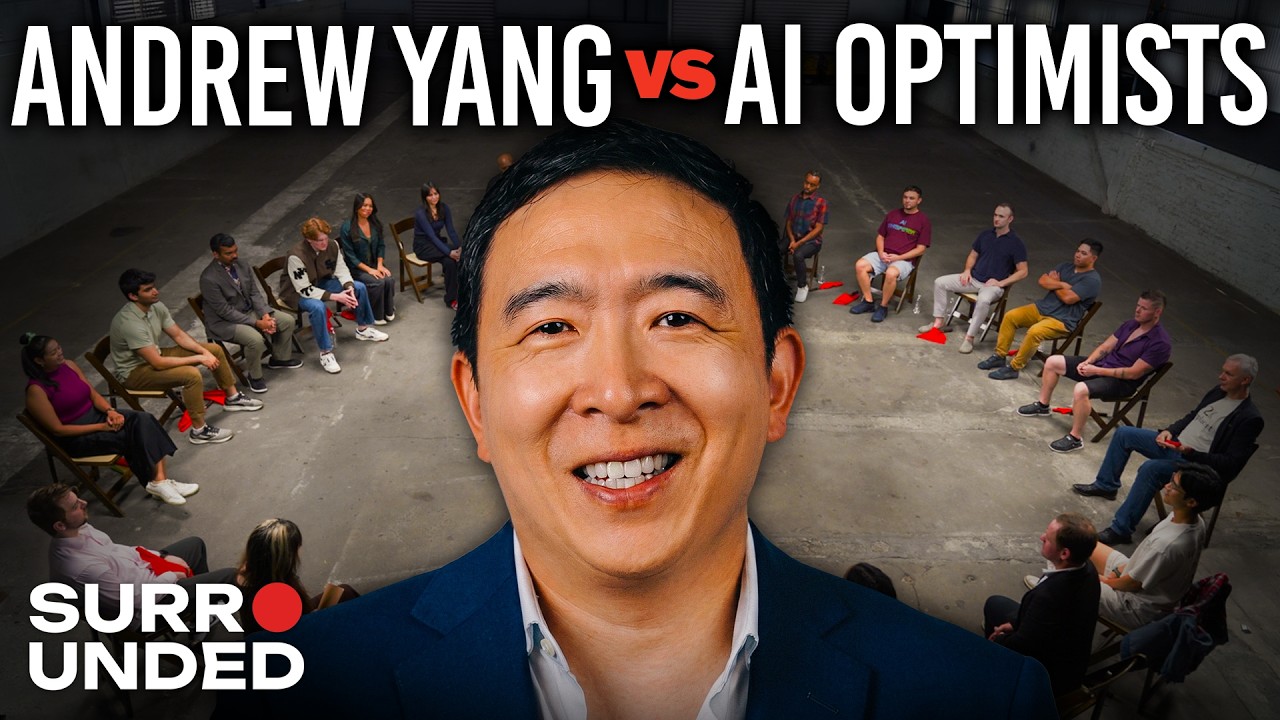
The claim is stark.
Yang, entrepreneur, co-founder of the Forward Party and CEO of Noble Mobile who ran for president in 2020 on universal basic income, told the room the gains from AI will not be broadly shared. He framed the engine as four forces converging, capital, AI, data and processing power, into what he called a multi-trillion dollar vortex that will hoover up value from office parks and businesses large and small. The winners, in his view, will be shareholders and employees of model makers, investors and anyone positioned to monetize efficiencies. Everyone else will be left asking what happened to call center or driving work.
Jubilee built the episode around that tension. Will AI democratize opportunity or entrench the hierarchy, whether UBI becomes necessary in an AI-driven economy, and what happens to dignity when markets reward productivity above all else. The format forces one person to hold a position while a rotating challenger takes the chair, with the room voting who stays.
Christina, who said she has worked in AI safety for three years and holds a master's in public policy from Carnegie Mellon, pushed first. She conceded the power concentration point but argued AI is simultaneously democratizing capability for consumers. You can build an app without having learned to code, stand up a website, use the system as a tutor or therapist. Her case was that both things can be true at once, broader access and heavier concentration.