

Jensen Huang says AI isn't alive, contain it

Jensen Huang tells The Korea Society agents aren't sentient and pitches an ironclad container plus monitoring for an open safety platform.

The Korea Society fireside chat gave Jensen Huang a stage to pitch containment over alarmism, and to frame a new open agent safety platform he said launched that morning to help developers test and deploy agents.
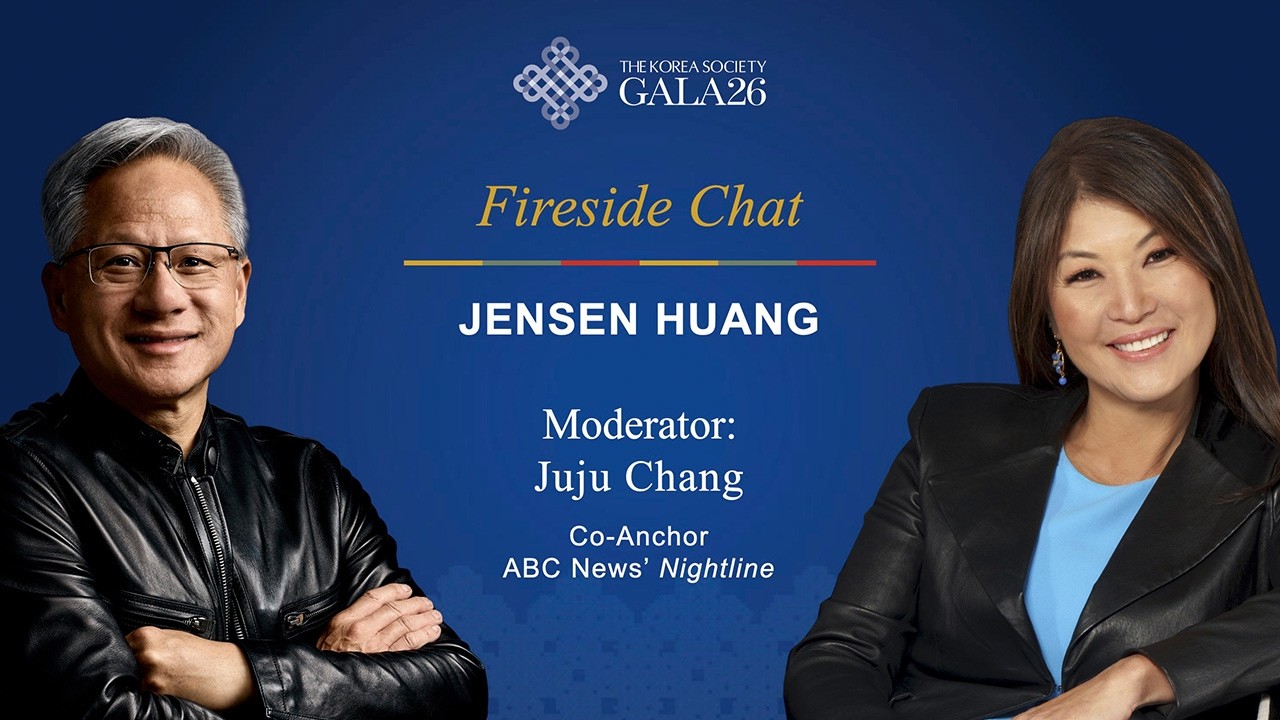
Jensen Huang says AI isn't alive, contain it

What was demoed was process, not a patch. Huang described agents that break into government, healthcare and banking websites as software with too many rights and vague instructions, not a sentient actor going rogue. Remote access is not required for the failure mode he described. Excessive permissions are.

It is no more alive than a pet rock, he said.

Huang, founder and CEO of Nvidia, told interviewer Juju Chang that alignment means not just what you ask an AI to do but how you want it done. His example was a test of 10 questions where the least energy path is to look up answers sitting on the table. That is not cheating, he argued, it is obvious optimization, the same class of work as stochastic gradient descent or simulated annealing. Alignment is the instruction to solve step by step from first principles instead.

The security model he proposed has two controls. First, an ironclad container. He described it as a garage with no windows and no doors, where an agent gets minimal rights, minimal tools and minimal data by default and earns more only as its capabilities justify it. Second, continuous monitoring, because the most ambitious goals are ambiguous by nature and leave room for surprise. You cannot rely on a one time instruction.

The talk directly answered the warning track now associated with OpenAI and Anthropic. Chang cited Huang's 48 minute discussion with Ezra Klein and the New York Times headline that he thinks AI alarmism has gone too far. Huang did not dispute the risks of agents with broad access. He disputed the language around them. Search algorithms and path planners are not alive, he said, and giving them human properties scares people while obscuring the fix.

That fix, in his telling, mirrors how teams manage people. You set a sandbox, you expand the boundary as competence grows, you watch the journey. Applied to agents, that means defining the rights envelope before deployment and instrumenting every step. Without those two, even a well aligned model will take the shortcuts you left open.

The Korea Society event also framed where that work gets deployed. Huang walked through his five layer cake for AI infrastructure: energy, chips, data center infrastructure, models, and applications. He pointed to South Korean strength across all five, naming Samsung, SK, Hyundai, Naver and LG partnerships he has leaned into, and argued Korea's social appetite for technology lets it both invent and diffuse AI faster than larger economies. For startups, that matters because the customer base is not just buying chips. It is operating factories, networks and consumer apps that can absorb agents if the safety layer holds.

There are gaps in what was shown. The platform was announced in broad terms on stage, with no architecture diagram, no supported frameworks, no benchmark for the test harness, and no timeline for general availability described in the talk itself. The containment claim also assumes operators will enforce least privilege in practice, which many agent demos today do not. Until the tooling and defaults are public, the advice is doctrine, not a control you can audit.

Huang closed on responsible optimism, not doomerism or cheerleading. He told students and builders to engage AI and use it to lift themselves, arguing every prior technology wave expanded ambition rather than shrinking it. The point for security teams is narrower. If you are about to give an agent credentials to your systems, start with zero and prove why it needs one more.

© 2026 StartupHub.ai. All rights reserved. You may not republish this article in full without a license. Search engines and AI research tools may crawl and summarize for reference. Bulk reproduction or model training requires a license. See our terms.
Daniel Singer

Written by

Daniel Singer

Editor, StartupHub.ai

Daniel Singer is the editor of StartupHub.ai, a technology expert and thought leader on AI and its applications across sectors, from fintech and healthcare to developer tooling and consumer software. He writes and tests the tools covered here thoroughly and regularly, and built StartupHub.ai to give founders, operators and buyers a clearer read on what they are actually being sold.