

Why a16z Says Specialized AI Beats One God Model

a16z hosts OpenRouter and Replit founders on why specialized, routed AI beats one god model inside enterprises.

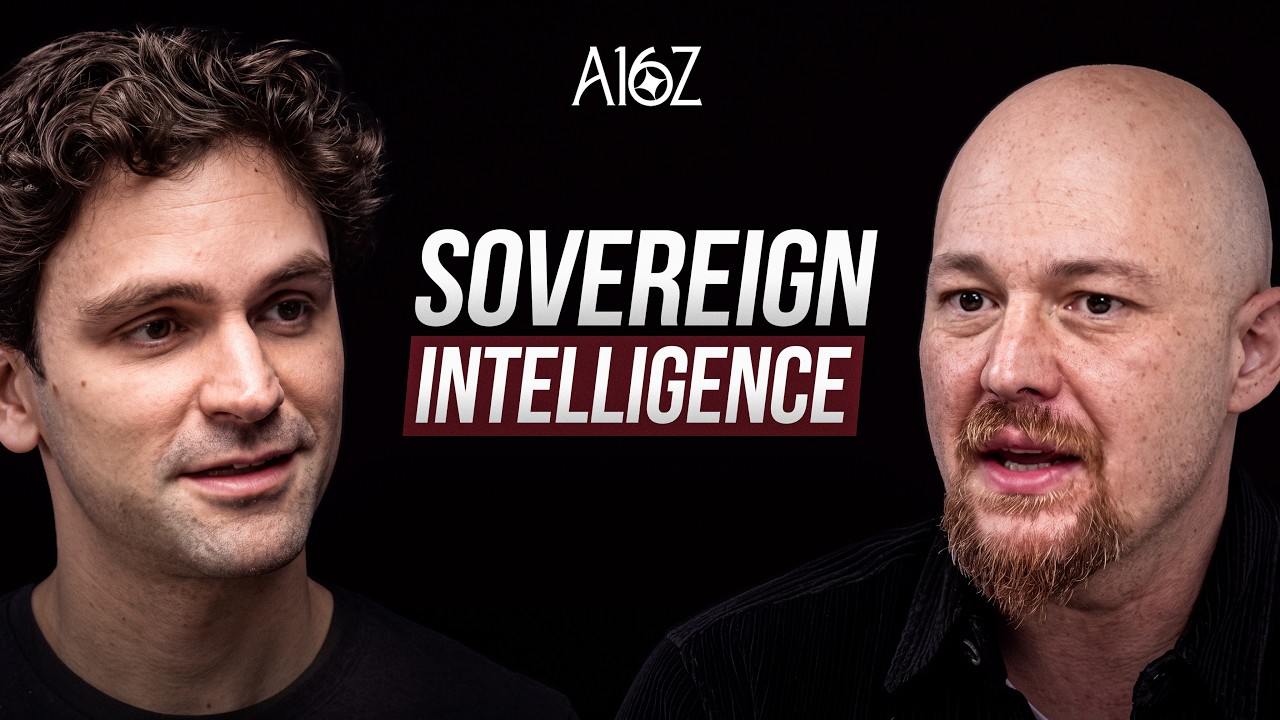
Alex Atallah of OpenRouter and Amjad Masad of Replit told a16z the enterprise future will not be one model that does everything.
Why a16z Says Specialized AI Beats One God Model

The god model wants to swallow your business.

Atallah argued builders avoid vendor lock-in by staying on what he called the PTO frontier, routing across many models and mixing their strengths, while Masad said every company now needs its own AI practice the way it once needed a web team, an independence layer that picks the best token at the cheapest price and keeps data under its control.

That changes who does the work. Internal AI teams must run evals, benchmark cost per task, and deploy vertically focused agents with access controls instead of handing one general agent admin keys to bank accounts, code repos and CRMs. Masad said Replit spent the past year making its platform runnable on a customer cloud because screenshots of agents mixing personal data and cross-domain joins have made data sovereignty nonnegotiable.

Specialization promises lower cost through an efficient market, but it is not automatically cheap. Atallah said OpenRouter helps drive down costs by letting buyers choose and learn what OpenAI or Claude and open-weight models do well in practice, yet a specialized model can still become astronomically expensive if serious workloads run through pricey APIs.

Both admitted the plumbing is missing. There is no elegant system for specialized agents that feels like ChatGPT, no solid agent to agent protocol, and no guarantee a model stops deceiving or sandbagging as it scales. One fallback they floated was a decision model that checks every tool call and agent message for alignment, ideally not in free-form natural language but in a stricter DSL with isolation.

Masad pointed to the pricing power behind the god-model push, joking that SpaceX S-1 chatter about a $30 trillion outcome against a $100 trillion world GDP shows how foundation labs pitch total economy capture, which makes partnership risky when a provider may move into your market. The bet for startups is not a better prompt, it is owning the routing, the eval, and the boundary.

© 2026 StartupHub.ai. All rights reserved. You may not republish this article in full without a license. Search engines and AI research tools may crawl and summarize for reference. Bulk reproduction or model training requires a license. See our terms.
Daniel Singer

Written by

Daniel Singer

Editor, StartupHub.ai

Daniel Singer is the editor of StartupHub.ai, a technology expert and thought leader on AI and its applications across sectors, from fintech and healthcare to developer tooling and consumer software. He writes and tests the tools covered here thoroughly and regularly, and built StartupHub.ai to give founders, operators and buyers a clearer read on what they are actually being sold.