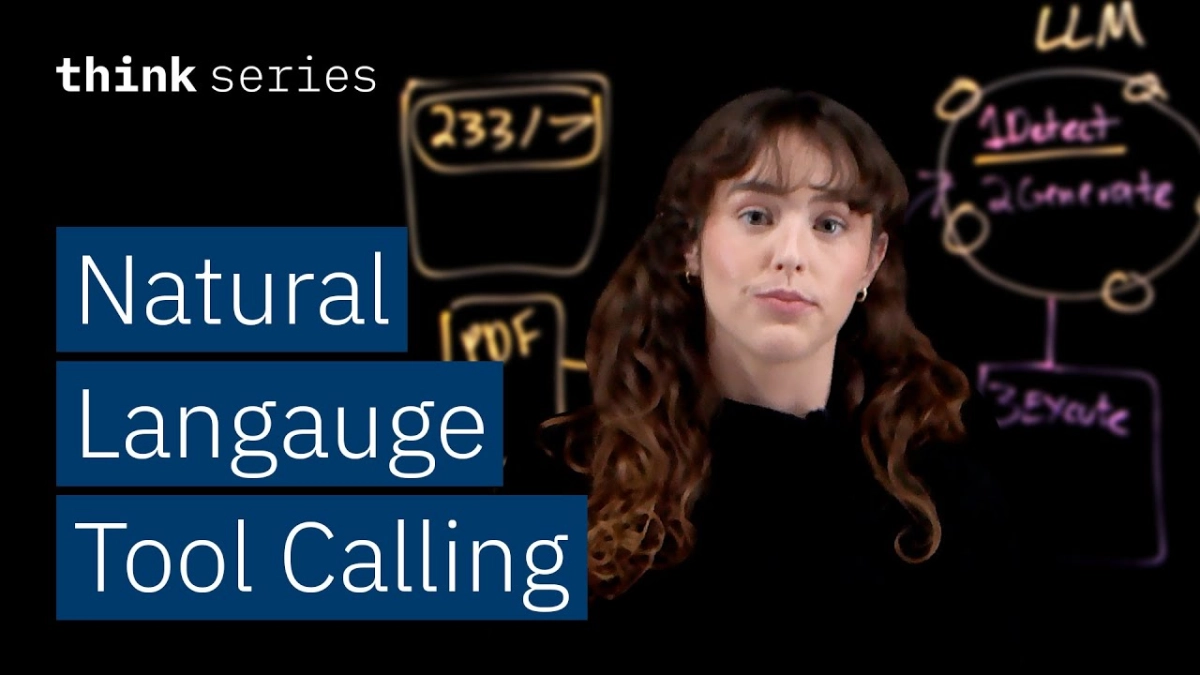
The transformative power of large language models (LLMs) extends far beyond mere conversation, moving into the realm of tangible action within our digital world. This pivotal shift, termed "tool calling," was meticulously detailed by Legare Kerrison, an AI Developer Advocate at Red Hat, who outlined the architectural blueprint enabling LLMs to execute complex tasks safely and reliably. This evolution is not just incremental; it fundamentally redefines the utility of AI, pushing it from predictive text generation to active participation in operational workflows.
Kerrison’s presentation clarified that while LLMs excel as "probabilistic maps of language," adept at understanding and generating human-like text based on learned patterns, they inherently lack computational or real-world interaction capabilities. Asking an LLM to solve a mathematical problem like "233 divided by 7" would typically result in a guess, not a precise calculation. This limitation underscores the critical need for a mechanism that allows these powerful language models to tap into external, specialized tools.
The solution lies in a sophisticated tool orchestration system. This architecture empowers an LLM-powered assistant to call upon any microservice, database, cloud storage API, or document summarizer, simply by interpreting a natural language intent as a requirement for an external tool. Imagine instructing an AI to "summarize this PDF and store the results in an S3 bucket," and having the system seamlessly wire together the necessary extraction, summarization, and storage tools behind the scenes. This capability transforms the LLM from a passive responder into an active agent, capable of executing multi-step processes across diverse digital environments.