

SK Hynix's $720B AI Memory Bet: Inside Korea's Chipmaking Giant

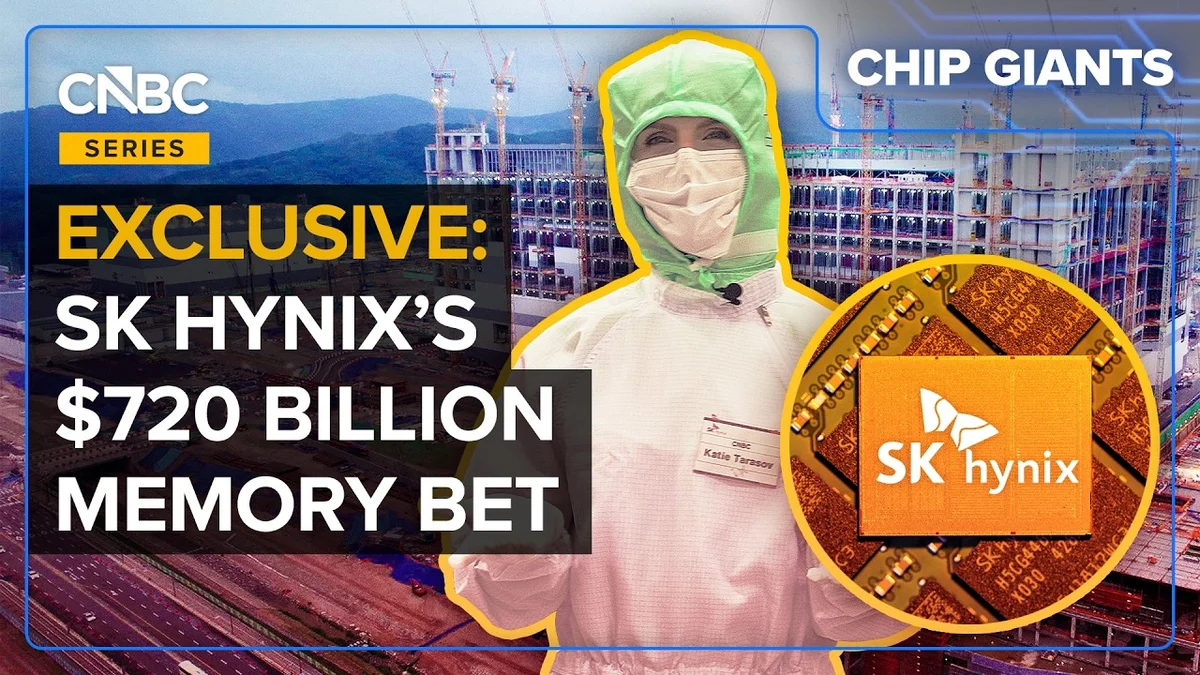
CNBC goes inside SK Hynix's massive Korean HBM chipmaking facilities and interviews Chairman Chey Tae-won about the company's $720 billion bet on AI.

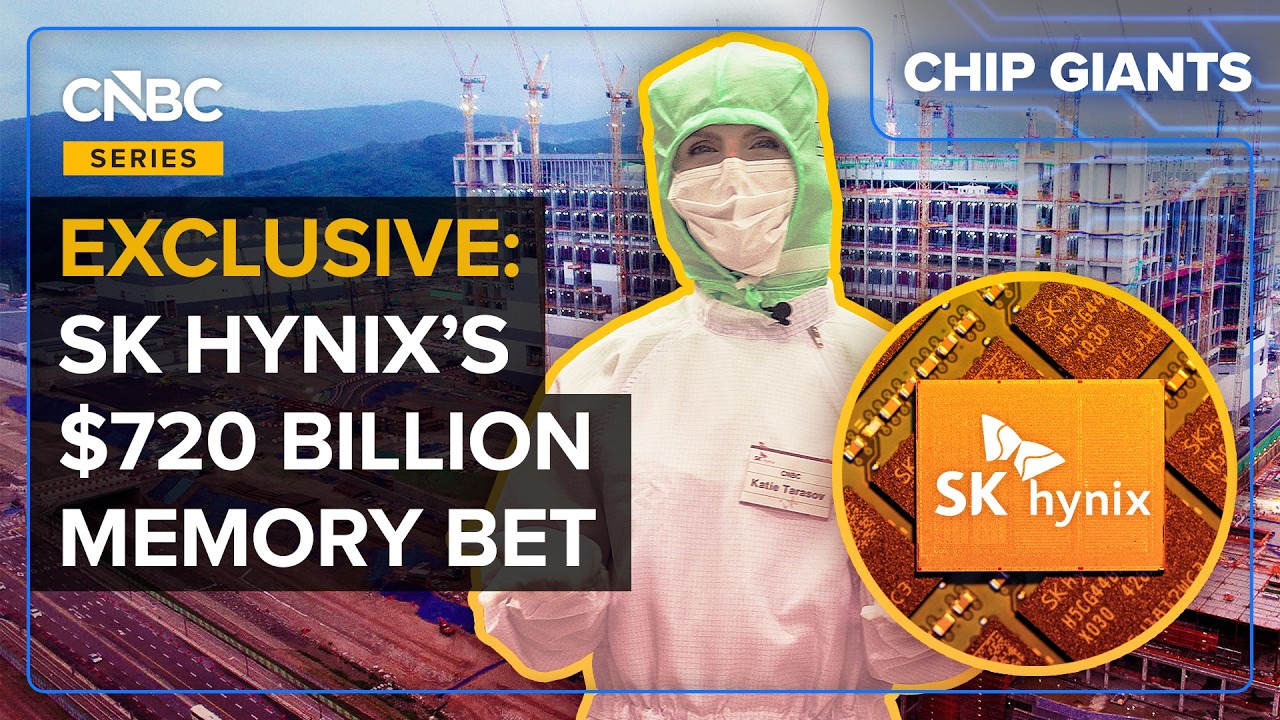
Aerial view of a massive SK Hynix semiconductor manufacturing facility under construction in South Korea, with numerous cranes and buildings.
CNBC
Visual TL;DR
AI Demand SurgesDriver
insatiable demand for High Bandwidth Memory (HBM) chips powering the AI revolution
From the article 5 mentionsThe sheer scale of the project, costing an estimated $400 billion, is designed to meet the projected surge in AI demand for the foreseeable future.
HBM ScarcityDriver
From the article 8 mentionsThe demand for HBM, a specialized memory that enables rapid data access for AI processors, has created a global scarcity.
SK Hynix BetCore
From the article 9+ mentionsThe company is investing a staggering $720 billion to triple its memory production capacity by 2034, a monumental bet fueled by the insatiable demand for High Bandwidth Memory (HBM) chips essential for powering the AI revolution.
Global CompetitionContext
leading tech giants like Nvidia and Apple scramble to secure long-term HBM contracts
From the article 2 mentionsThe company's expansion plans are set against a backdrop of increasing global competition and geopolitical tensions, particularly concerning China's rapid advancements in memory technology.
Yongin ClusterContext
monumental expansion in South Korea, building massive chipmaking facilities for HBM
From the articleThe company is constructing the Yongin cluster, a sprawling complex encompassing 45 million square feet, roughly equivalent to 600 soccer fields.
AI Memory Arms RaceOutcome
memory chips transformed into high-stakes battleground, bottleneck for AI computing power
From the articleThe race for AI dominance is clearly driving an unprecedented surge in memory manufacturing capacity, with SK Hynix at the forefront.
HBM ManufacturingContext
CNBC granted unprecedented access inside clean rooms for critical component production
From the article 9+ mentionsThis technological edge, combined with its manufacturing scale, positions SK Hynix as the current HBM king, though rivals like Samsung are rapidly catching up.
Future AI PowerEffect
SK Hynix's expansion aims to meet future AI computing needs and secure market leadership
From the article 3 mentionsWhat was once considered a low-margin commodity has transformed into a high-stakes battleground, with memory chips becoming a bottleneck for AI computing power.
Contents(6)

In the heart of South Korea, SK Hynix, a titan in the memory chip industry, is undertaking its most ambitious expansion yet. The company is investing a staggering $720 billion to triple its memory production capacity by 2034, a monumental bet fueled by the insatiable demand for High Bandwidth Memory (HBM) chips essential for powering the AI revolution. CNBC was granted unprecedented access inside SK Hynix's clean rooms, offering a rare glimpse into the manufacturing of these critical components.

SK Hynix's $720B AI Memory Bet: Inside Korea's Chipmaking Giant - CNBC
SK Hynix's $720B AI Memory Bet: Inside Korea's Chipmaking Giant, CNBC

The AI Memory Arms Race

The demand for HBM, a specialized memory that enables rapid data access for AI processors, has created a global scarcity. Leading tech giants like Nvidia (NASDAQ:NVDA) and Apple are now locked in a scramble to secure long-term contracts with memory manufacturers like SK Hynix. What was once considered a low-margin commodity has transformed into a high-stakes battleground, with memory chips becoming a bottleneck for AI computing power.

SK Group Chairman Chey Tae-won highlighted the urgency, stating, "Everybody wants the memory chips. Without that, they cannot produce their AI computing and AI chips." This sentiment underscores the critical role memory plays in the current AI landscape.

SK Hynix: A History of Risky Bets

SK Hynix's journey to the forefront of AI memory is a testament to strategic, albeit risky, bets. The company, which began as Sunkyong Textile Company, diversified over decades, navigating near-bankruptcy during the 1997 Asian financial crisis. Under Chairman Chey Tae-won, the group pivoted towards semiconductors. A pivotal moment came in 2012 when SK Group acquired Hynix Semiconductor for $3 billion, a product of Hyundai and LG's chip divisions. The following year, SK Hynix unveiled the world's first High Bandwidth Memory (HBM).

Myeong-jae Park, who now leads HBM design at SK Hynix, recalled the early days: "At that moment, there was no application or devices that needed that. But we had strong conviction." This conviction paid off. By 2015, SK Hynix sold the first commercial HBM on AMD's Radeon graphics cards. The true inflection point, however, arrived with the AI boom sparked by ChatGPT in 2022, when SK Hynix was first to market with HBM3, prompting Nvidia to switch its primary supplier.

The Yongin Cluster: A Monumental Expansion

The scale of SK Hynix's current expansion is unprecedented. The company is constructing the Yongin cluster, a sprawling complex encompassing 45 million square feet, roughly equivalent to 600 soccer fields. This facility will house four new fabs, including the first with six clean rooms, and is scheduled to begin operations in February 2025. The sheer scale of the project, costing an estimated $400 billion, is designed to meet the projected surge in AI demand for the foreseeable future.

The construction itself is a feat of engineering, with the stacked design necessitated by South Korea's mountainous terrain. The Korean government is supporting this massive undertaking with a chip support package valued at up to $22 billion, assisting with infrastructure needs like land flattening. This initiative aligns with the South Korean government's goal to double the country's memory production capacity within five years.

Despite the current demand, the memory industry is notorious for its cyclical nature. MS Hwang, Research Director at Counterpoint Research, cautioned, "We cannot avoid a cycle. It's coming, especially against China." The memory market has historically experienced dramatic swings, and a downturn in 2023 saw SK Hynix incur nearly $6 billion in operating losses due to oversupply.

However, SK Hynix believes the AI era marks a structural change, potentially altering the traditional cycle. The company is accelerating construction timelines, targeting completion of its fourth fab 12 years ahead of its original schedule. The massive investments are underpinned by long-term contracts, some extending up to five years, with significant prepayments, indicating a shared commitment and risk-taking among major tech players to secure future supply.

Innovation in HBM Manufacturing

At the heart of SK Hynix's dominance is its proprietary packaging technology, MR-MUF (Mass Reflow Molded Underfill). Developed around 2019 to regain HBM leadership, this low-pressure, quick method stacks DRAM chips and bonds all layers simultaneously. By injecting a protective liquid between the chips, SK Hynix mitigates heat and warpage issues, resulting in stacks that are reportedly 40% thinner than previous generations. This technological edge, combined with its manufacturing scale, positions SK Hynix as the current HBM king, though rivals like Samsung are rapidly catching up.

US Expansion and Global Competition

SK Hynix is also making strategic moves in the U.S. market, with a $4 billion investment in its first U.S. manufacturing facility in West Lafayette, Indiana, focusing on advanced packaging. While this is not front-end HBM production, it signals a commitment to the American market. The company's expansion plans are set against a backdrop of increasing global competition and geopolitical tensions, particularly concerning China's rapid advancements in memory technology. The race for AI dominance is clearly driving an unprecedented surge in memory manufacturing capacity, with SK Hynix at the forefront.

© 2026 StartupHub.ai. All rights reserved. You may not republish this article in full without a license. Search engines and AI research tools may crawl and summarize for reference. Bulk reproduction or model training requires a license. See our terms.
Daniel Singer

Written by

Daniel Singer

Editor, StartupHub.ai

Daniel Singer is the editor of StartupHub.ai, a technology expert and thought leader on AI and its applications across sectors, from fintech and healthcare to developer tooling and consumer software. He writes and tests the tools covered here thoroughly and regularly, and built StartupHub.ai to give founders, operators and buyers a clearer read on what they are actually being sold.