

Simulating Humans at Scale: Simile's Joon Sung Park

Simile's Joon Sung Park discusses simulating human behavior at scale using LLMs to understand societal dynamics and emergent phenomena.

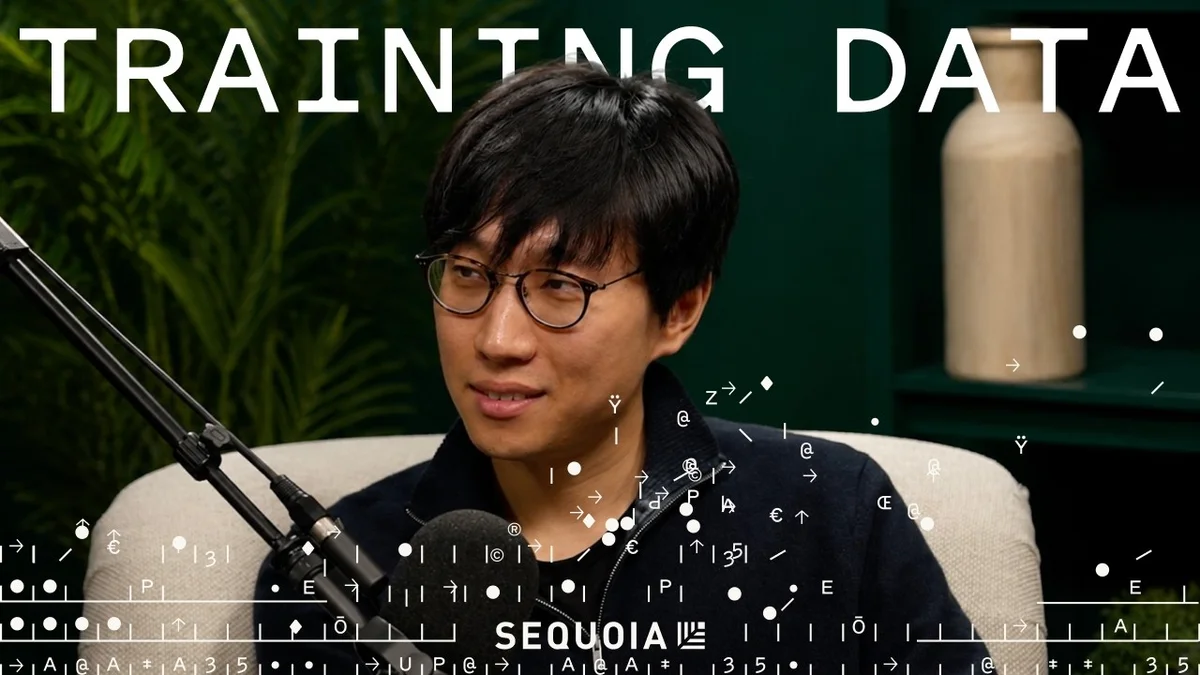
Joon Sung Park speaking at a panel discussion.
Sequoia Capital
Visual TL;DR
AI needs simulationDriver
understanding societal dynamics and emergent phenomena
From the article 3 mentionsJoon Sung Park, founder and CEO of Simile, is at the forefront of this movement, exploring how large language models can be harnessed to create sophisticated simulations of human interactions and societal dynamics.
LLMs encode knowledgeCore
From the articlePark explains that current large language models possess a remarkable ability to encode a vast spectrum of human experiences and knowledge from their training data.
Simile's approachCore
harnessing LLMs to create sophisticated simulations of human interactions
From the article 4 mentionsThis intrinsic capability forms the foundation of Simile's approach.
Simulating human behaviorContext
building AI agents capable of exhibiting emergent behaviors
From the article 6 mentionsIn the rapidly evolving world of artificial intelligence, the concept of simulating human behavior at scale is moving from the realm of science fiction to tangible reality.
Understanding societyEffect
From the article 5 mentionsSimile's work focuses on building AI agents capable of exhibiting emergent behaviors, a crucial step towards understanding and replicating the complexities of human society within artificial environments.
From research to applicationOutcome
moving from science fiction to tangible reality
From the article 2 mentionsThe ability to simulate these complex systems at scale opens up new avenues for research and development in AI, allowing for the testing of hypotheses and the exploration of scenarios that would be impossible in the real world.
Future of AIContext
advancing AI capabilities through large-scale simulation
From the articleBy simulating humans at scale, Simile aims to unlock new possibilities for research, prediction, and intervention, paving the way for a future where AI plays a crucial role in addressing some of the world's most pressing challenges.
Contents(4)

In the rapidly evolving world of artificial intelligence, the concept of simulating human behavior at scale is moving from the realm of science fiction to tangible reality. Joon Sung Park, founder and CEO of Simile, is at the forefront of this movement, exploring how large language models can be harnessed to create sophisticated simulations of human interactions and societal dynamics. Simile's work focuses on building AI agents capable of exhibiting emergent behaviors, a crucial step towards understanding and replicating the complexities of human society within artificial environments.

Simulating Humans at Scale: Simile's Joon Sung Park - Sequoia Capital
Simulating Humans at Scale: Simile's Joon Sung Park, Sequoia Capital

The Power of Simulation in AI

Park explains that current large language models possess a remarkable ability to encode a vast spectrum of human experiences and knowledge from their training data. This intrinsic capability forms the foundation of Simile's approach. By leveraging these models, the company aims to move beyond simple task-oriented AI and delve into simulating the intricate web of human interactions, decision-making, and societal structures. The core idea is to create AI agents that can not only process information but also reason, plan, and learn in ways that mirror human cognitive processes.

Simulating Human Behavior at Scale

The challenge, as Park articulates, lies in scaling these simulations to represent a significant portion of human society. This involves creating a multitude of AI agents, each with its own unique characteristics, motivations, and behavioral patterns, and then observing how they interact within a simulated environment. The goal is to observe emergent phenomena that arise from these interactions, offering insights into social dynamics, economic behaviors, and even cultural shifts. The ability to simulate these complex systems at scale opens up new avenues for research and development in AI, allowing for the testing of hypotheses and the exploration of scenarios that would be impossible in the real world.

From Research to Application

Simile's work is not merely theoretical. The company is actively developing the tools and infrastructure needed to build these large-scale simulations. The key lies in creating models that are not only capable of mimicking individual human behaviors but also of interacting with each other in a way that reflects the richness and unpredictability of human society. This involves a deep understanding of human psychology, sociology, and economics, translated into computational models. The ultimate vision is to create a platform where researchers, policymakers, and businesses can explore complex societal questions and test interventions in a virtual environment before implementing them in the real world.

The Future of AI and Simulation

Park's insights highlight the transformative potential of AI in understanding human behavior and societal structures. By simulating humans at scale, Simile aims to unlock new possibilities for research, prediction, and intervention, paving the way for a future where AI plays a crucial role in addressing some of the world's most pressing challenges.

© 2026 StartupHub.ai. All rights reserved. You may not republish this article in full without a license. Search engines and AI research tools may crawl and summarize for reference. Bulk reproduction or model training requires a license. See our terms.
Daniel Singer

Written by

Daniel Singer

Editor, StartupHub.ai

Daniel Singer is the editor of StartupHub.ai, a technology expert and thought leader on AI and its applications across sectors, from fintech and healthcare to developer tooling and consumer software. He writes and tests the tools covered here thoroughly and regularly, and built StartupHub.ai to give founders, operators and buyers a clearer read on what they are actually being sold.