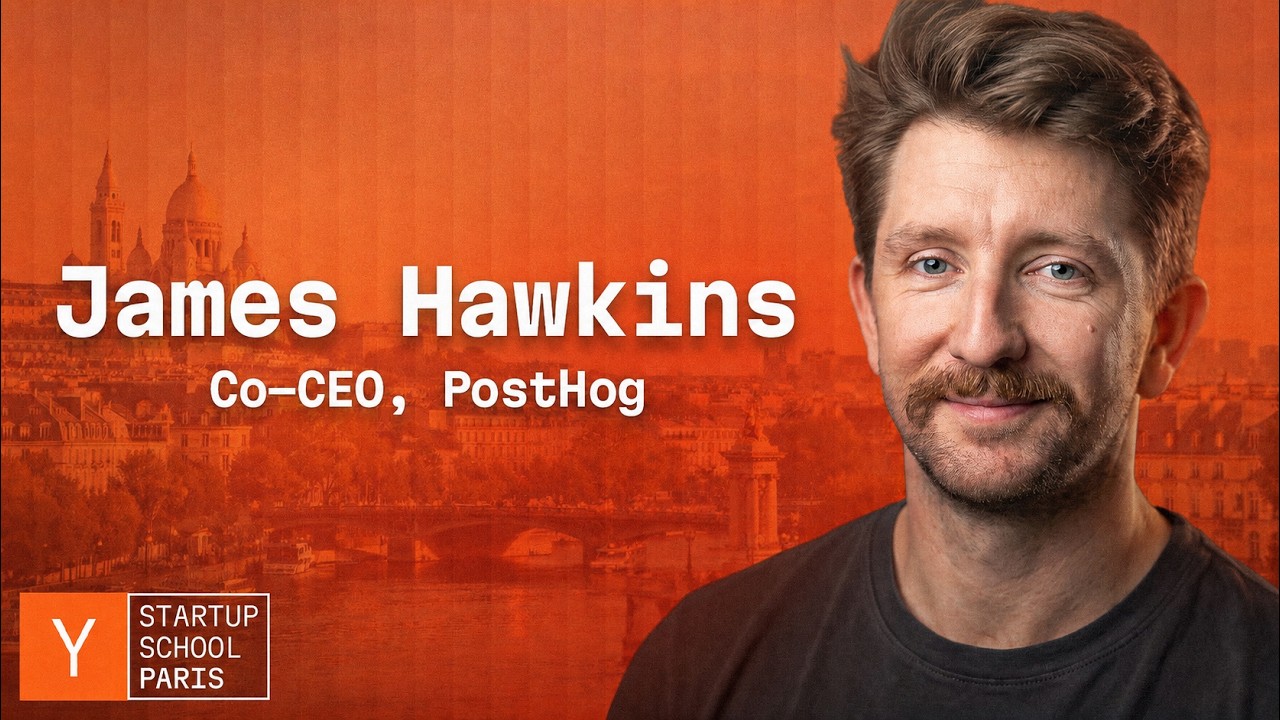
PostHog's James Hawkins on AI-Native Software

PostHog co-CEO James Hawkins details the company's shift to AI-native self-driving software, emphasizing ambition and the iterative process of building autonomous solutions.

PostHog's James Hawkins on AI-Native Software
YC
Visual TL;DR
PostHog: Product AnalyticsContext
From the articleOnce known for its popular open-source product analytics tool launched during YC's Winter 2020 batch, PostHog is now reshaping its mission to build software that can autonomously solve problems within a company's product development lifecycle.
James Hawkins, Co-CEOContext
From the articleJames Hawkins, co-CEO of PostHog, recently discussed the company's strategic pivot towards "AI-native self-driving software" in a conversation with Tom Blomfield, General Partner at Y Combinator.
AI Platform ShiftDriver
From the article 2 mentionsHawkins explained that the platform shift driven by AI has led PostHog to "up the ambition" of its goals.
AI-Native Self-DrivingCore
From the article 3 mentionsJames Hawkins, co-CEO of PostHog, recently discussed the company's strategic pivot towards "AI-native self-driving software" in a conversation with Tom Blomfield, General Partner at Y Combinator.
Autonomous SoftwareCore
building software that can autonomously solve problems in product development lifecycle
From the article 3 mentionsJames Hawkins, co-CEO of PostHog, recently discussed the company's strategic pivot towards "AI-native self-driving software" in a conversation with Tom Blomfield, General Partner at Y Combinator.
Solve User's JobEffect
From the articleThe core principle guiding this change is to "fundamentally solve someone's job for them rather than giving them a rough idea of what's important." This means moving beyond simply presenting data and instead actively improving metrics, such as making graphs go up, by addressing the underlying issues.
Improve Metrics ActivelyOutcome
From the articleThe core principle guiding this change is to "fundamentally solve someone's job for them rather than giving them a rough idea of what's important." This means moving beyond simply presenting data and instead actively improving metrics, such as making graphs go up, by addressing the underlying issues.
Contents(4)

James Hawkins, co-CEO of PostHog, recently discussed the company's strategic pivot towards "AI-native self-driving software" in a conversation with Tom Blomfield, General Partner at Y Combinator. Once known for its popular open-source product analytics tool launched during YC's Winter 2020 batch, PostHog is now reshaping its mission to build software that can autonomously solve problems within a company's product development lifecycle.

From Analytics to Autonomous Software

Hawkins explained that the platform shift driven by AI has led PostHog to "up the ambition" of its goals. The core principle guiding this change is to "fundamentally solve someone's job for them rather than giving them a rough idea of what's important." This means moving beyond simply presenting data and instead actively improving metrics, such as making graphs go up, by addressing the underlying issues.

The full discussion can be found on YC's YouTube channel.

Why Ambitious Startup Ideas Are Actually Easier To Sell - YC
Why Ambitious Startup Ideas Are Actually Easier To Sell, from YC

The company is currently working on advanced clustering and modeling techniques, drawing inspiration from AI research to analyze various data types. This includes understanding customer complaints from support tickets, identifying issues in logs and error reports, and even analyzing session recordings. The ultimate aim is to automatically ship pull requests to fix simpler engineering tasks, with more complex solutions further down the roadmap.

AI-Driven Iteration and Intent Capture

Blomfield drew a parallel between PostHog's approach and the concept of "self-contained recursive loops" in AI-native companies. Hawkins elaborated on this, explaining the development of a system to "harness" intent data from engineers. By capturing this intent, the AI can iterate more quickly and understand the fundamental purpose of a product, rather than just its technical requirements.

The company has already released a desktop product to help capture this intent. Hawkins also noted that the AI could potentially ingest data from product meetings, including discussions between product officers, CTOs, designers, and engineers, to inform its development loops. He believes that AI can eventually outperform human product managers in analyzing vast amounts of customer data from sales calls, internal meetings, and customer feedback.

The Power of Ambition and Founding Partnerships

The decision to pivot towards AI-native software was made about a year and a half ago, stemming from Hawkins's own reflection on the potential of LLMs compared to human brains. He realized that LLMs could go much further by framing AI development as a fundamentally engineering-driven task. This shift also reflects a broader company philosophy of tackling jobs that are already happening within companies, aiming to accelerate them with superior execution.

Hawkins also shared insights on the importance of ambition, particularly for European founders. He argued that "there's no ceiling to where you can think there is." Founders who embrace ambitious goals often find it easier to attract top talent and gain market traction because their vision is more remarkable and compelling. This aligns with PostHog's own journey, which started with a more modest scope and grew into a company aiming to build hundreds of tools.

The conversation also touched on the power of co-founder partnerships. Hawkins described how he and co-founder Tim initially had distinct roles but found success by swapping them based on who was better suited to drive specific areas. This flexibility and willingness to adapt are crucial for navigating the challenges of building a large company.

Shipping and Continuous Improvement

A key takeaway from the discussion was the emphasis on shipping. Hawkins stated that "the more innovative an idea is, the more important it is to ship." This iterative approach, combined with a focus on user feedback and continuous improvement, is essential for navigating the complexities of building groundbreaking technology. PostHog's team is now highly focused on getting innovative features into users' hands quickly, recognizing that this rapid iteration is vital for success in the rapidly evolving AI landscape.

StartupHub data

In our directory

Founded
2019
Location
San Francisco, United States
Funding
$33M

A startup accelerator that provides seed funding, mentorship, and resources to early-stage companies.

Founded
2005
Location
San Francisco, United States
© 2026 StartupHub.ai. All rights reserved. You may not republish this article in full without a license. Search engines and AI research tools may crawl and summarize for reference. Bulk reproduction or model training requires a license. See our terms.
Daniel Singer

Written by

Daniel Singer

Editor, StartupHub.ai

Daniel Singer is the editor of StartupHub.ai, a technology expert and thought leader on AI and its applications across sectors, from fintech and healthcare to developer tooling and consumer software. He writes and tests the tools covered here thoroughly and regularly, and built StartupHub.ai to give founders, operators and buyers a clearer read on what they are actually being sold.

More from Daniel Singer