

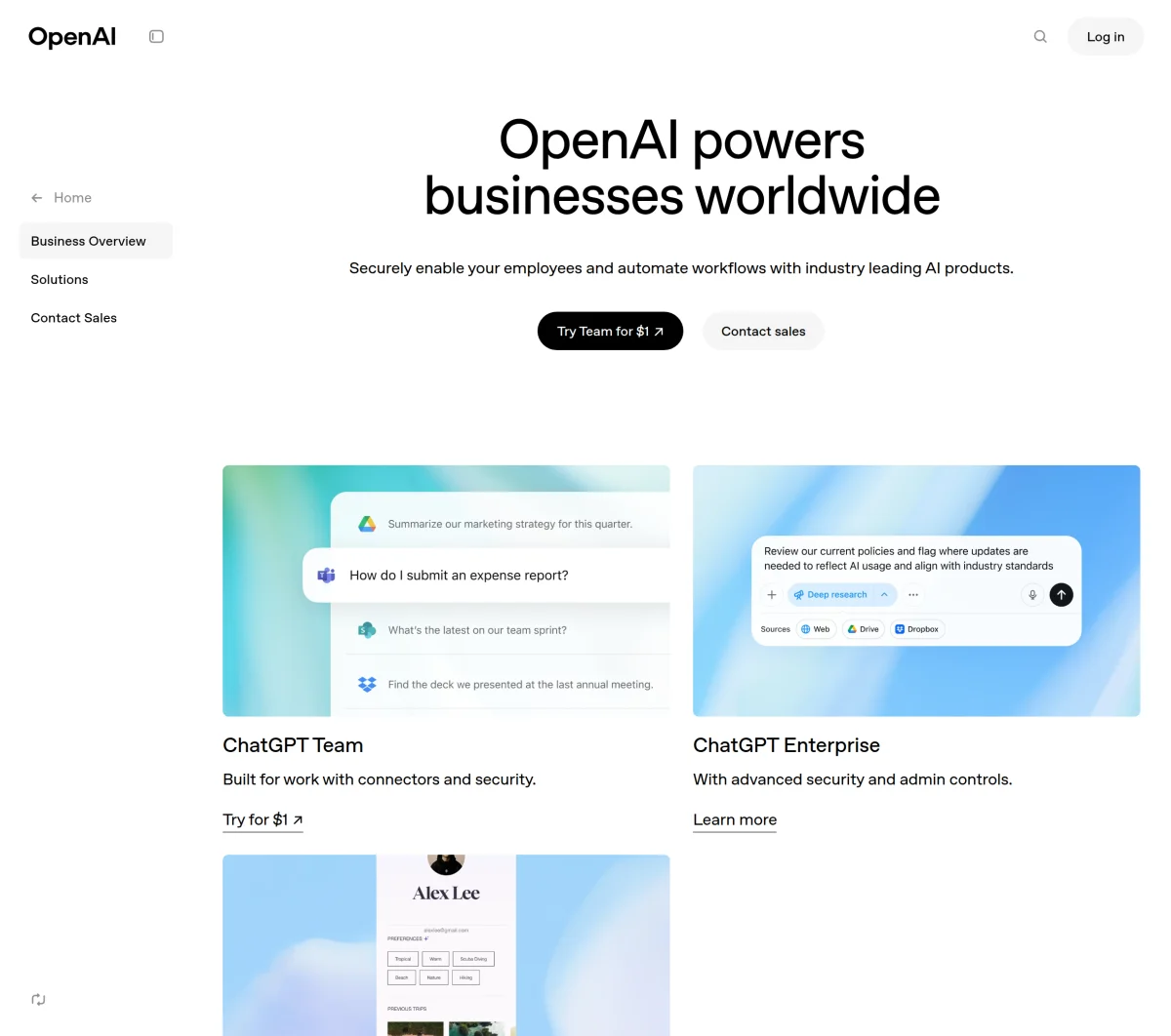
OpenAI, the leading artificial intelligence company, announced a significant milestone: it now boasts 3 million paying business customers, a 50% increase since February. This surge coincides with the launch of a comprehensive suite of new workplace tools designed to compete directly with Microsoft's enterprise AI offerings. These tools include connectors integrating ChatGPT with popular business applications like Dropbox and Google Drive, a meeting transcription feature (Record Mode), and enhanced versions of its Deep Research and Codex coding tools.
The new tools aim to solidify OpenAI's position in the competitive enterprise AI market. The company highlights its "AI-native" approach, focusing solely on advancing AI, as a key differentiator from competitors like Microsoft and Google, who integrate AI into existing systems. OpenAI emphasizes its commitment to state-of-the-art models, enterprise-grade security, and a promise not to train its models on business customer data.
OpenAI's aggressive push into the enterprise market reflects a broader industry trend of accelerating AI adoption. CEO Sam Altman's recent shift in messaging, advocating for immediate AI adoption rather than cautious experimentation, underscores this rapid change. However, OpenAI faces challenges, including competition for talent from companies like Anthropic and ongoing questions about data security and governance.
Despite these challenges, OpenAI's 3 million business users represent a significant achievement, marking a pivotal moment in the mainstream adoption of AI in corporate settings. The company's success hinges on maintaining its technical leadership while addressing concerns about talent retention, governance, and long-term strategy.
