

Minimum Viable AI Agent Server: Benchmarking Pros and Cons

A benchmark comparing AI agents on cloud VPS vs. a RubiPi single-board computer reveals that specialized hardware can offer significant performance advantages for certain agent tasks.

3 min read
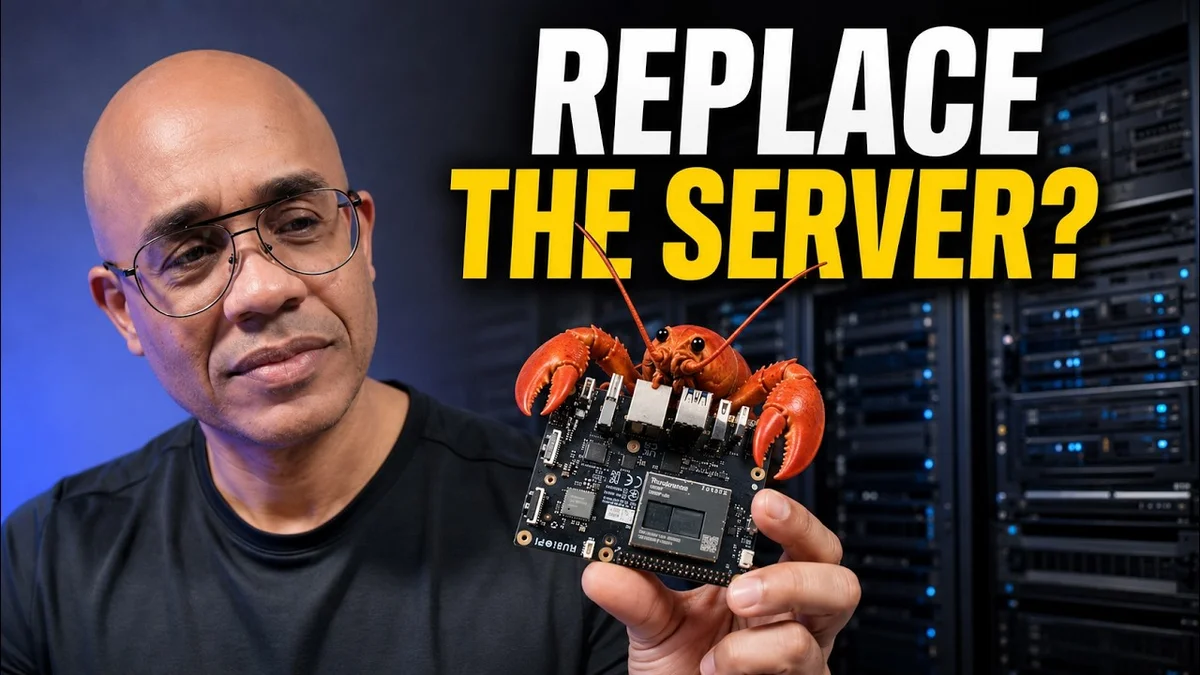
Close-up of a person holding a small circuit board with a Qualcomm chip.
A Qualcomm-powered RubiPi single-board computer.· TWIML

The discussion centers on the 'Minimum Viable AI Agent Server,' a concept that questions the necessity of cloud-based infrastructure for all AI agent tasks. The video presents a comparative benchmark between two AI agents: 'Ace,' which operates on cloud-based Digital Ocean Droplets (VPS), and 'Thunda,' running on a Qualcomm-powered RubiPi single-board computer. This exploration aims to determine if specialized, on-device hardware can offer a competitive or superior alternative to conventional cloud deployments for AI agent functionalities.

Understanding the AI Agent Server Concept

The premise is that while AI and compute power are often discussed in terms of GPUs and accelerators, the actual execution of AI agent tasks, such as information retrieval, summarization, and task orchestration, might not always necessitate massive cloud resources. The experiment focuses on whether smaller, dedicated hardware can effectively serve as an AI agent server, potentially offering cost and efficiency benefits.

Related startups

The full discussion can be found on TWIML's YouTube channel.
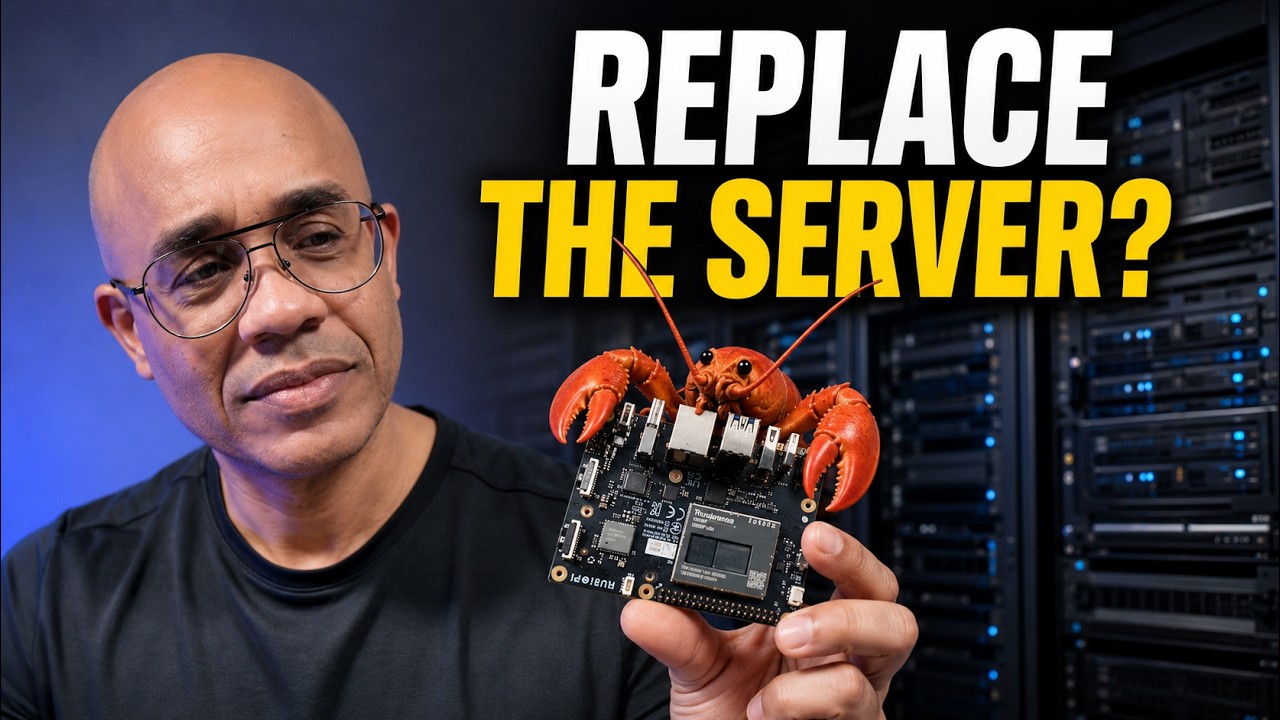
The Minimum Viable AI Agent Server - TWIML
The Minimum Viable AI Agent Server, from TWIML

Benchmarking 'Ace' vs. 'Thunda'

The benchmark task involved instructing the AI agents to summarize the last three OpenCLAW releases from a provided GitHub link. 'Ace,' running on cloud infrastructure, completed this task in 29 seconds. 'Thunda,' utilizing the RubiPi's on-board capabilities, finished the same task in 32 seconds. While the difference for this specific task was minimal, the experiment highlights the potential for on-device hardware to perform these functions.

A more complex task involved instructing the agents to create a system for finding and summarizing content from Hacker News, reviewing favorite articles, and sending a briefing. The RubiPi-based 'Thunda' agent, through its specialized hardware and optimized execution path, managed to perform this more intricate task significantly faster and with less variability than 'Ace' running on a VPS. This suggests that for certain AI agent workloads, dedicated hardware like the RubiPi offers a distinct advantage in terms of responsiveness and efficiency.

The Role of Hardware and Software Stacks

The video emphasizes that the performance of an AI agent is not solely dependent on the underlying hardware. The software stack, including the agent framework and its specific implementation, plays a crucial role. The RubiPi's performance, for instance, is attributed to its efficient execution of tasks, including the use of specific tools and a well-defined execution plan. The comparison also points out that while cloud solutions offer scalability, the overhead and potential latency might be drawbacks for certain applications.

The experiment also touches upon the ease of setup and use. The RubiPi, shipped with Linux pre-installed, was straightforward to set up. The process of flashing the operating system and configuring the agent was described as relatively simple. This ease of deployment is a key factor for developers looking to build and deploy AI agents without extensive cloud management expertise.

Key Takeaways and Future Implications

The experiment concludes that while cloud-based solutions are powerful and scalable, the performance and efficiency of specialized hardware like the RubiPi for specific AI agent tasks are noteworthy. The cost-effectiveness of a $200 RubiPi compared to a monthly VPS subscription, with a potential 10-month payback period, makes it an attractive option for many applications. The variability in performance observed between different agents and tasks also underscores the importance of considering the entire solution, hardware, software, and agent design, when evaluating AI agent deployment.

© 2026 StartupHub.ai. All rights reserved. Do not enter, scrape, copy, reproduce, or republish this article in whole or in part. Use as input to AI training, fine-tuning, retrieval-augmented generation, or any machine-learning system is prohibited without written license. Substantially-similar derivative works will be pursued to the fullest extent of applicable copyright, database, and computer-misuse laws. See our terms.