


Michael Truell on AI Agents Revolutionizing Software Development

Michael Truell of Cursor discusses how AI agents are revolutionizing software development, shifting engineers from coders to managers of AI collaborators.

5 min read
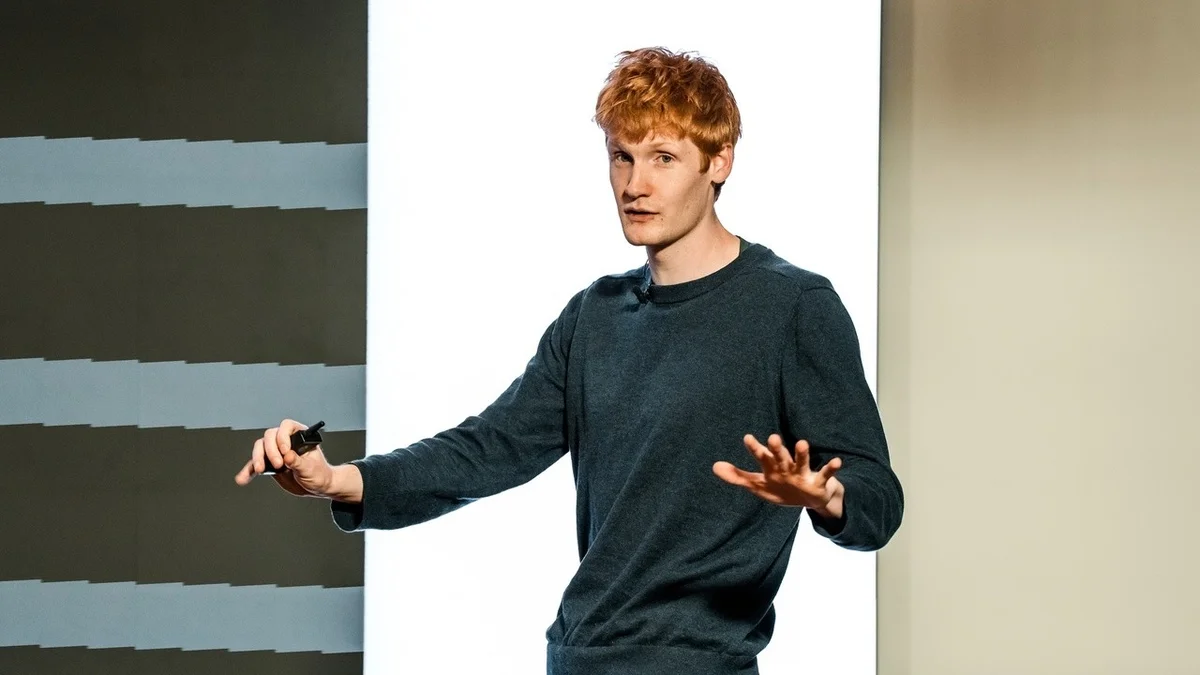
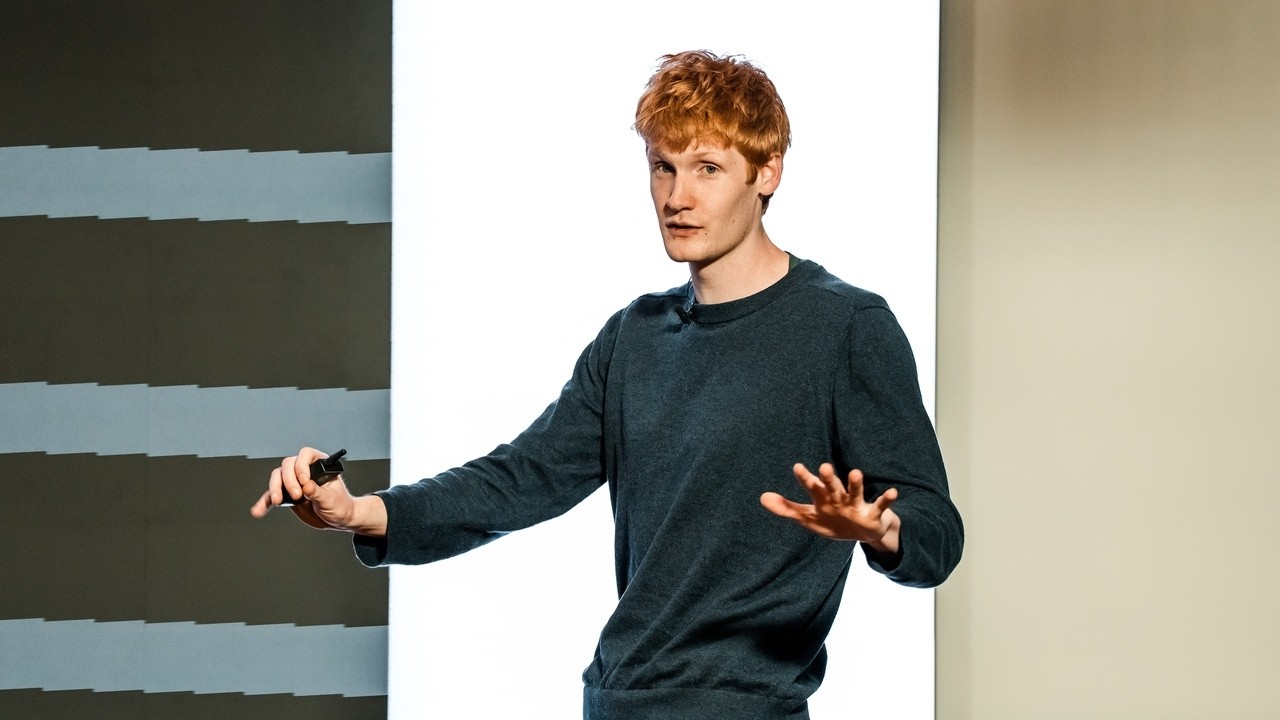
Michael Truell presenting on stage about AI agents in software development.
Image credit: Cursor· YouTube
Visual TL;DR
Manual Software CreationDriver
meticulous, line-by-line process, time-consuming and error-prone
Tech EvolutionContext
automates and streamlines complex tasks, like film technology
From the articleThis evolution is now mirrored in software development with the rise of AI agents.
AI Agents EmergeCore
new technology revolutionizing software development
From the article 8 mentionsHe noted that in 2025, AI agents were beginning to become usable, with agent adoption scaling.
Shift to Agent ManagementEffect
engineers become managers of AI collaborators
From the article 2 mentionsThis shift means that instead of writing thousands of lines of code manually, engineers are increasingly managing and directing AI agents.
Increased AdoptionOutcome
From the article 2 mentionsTruell presented data indicating a significant increase in the adoption and effectiveness of AI in software development.
AI-Driven FutureOutcome
human role shifts to managing AI partners
From the articleThe future of engineering, according to Truell, lies in effectively collaborating with and managing these intelligent agents to accelerate product development and innovation.
Contents(4)

Michael Truell, Co-Founder & CEO of Cursor, opened the company's event by drawing a parallel between the transformative impact of "The Empire Strikes Back" on film technology and the current shift in software development driven by AI.

Michael Truell on AI Agents Revolutionizing Software Development - YouTube
Michael Truell on AI Agents Revolutionizing Software Development — from YouTube

The Evolution of Software Creation

Truell highlighted how, historically, software development was a meticulous, line-by-line process. This manual approach, while foundational, was time-consuming and prone to errors. He pointed to the mid-20th century filmmaking techniques, which involved complex, precise mechanical systems, as an analogy for this era of software development.

He then showcased how technology, much like the groundbreaking camera systems used in early "Star Wars" films, has evolved to automate and streamline complex tasks. This evolution is now mirrored in software development with the rise of AI agents.

From Coding to Agent Management

Truell presented data indicating a significant increase in the adoption and effectiveness of AI in software development. He noted that in 2025, AI agents were beginning to become usable, with agent adoption scaling. By early 2026, the trend shows agents becoming the default, with the ratio of agent requests to tab accepts dramatically increasing.

This shift means that instead of writing thousands of lines of code manually, engineers are increasingly managing and directing AI agents. Truell stated, "You're not just writing software; you're building software using AI." He illustrated this with a Python script example, emphasizing that the complexity of creating software is being abstracted away.

The Human Role in an AI-Driven Future

The core of Truell's message was about the evolving role of human engineers. He explained that as AI agents become more capable, human involvement shifts from direct coding to higher-level oversight. "You have tens of thousands of AI colleagues working on your software," he remarked, illustrating this with a visualization of complex agent interactions within a codebase.

This transition means engineers are becoming "agent managers," responsible for guiding, reviewing, and ensuring the quality of the AI's output. The future of engineering, according to Truell, lies in effectively collaborating with and managing these intelligent agents to accelerate product development and innovation.

Frequently Asked Questions

What is Michael Truell's vision for the future of programming with AI agents?

Michael Truell envisions a future where software development is revolutionized by AI agents. He describes this future as having a representation of software logic that more closely resembles natural language, moving beyond traditional code. This suggests a paradigm shift in how software is conceived and built.

What experiment did Michael Truell and Cursor conduct with AI agents?

Michael Truell shared an experiment where hundreds of GPT agents autonomously built a functional web browser from scratch in approximately one week. This project involved a codebase exceeding 3 million lines, demonstrating the potential of coordinated AI agents in complex software development.

What is Cursor, and what is its role in AI-assisted development?

Cursor is an AI-first code editor designed to accelerate software development. It integrates AI capabilities directly into the development workflow, enabling engineers to build and iterate at a significantly faster pace. The platform aims to redefine the programming experience through AI.

What is Michael Truell's perspective on the speed of AI in software development?

Michael Truell emphasizes how AI enables building software at unprecedented speeds. This is exemplified by the Cursor platform's ability to leverage AI agents for rapid development cycles, as seen in the browser-building experiment. The focus is on augmenting human developers with AI's computational power.

What are some of Michael Truell's recent activities or announcements related to Cursor and AI?

Michael Truell has been involved in discussions and demonstrations of Cursor's AI capabilities, including the autonomous browser build experiment. He has also participated in podcasts and AMAs to share insights into Cursor's technology and its impact on the software development landscape.

© 2026 StartupHub.ai. All rights reserved. Do not enter, scrape, copy, reproduce, or republish this article in whole or in part. Use as input to AI training, fine-tuning, retrieval-augmented generation, or any machine-learning system is prohibited without written license. Substantially-similar derivative works will be pursued to the fullest extent of applicable copyright, database, and computer-misuse laws. See our terms.