

Mamadou-Abou Sarr: Diversify Beyond AI

Mamadou-Abou Sarr of V-Square Quantitative Management advises investors to diversify beyond AI, citing concentration risks in the S&P 500 and highlighting real assets and momentum as key strategies.

3 min read
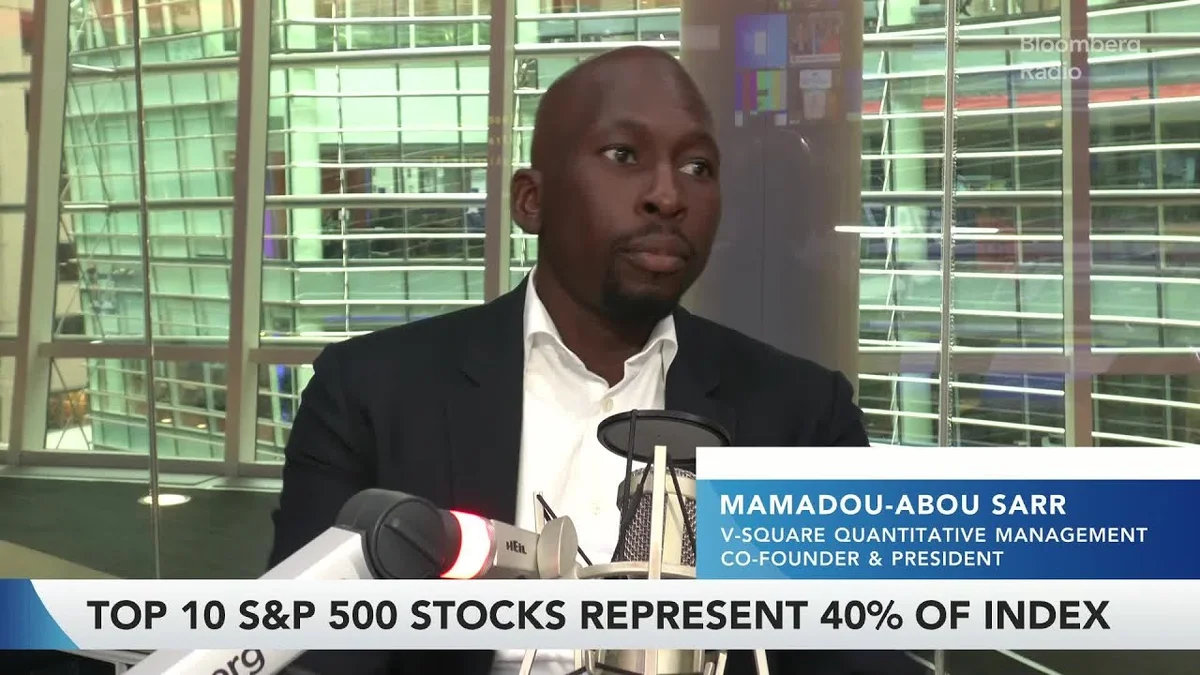
Mamadou-Abou Sarr speaking on Bloomberg Radio about investment diversification.
Bloomberg Podcast

Mamadou-Abou Sarr, Co-Founder & President of V-Square Quantitative Management, is urging investors to broaden their horizons beyond a singular focus on artificial intelligence (AI). In a recent discussion, Sarr highlighted the inherent risks in concentrating portfolios solely on AI-driven assets, emphasizing the need for a more diversified approach to navigate market volatility.

The Concentration Risk in the S&P 500

Sarr pointed out a significant trend in the market: the top 10 stocks within the S&P 500 now represent a substantial 40% of the index. This level of concentration, he warned, means that the overall market's performance is heavily reliant on a small number of large-cap companies. Such a scenario poses a considerable risk, as a downturn in these few dominant players could disproportionately impact the entire index.

Related startups

He drew a parallel to the dot-com era, suggesting that while the current AI boom is powerful, investors should be cautious of over-concentration. "You will say that earnings are strong, the way you start it, but I will caution that in a way, because if this concentration for growth and you look at the yield you're getting, and you compare it to the 10-year treasury, you're pretty much getting the same," Sarr explained, underscoring the potential for diminishing returns and increased risk when the market is driven by such a narrow set of performers.
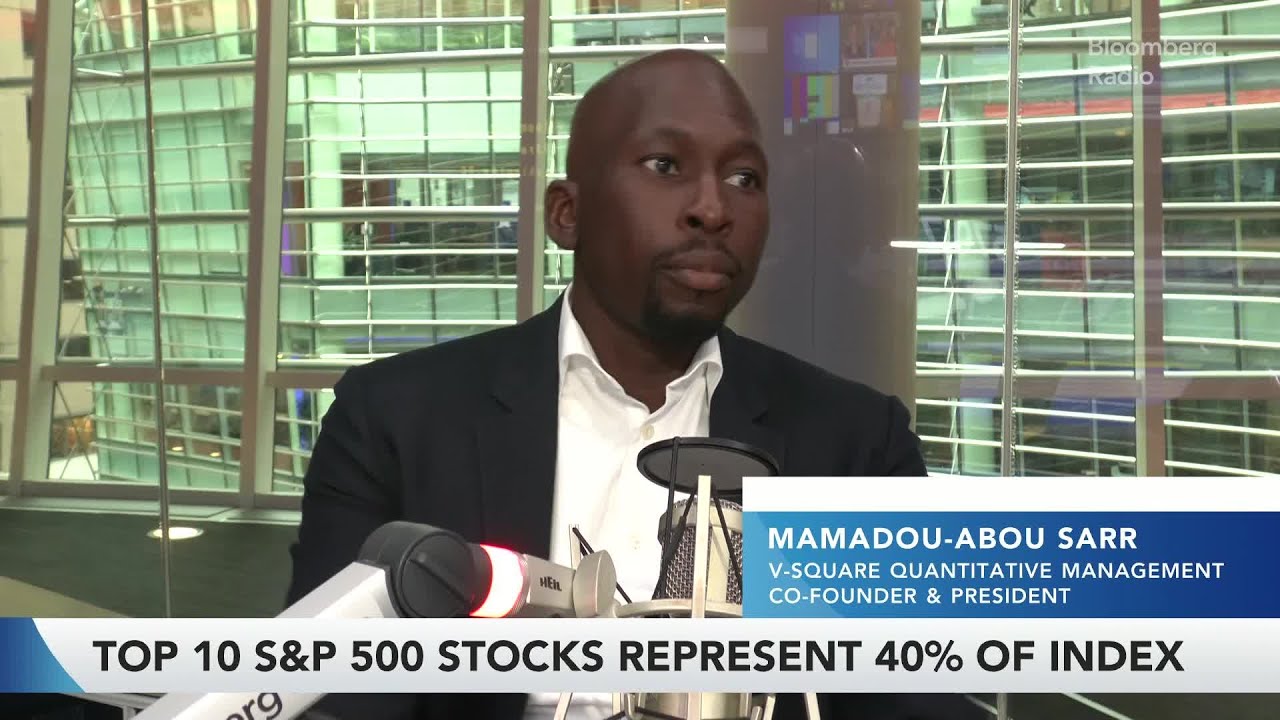
The full discussion can be found on Bloomberg Podcast's YouTube channel.

Diversify Outside of 'AI Only Play' Says Mamadou-Abou Sarr - Bloomberg Podcast
Diversify Outside of 'AI Only Play' Says Mamadou-Abou Sarr, from Bloomberg Podcast

Diversification Strategies for Investors

To counter this concentrated risk, Sarr advocated for diversification across different asset classes. He specifically recommended looking into real assets and strategies that incorporate momentum. "I think the bonds serve in a in a cautionary way, but if you look at since 2022, the correlation between the equity and bonds has been positive," Sarr stated, noting that traditional diversifiers might not be as effective in the current economic climate.

He elaborated on the appeal of real assets, suggesting they offer a dual benefit: exposure to the real economy and an inflation hedge. "You're earning both the exposure to the real economy, but also you can have an inflation edge. Think about legacy infrastructure, think about natural resources," he advised. This approach allows investors to capture cash flow from tangible assets while potentially mitigating the inflationary pressures that can erode the value of other investments.

Furthermore, Sarr highlighted the importance of momentum as a factor in investment strategy. He explained that while the S&P 500 might appear to be performing well, the underlying distribution of returns is often skewed. "The winners are such big winners, but the losers are kind of languishing there," he observed. By analyzing momentum, investors can identify assets that are trending upwards, potentially offering more consistent and diversified returns.

Sarr stressed that investors should not be exclusively focused on an "AI-only play." Instead, he encouraged a more balanced portfolio that includes assets with different risk and return profiles. "You have to diversify, you have to look at other ways you get your return outside of this AI only play," he concluded, emphasizing the need for a proactive and diversified investment approach in today's dynamic market.

© 2026 StartupHub.ai. All rights reserved. Do not enter, scrape, copy, reproduce, or republish this article in whole or in part. Use as input to AI training, fine-tuning, retrieval-augmented generation, or any machine-learning system is prohibited without written license. Substantially-similar derivative works will be pursued to the fullest extent of applicable copyright, database, and computer-misuse laws. See our terms.