


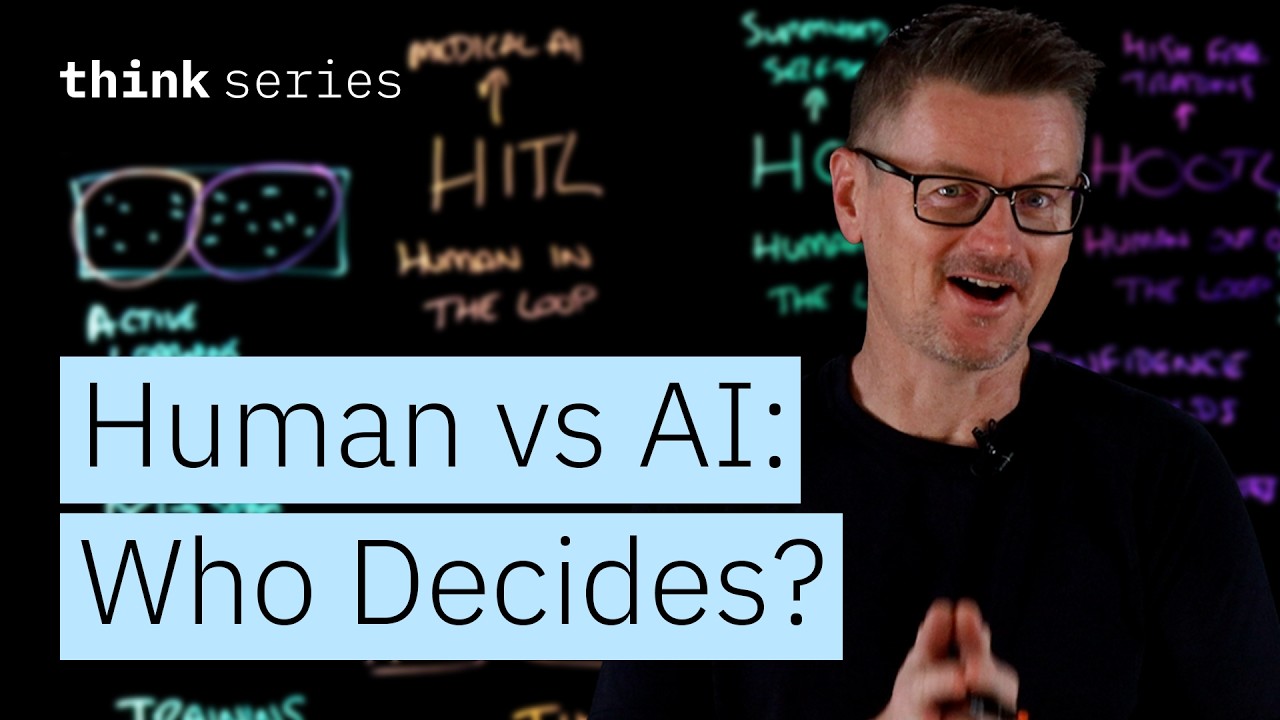
Martin Keen, a Master Inventor at IBM, breaks down the nuanced concept of the 'human-in-the-loop' (HITL) for artificial intelligence systems. In a clear and concise explanation, Keen illustrates that HITL is not a binary state but rather a spectrum of human involvement, crucial for the development and deployment of reliable AI.
Understanding the Human-in-the-Loop Spectrum
Keen frames the core question of HITL as determining how much human oversight is necessary for an AI to perform a given task. He outlines three key positions on this spectrum: 'human in the loop,' 'human on the loop,' and 'human out of the loop.'
In a 'human in the loop' system, the AI performs a task but pauses to allow human approval or intervention before proceeding. This is exemplified by medical AI that flags potential tumors on an X-ray, requiring a radiologist to make the final diagnosis. The stakes are high, and human judgment is critical to avoid false positives or negatives.
The full discussion can be found on IBM's YouTube channel.
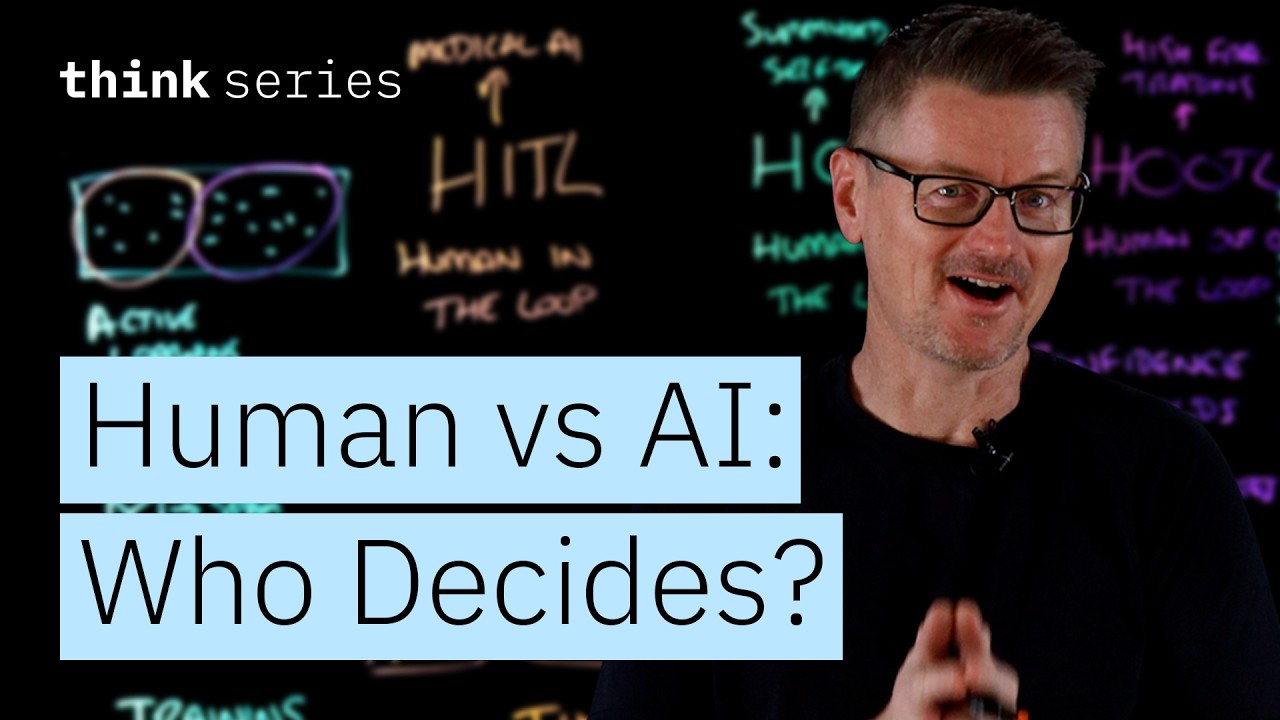
The 'human on the loop' model involves the AI operating autonomously but under human supervision. A prime example is a self-driving car that can handle most driving scenarios but requires the human driver to remain attentive and ready to take over if necessary. The human acts as a safety net, monitoring the AI's performance and intervening when situations become too complex or dangerous.