

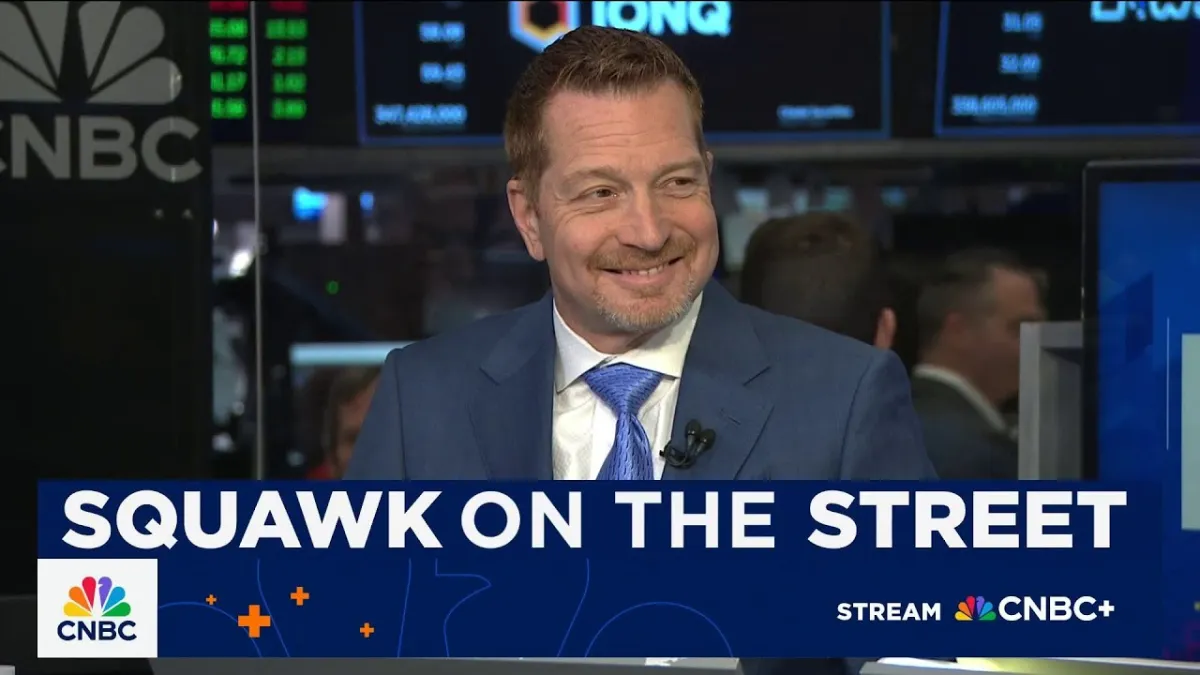
"AI is not going to kill software; you need it to protect AI." This declarative statement from George Kurtz, CEO of CrowdStrike, encapsulates a crucial perspective on the burgeoning field of artificial intelligence during his appearance on CNBC's "Squawk on the Street." Kurtz spoke with host Jim Cramer about the implications of the recent AWS outage, the evolving threat landscape, and the symbiotic relationship between AI and cybersecurity.
The conversation underscored a prevalent narrative that AI might render existing software obsolete. However, Kurtz firmly refuted this notion, arguing instead that AI's advancement necessitates a robust cybersecurity framework. He emphasized that as AI systems become more sophisticated and integrated into critical infrastructure, their susceptibility to sophisticated attacks will also increase. This creates a clear demand for advanced security solutions, not their obsolescence.
A significant point of discussion revolved around the recent AWS outage, which impacted numerous services. Kurtz highlighted how interconnectedness, while enabling innovation, also amplifies the impact of failures. He noted that "when you look at technology and how interconnected everything is, these sorts of events happen." He also pointed out that while AWS handled the situation competently, the incident served as a reminder of the inherent risks in relying on complex, distributed systems.
Kurtz's core argument is that AI and cybersecurity are inextricably linked, rather than being in opposition. He articulated this by stating, "I don't buy the idea that AI will kill software; you need it to protect AI." This perspective suggests that the very capabilities that make AI powerful also make it a target. As AI models are trained on vast datasets and deployed in critical decision-making roles, securing these systems becomes paramount. The potential for malicious actors to manipulate AI, steal sensitive data, or disrupt AI-driven operations presents a formidable challenge.
Furthermore, Kurtz drew a parallel between the current AI boom and previous technological shifts, noting that "AI has capabilities to interact with data, it has capabilities to interact with compute, it has non-human identities." This complexity means that traditional security measures may be insufficient. He elaborated on this by explaining that AI operates at "superhuman speed," amplifying the consequences of any breach or malfunction. Consequently, the development and deployment of AI must be accompanied by equally advanced security protocols.