

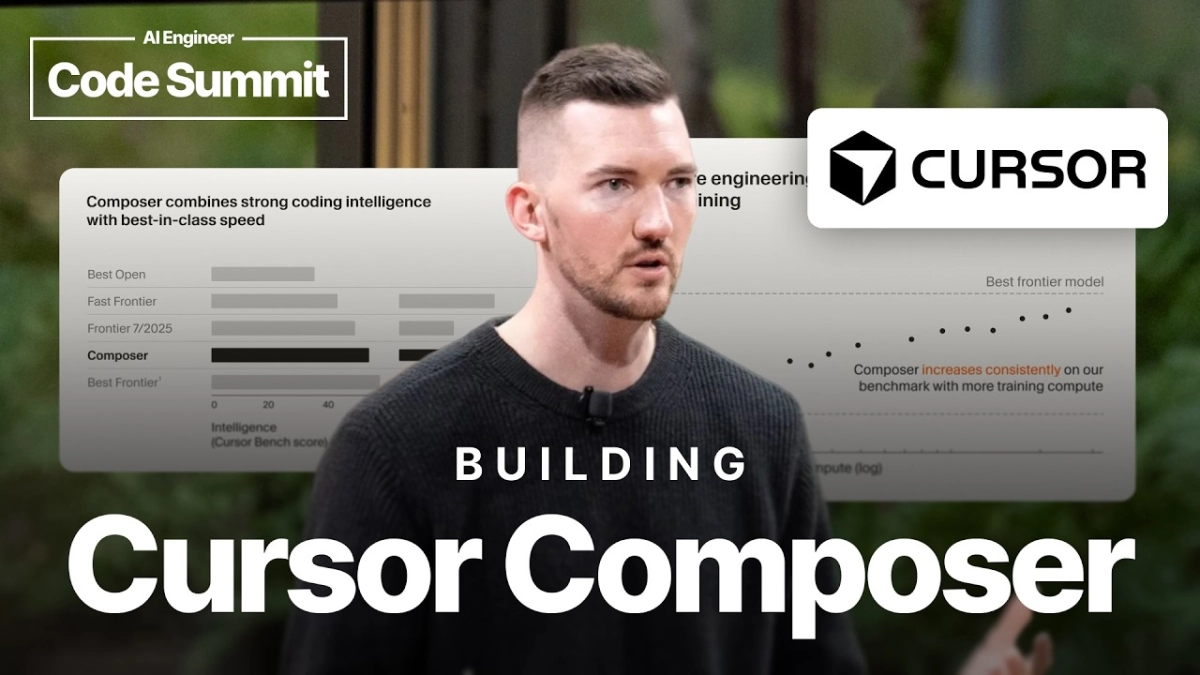
Lee Robinson, the driving force behind Cursor, recently articulated the intricate journey of building Cursor Composer, their inaugural coding model, in a compelling discussion. Robinson spoke with an interviewer at an unspecified event, detailing the infrastructure, training methodologies, and rigorous evaluation processes that underpin this ambitious project. The conversation offered a rare glimpse into the engineering realities of developing advanced AI for software development, a domain ripe for disruption.
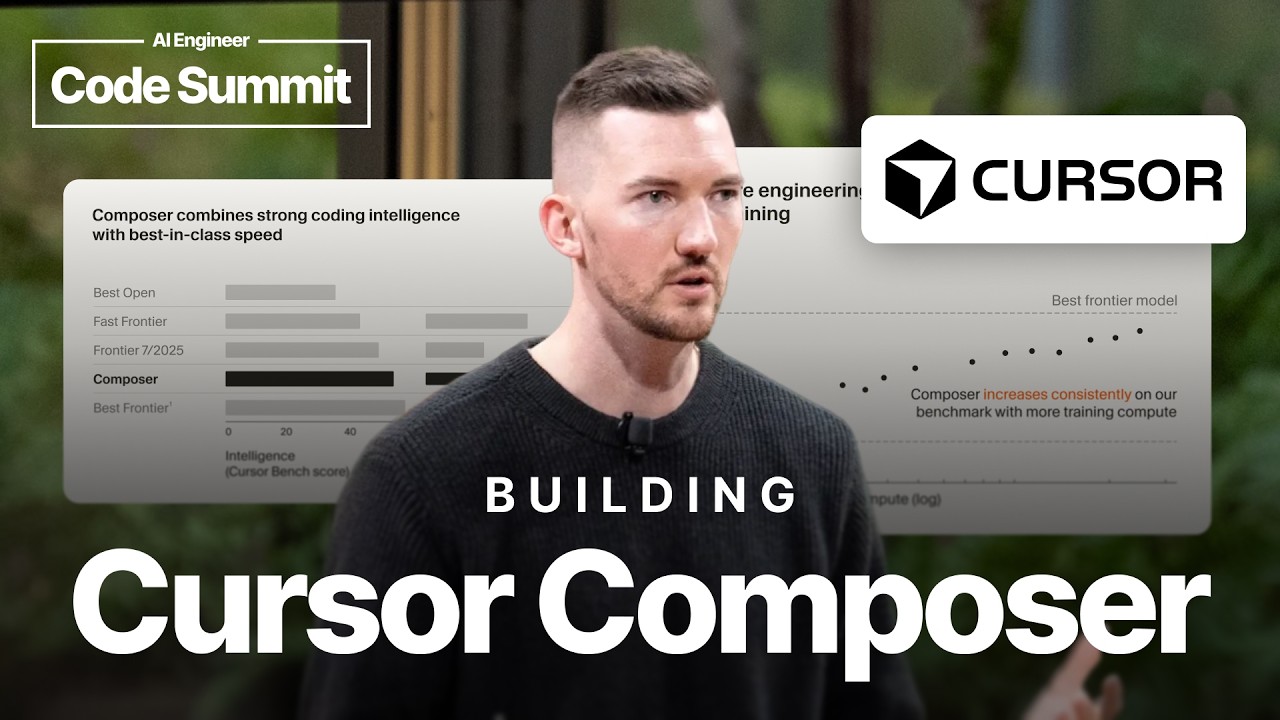
The core challenge, as Robinson highlighted, wasn't merely about generating code, but about generating useful and contextually aware code. "We’re not just trying to spit out code snippets," he emphasized, underscoring the need for models that understand the broader project and developer intent. This necessitates a departure from simpler, more generalized language models. Instead, Cursor Composer is built upon a foundation designed to comprehend and contribute to complex codebases, aiming to become an indispensable partner in the developer's workflow.
A significant insight from the discussion revolves around the crucial role of data quality and curation in training such specialized models. Robinson alluded to the painstaking process of sourcing and refining the datasets used for Composer, suggesting that generic web crawls, while a starting point, are insufficient for achieving the nuanced understanding required for high-fidelity code generation. The inference here is that the "secret sauce" of models like Composer lies not just in their architecture, but in the meticulous preparation of the information they learn from. This attention to detail in data is what allows the model to grasp the subtleties of programming languages and project-specific conventions.
Furthermore, Robinson touched upon the iterative nature of model development, particularly in the realm of evaluation. Building a coding model isn't a one-and-done affair; it's a continuous cycle of testing, refinement, and re-evaluation. The metrics used to gauge success go beyond simple code correctness, encompassing factors like code efficiency, maintainability, and adherence to best practices. This suggests a sophisticated testing framework that mirrors the complexities of real-world software engineering.
The infrastructure required to support such an endeavor is also a noteworthy aspect. Robinson hinted at the significant computational resources and specialized hardware necessary for training and deploying a model of Composer's caliber. This underscores the substantial investment and technical expertise required to compete at the forefront of AI development. The scale of this undertaking is a testament to the commitment Cursor has to revolutionizing how software is built.
