Anthropic's Product Head on AI's Future

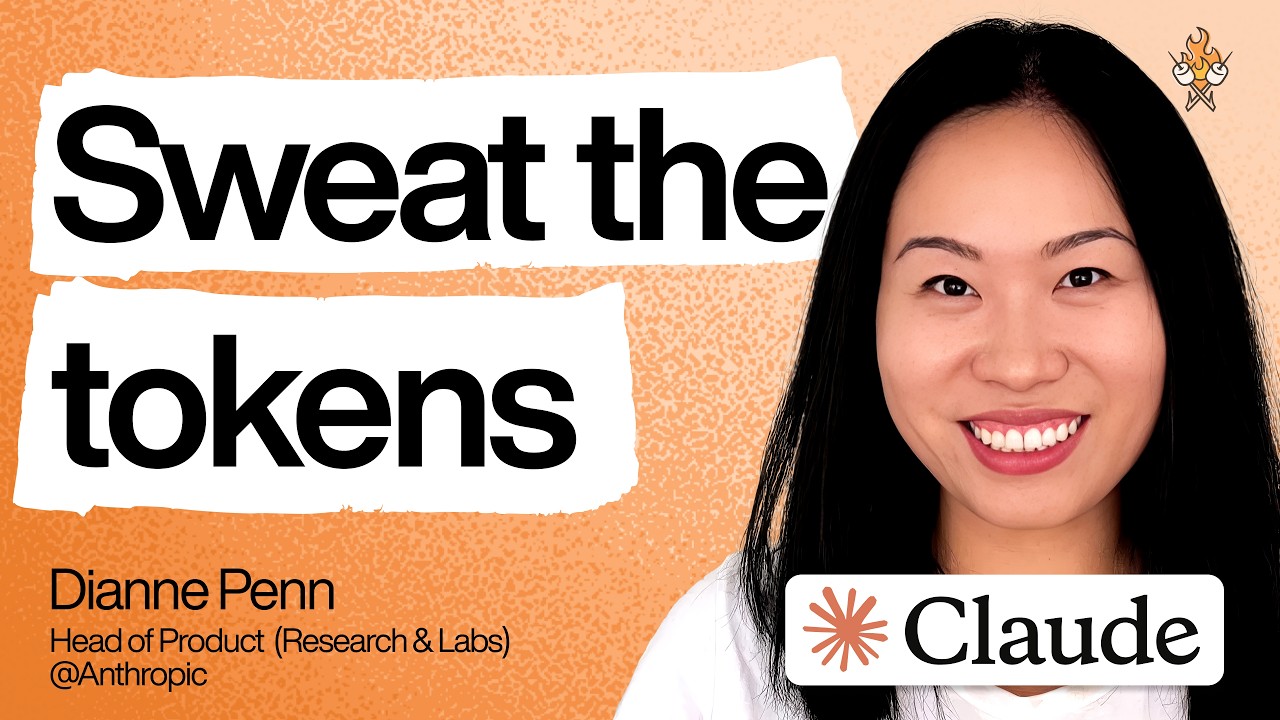
Diane Penn, Anthropic's Head of Product for AI Research and Labs, discusses the company's journey, the evolving product role, and the future of AI.

Diane Penn, Head of Product for AI Research and Labs at Anthropic, speaking into a microphone.
Lenny's Podcast
Visual TL;DR
Early SkepticismDriver
initially doubted Anthropic's chances against OpenAI's lead
From the articleRecalling Anthropic's early days, Penn admitted to initial skepticism about their chances against a seemingly insurmountable OpenAI.
Evolving Product RoleContext
shifted from traditional PM to incubating key AI products
From the article 4 mentionsDiane Penn, Head of Product for Anthropic's AI Research and Labs teams, recently shared insights into the company's journey and the evolving landscape of AI product management.
Labs & Bottom-UpEffect
fostering innovation through research labs and cultural approach
From the article 2 mentionsPenn also elaborated on the function of Anthropic's Labs team, describing its thesis as identifying and pursuing "discontinuous large bets" that might not align with the core roadmap.
Incubating ProductsEffect
From the article 9+ mentionsPenn, who joined Anthropic as the first technical product manager over three years ago, has been instrumental in shipping every model from Claude 2 through Fable, and incubating key products like Claude Code and Claude Design.
Anthropic's ProgressOutcome
significant ARR and shipping models like Claude 2 to Fable
From the article 6 mentionsHowever, Anthropic's trajectory has dramatically shifted, with reports suggesting significant ARR, a testament to their progress and innovation.
Claude 3 MilestoneCore
From the article 5 mentionsThe training and testing of Claude 3 (Opus 3) was a major milestone, solidifying the company's commitment to developing a frontier model.
Future AI DevelopmentOutcome
embracing ambition and adaptability for continued AI advancements
From the article 5 mentionsWhat does that mean for how you're building today?" This highlights the need for product development to anticipate future AI advancements.
Contents(5)

Diane Penn, Head of Product for Anthropic's AI Research and Labs teams, recently shared insights into the company's journey and the evolving landscape of AI product management. Penn, who joined Anthropic as the first technical product manager over three years ago, has been instrumental in shipping every model from Claude 2 through Fable, and incubating key products like Claude Code and Claude Design.

Anthropic's Product Head on AI's Future - Lenny's Podcast
Anthropic's Product Head on AI's Future, from Lenny's Podcast

From Early Skepticism to Frontier AI

Recalling Anthropic's early days, Penn admitted to initial skepticism about their chances against a seemingly insurmountable OpenAI. "I remember dealing, man, these guys have no chance. OpenAI is so far ahead," she recalled. However, Anthropic's trajectory has dramatically shifted, with reports suggesting significant ARR, a testament to their progress and innovation.

Penn highlighted key inflection points in Anthropic's development. The training and testing of Claude 3 (Opus 3) was a major milestone, solidifying the company's commitment to developing a frontier model. She also pointed to the development of Claude 4.5 (Opus 4.5) a year later, which was not just about the model itself but also the creation of a strong product experience through Claude Code. "One thing we say a lot on the team is you need frontier products in order to have frontier models and for people to feel the magic of frontier models," Penn stated.

The Shifting Role of Product Management in AI

Penn emphasized how the product role is changing, particularly within AI research teams. Her team's approach focuses on user feedback and meticulous evaluation, famously coining the phrase "evals are the new PRDs." This shift underscores the importance of data-driven iteration and validation in a rapidly evolving field.

She also touched upon the idea of "token maxing," referencing Gary Tan's observation that spending heavily on tokens now is akin to experiencing 2028's capabilities. Penn agreed with the sentiment, stating, "You have to sweat the tokens as much as you sweat the pixels." She stressed the necessity of actively using AI models to generate ideas and drive product development, noting that "there's no substitute for that."

Embracing Ambition and Adaptability

Looking ahead, Penn encouraged greater ambition when using AI tools, given their increasing capabilities. She posed a forward-thinking question to her team: "Let's say Claude 8 comes around. What changes in what users do? What does that mean for how you're building today?" This highlights the need for product development to anticipate future AI advancements.

The conversation also touched upon the concept of "emerging capabilities" in AI models, which can appear discontinuously as models scale. Penn acknowledged that these jumps can make safety measures more challenging, as capabilities might emerge unexpectedly. The role of the product manager is crucial in uncovering these new potentials and translating them into actionable insights for the research teams.

The Power of Labs and Bottom-Up Culture

Penn also elaborated on the function of Anthropic's Labs team, describing its thesis as identifying and pursuing "discontinuous large bets" that might not align with the core roadmap. Products like Claude Code, Skills, and Claude Design have emerged from this initiative, showcasing the value of dedicated incubation teams.

She emphasized the importance of a strong team culture, particularly selecting individuals passionate about zero-to-one experimentation. "It's not easy. There's a lot of bets that we end up turning down or turning off," she admitted, highlighting the resilience required in this fast-paced environment.

The Future of AI and Product Development

Penn's insights underscore the dynamic nature of AI development, where product and research teams must remain adaptable and user-focused. The conversation also highlighted the critical role of continuous learning and hands-on experimentation in building the next generation of AI products. As AI capabilities continue to expand, the need for ambitious, adaptable, and user-centric product strategies will only grow.

StartupHub data

OpenAI and Anthropic

OpenAI is an AI research and deployment company dedicated to ensuring that artificial general intelligence benefits all of humanity.

Founded
2015
Location
San Francisco, United States
Valuation
Private / $100B+ est

Anthropic is an AI safety and research company building reliable, interpretable, and steerable AI systems, best known for the Claude family of models.

Founded
2021
Location
San Francisco, California, USA
Valuation
Private / $100B+ est
© 2026 StartupHub.ai. All rights reserved. You may not republish this article in full without a license. Search engines and AI research tools may crawl and summarize for reference. Bulk reproduction or model training requires a license. See our terms.
Daniel Singer

Written by

Daniel Singer

Editor, StartupHub.ai

Daniel Singer is the editor of StartupHub.ai, a technology expert and thought leader on AI and its applications across sectors, from fintech and healthcare to developer tooling and consumer software. He writes and tests the tools covered here thoroughly and regularly, and built StartupHub.ai to give founders, operators and buyers a clearer read on what they are actually being sold.

More from Daniel Singer