

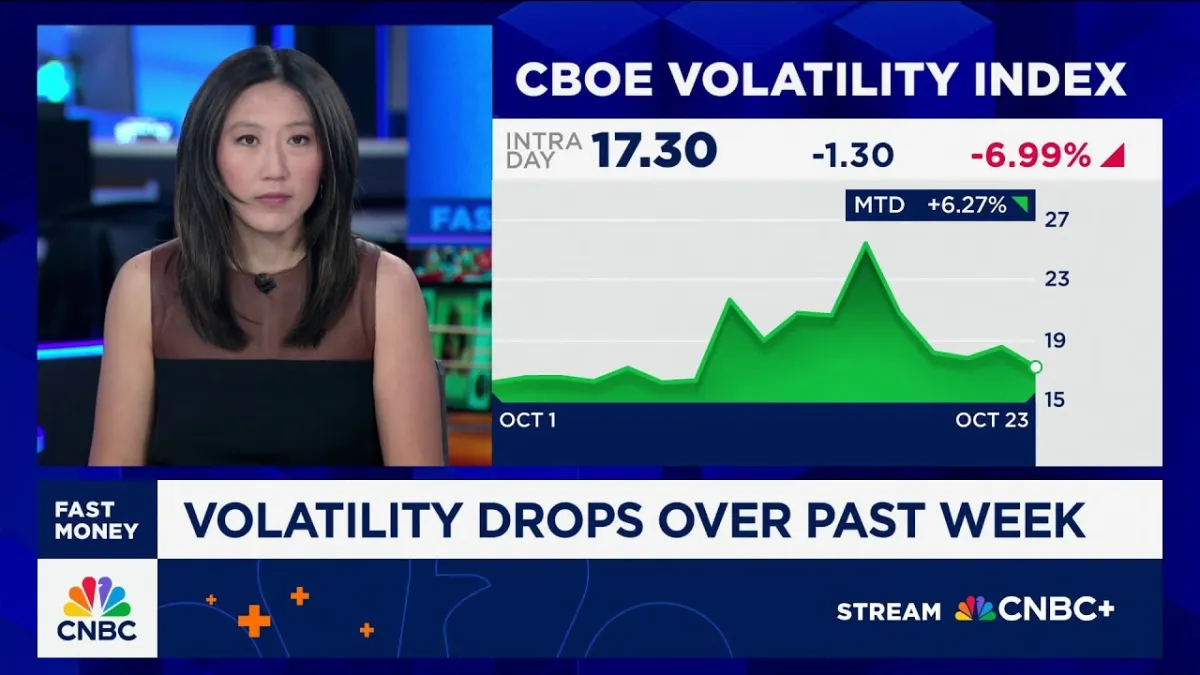
Mandy Xu, the Head of Derivatives Market Intelligence for Cboe Global Markets, recently joined the CNBC “Fast Money” team to dissect the intricate layers of market volatility, particularly as it pertains to the high-stakes AI trade and the impending earnings reports from the Magnificent 7 tech giants. Her insights painted a picture of a market far more complex than surface-level indices suggest, revealing a significant divergence between broad market tranquility and acute, single-stock turbulence. This nuanced perspective is critical for founders, venture capitalists, and AI professionals navigating the current investment climate.
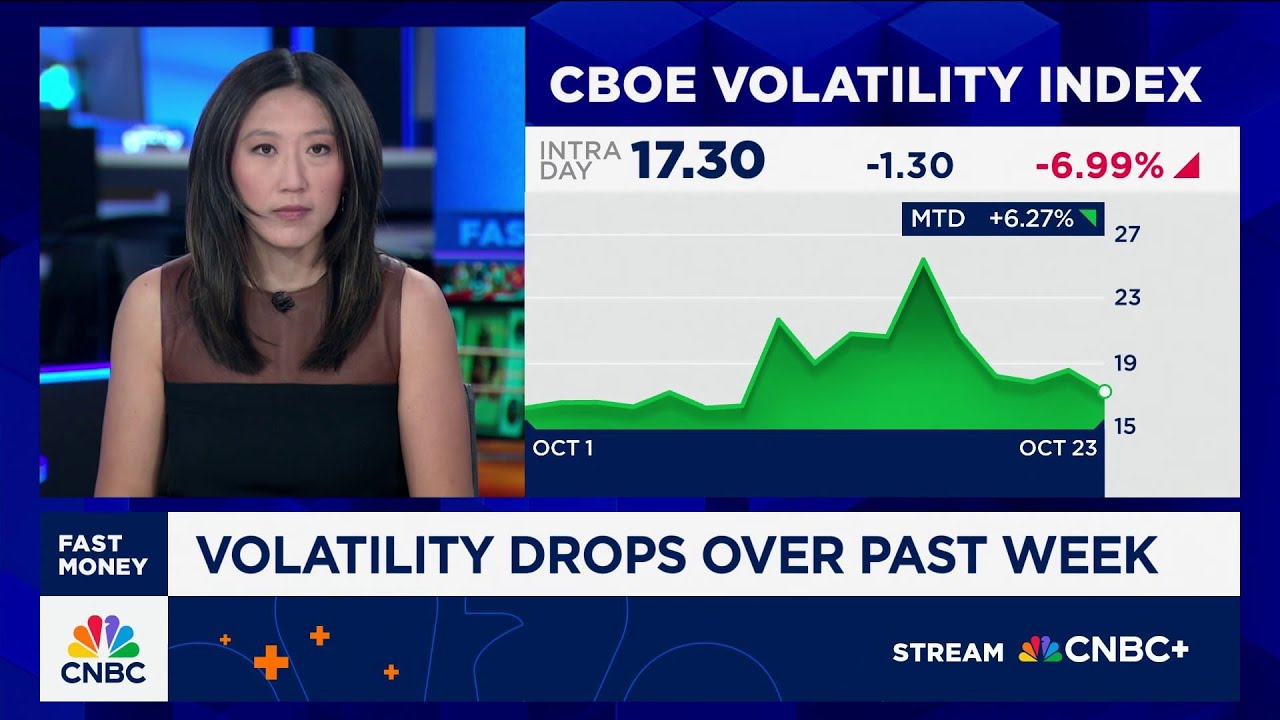
A primary revelation from Xu's analysis is the stark contrast between the Cboe Volatility Index (VIX), often seen as a barometer of overall market fear, and the Cboe Single Stock Volatility Index (VIX EQ). While the VIX might appear subdued, indicating a general calm, the VIX EQ has recently surged to an all-time high. This signifies that despite the aggregate market moving with relative stability, individual stocks, particularly those at the forefront of the AI revolution, are experiencing dramatic, often unpredictable, swings. This dispersion in volatility suggests that capital is not flowing uniformly; instead, it is highly concentrated and reactive to specific company news and speculative fervor.
This heightened single-stock volatility, especially preceding major earnings announcements, points to a palpable anxiety surrounding the AI trade and the lofty valuations many tech companies currently command. As Xu noted, "the extent of that widening of that spread widening, we thought was very notable, and I think it kind of speaks to this anxiety around earnings and valuation around some of the, you know, the high flyer AI stocks and the tech names that we have seen so far this year." This isn't merely standard earnings-related price discovery; it reflects a deeper uncertainty about whether these companies can sustain their growth narratives and justify their elevated multiples. The market is grappling with the fundamental question of how much future AI-driven growth is already priced in, and any deviation from stellar performance could trigger sharp corrections.
Indeed, this underlying apprehension is manifesting in tangible shifts within the options market. Over the past week, there has been a notable increase in hedging demand, with investors actively seeking downside protection. This strategic move, particularly as the year-end approaches, is aimed at "locking their year-to-date gains," as Xu observed. It suggests that despite the impressive rallies seen across many tech and AI stocks throughout the year, sophisticated players are not complacent. They are prudently preparing for potential headwinds, recognizing the inherent risks in a market where valuations have stretched considerably.
Moreover, the fixed income market offers its own intriguing signals, presenting a seemingly paradoxical narrative. Treasury yields have come down, yet inflation expectations are simultaneously rising. This scenario, Xu explained, indicates that "what the bond market is telling you is that the Fed is going to completely ignore any inflation risk and really focus on the softening in the labor market." Such an interpretation suggests that the market anticipates the Federal Reserve will prioritize economic stability over aggressive inflation fighting, leading to a "loosening of financial conditions." This perceived dovish tilt by the Fed has been a significant underpinning for the positive performance across various asset classes, including equities, throughout the year.