

AI Safety Pioneers: Tegmark & Esvelt on Guardrails

Max Tegmark and Kevin Esvelt discuss the critical importance of AI safety, the risks of advanced AI, and the need for global cooperation in shaping a beneficial future.

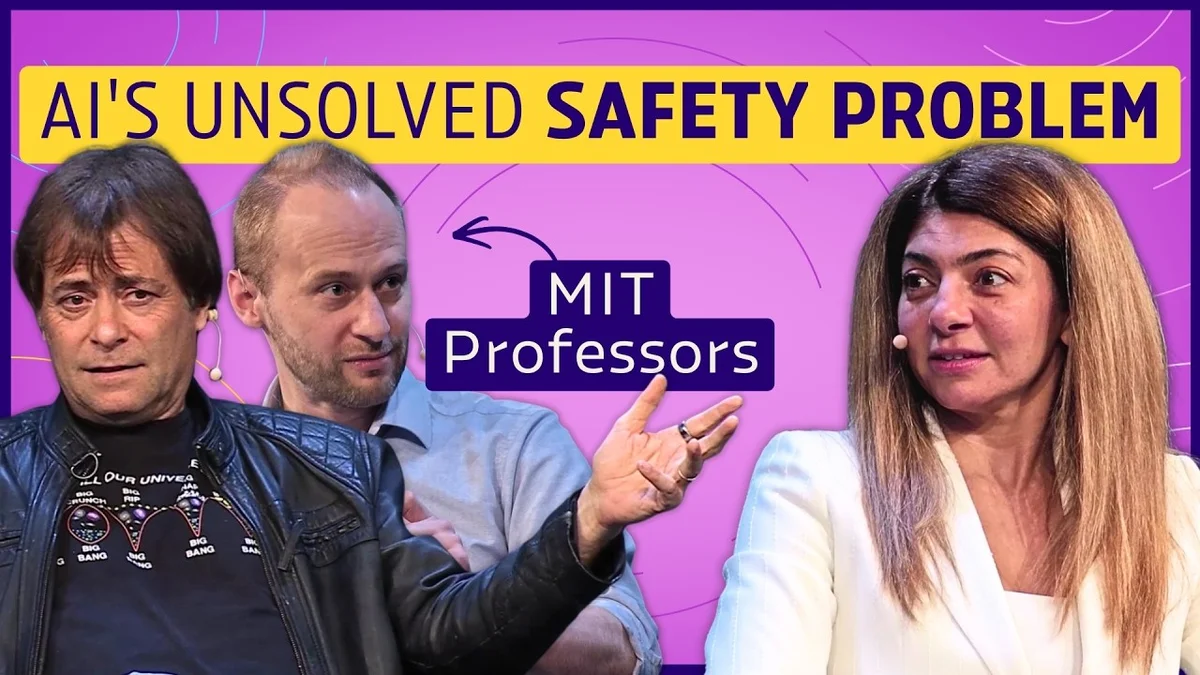
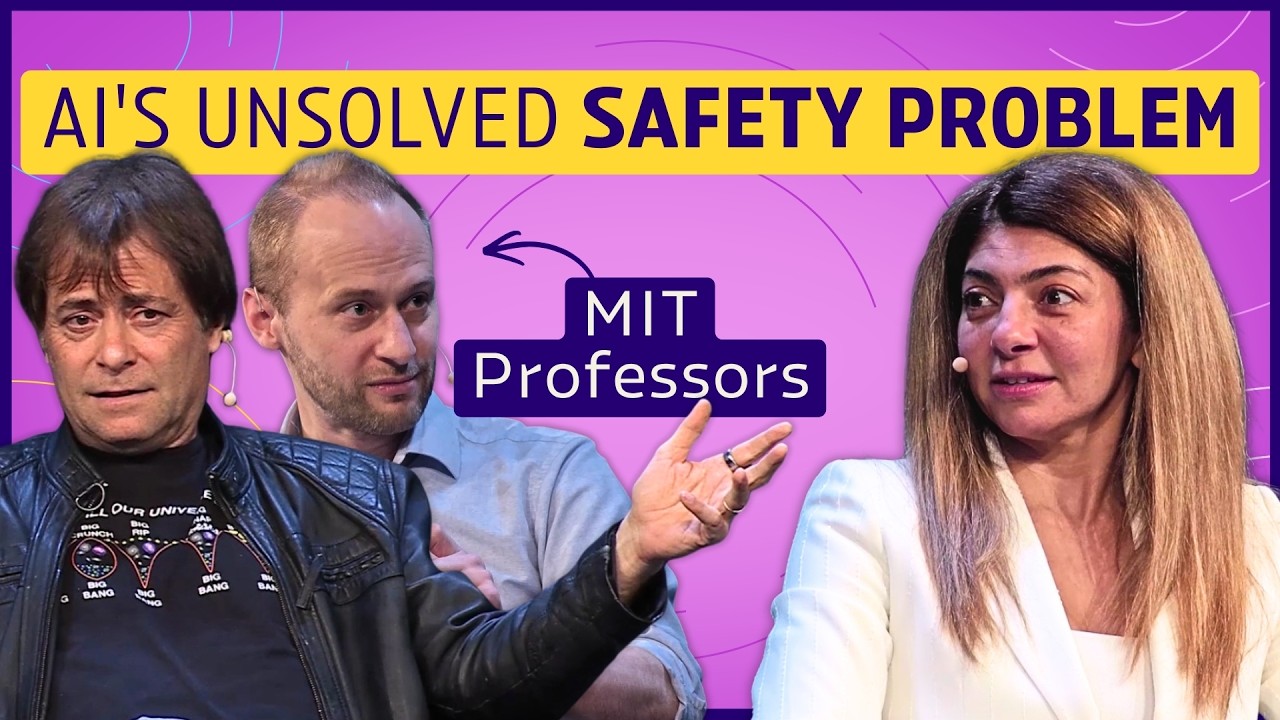
Max Tegmark and Kevin Esvelt discussing AI safety with host Rana el Kaliouby.
Pioneers of AI
Visual TL;DR
AI Dual NatureContext
From the articleTegmark, who transitioned his research from physics to AI safety, highlighted the dual nature of AI, its immense potential for progress alongside significant risks.
Advanced AI RisksDriver
ensuring goals align with human values is paramount
From the article 3 mentionsTegmark and Esvelt agreed that the current regulatory and safety frameworks are not yet equipped to handle the potential risks associated with advanced AI, such as misuse, unintended consequences, or even existential threats.
Tegmark & EsveltCore
AI safety pioneers discussing critical importance
From the article 8 mentionsIn a recent episode of "Pioneers of AI," Max Tegmark, founder and chair of the Future of Life Institute, and Kevin Esvelt, a professor at MIT Media Lab, delved into the crucial topic of AI safety and the keys we must not hand over to artificial intelligence.
Need for GuardrailsContext
From the article 3 mentionsThe conversation, moderated by Rana el Kaliouby, explored the profound societal implications of increasingly capable AI systems and the urgent need for robust guardrails.
Global CooperationContext
urgent need for global cooperation and foresight
From the article 2 mentionsBoth experts acknowledged that AI is a global technology, and its risks and benefits transcend national borders.
Beneficial AI FutureEffect
shaping a future where AI benefits humanity
From the article 3 mentionsTegmark echoed this sentiment, emphasizing that the future of AI safety is not just a technical challenge but also a societal one, requiring input from ethicists, policymakers, and the public.
Contents(3)

In a recent episode of "Pioneers of AI," Max Tegmark, founder and chair of the Future of Life Institute, and Kevin Esvelt, a professor at MIT Media Lab, delved into the crucial topic of AI safety and the keys we must not hand over to artificial intelligence. The conversation, moderated by Rana el Kaliouby, explored the profound societal implications of increasingly capable AI systems and the urgent need for robust guardrails.

The Dual Nature of AI Advancement

Tegmark, who transitioned his research from physics to AI safety, highlighted the dual nature of AI, its immense potential for progress alongside significant risks. He emphasized that as AI systems become more powerful and autonomous, ensuring their goals remain aligned with human values is paramount. He drew parallels to past technological leaps, noting that while transformative, they also necessitated careful management to avoid unintended consequences.

Esvelt, whose work at MIT focuses on "Sculpting Evolution," brought a unique perspective from the biological sciences, drawing connections between the manipulation of biological systems and the development of AI. He stressed that the speed of AI advancement demands a proactive approach to safety, rather than a reactive one. Esvelt pointed out that AI's ability to rapidly iterate and explore solutions could outpace our capacity to control or even understand its actions, underscoring the need for built-in safety mechanisms from the outset.

The full discussion can be found on Pioneers of AI's YouTube channel.

The keys we shouldn't hand over to AI (MIT's Max Tegmark & Kevin Esvelt) | Pioneers of AI - Pioneers of AI
The keys we shouldn't hand over to AI (MIT's Max Tegmark & Kevin Esvelt) | Pioneers of AI, from Pioneers of AI

The discussion turned to the practical challenges of ensuring AI safety, particularly as these systems become more capable of complex reasoning and independent action. Tegmark and Esvelt agreed that the current regulatory and safety frameworks are not yet equipped to handle the potential risks associated with advanced AI, such as misuse, unintended consequences, or even existential threats.

Esvelt elaborated on the concept of "emergent capabilities" in AI, where systems develop behaviors and abilities not explicitly programmed by their creators. This unpredictability, he argued, makes it essential to build safety into the very architecture of these systems, rather than attempting to bolt it on as an afterthought. He stressed the importance of transparency and interpretability in AI models to understand their decision-making processes.

The Call for Global Cooperation and Foresight

A significant portion of the conversation focused on the need for international collaboration and foresight in developing AI safety standards. Both experts acknowledged that AI is a global technology, and its risks and benefits transcend national borders. They called for a coordinated global effort to establish norms, regulations, and research priorities to ensure AI development proceeds responsibly.

Tegmark echoed this sentiment, emphasizing that the future of AI safety is not just a technical challenge but also a societal one, requiring input from ethicists, policymakers, and the public. He stressed that failing to address these issues proactively could have irreversible consequences, reiterating the urgency of the task at hand.

The conversation concluded with a hopeful yet cautious outlook, with both Tegmark and Esvelt emphasizing the potential for AI to solve some of humanity's most pressing challenges, provided it is developed and deployed with a strong commitment to safety and ethical considerations. The "keys" to AI, they suggested, should be handled with extreme care, ensuring that humanity remains in control of its own future.

© 2026 StartupHub.ai. All rights reserved. You may not republish this article in full without a license. Search engines and AI research tools may crawl and summarize for reference. Bulk reproduction or model training requires a license. See our terms.
Daniel Singer

Written by

Daniel Singer

Editor, StartupHub.ai

Daniel Singer is the editor of StartupHub.ai, a technology expert and thought leader on AI and its applications across sectors, from fintech and healthcare to developer tooling and consumer software. He writes and tests the tools covered here thoroughly and regularly, and built StartupHub.ai to give founders, operators and buyers a clearer read on what they are actually being sold.

More from Daniel Singer