


AI Data Centers Spark Public Backlash

Jasmine Sun joins Odd Lots to discuss the growing public backlash against AI data centers, driven by local concerns and a lack of trust in tech companies.

8 min read
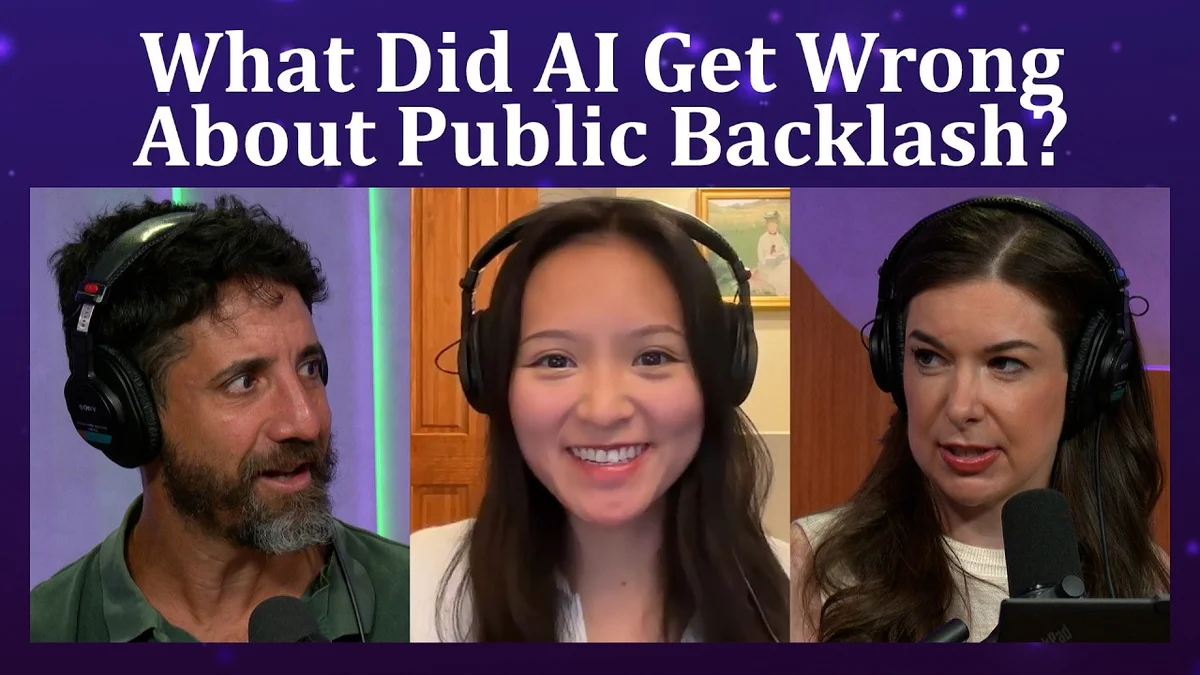
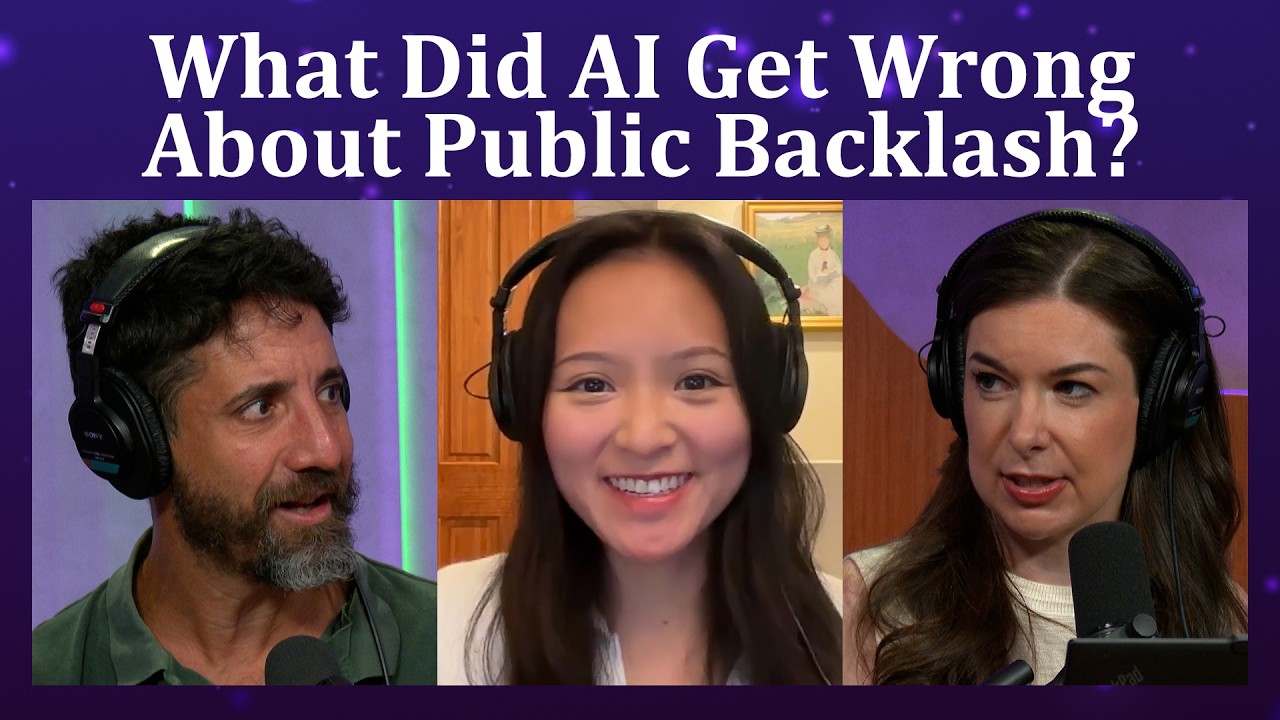
Jasmine Sun and Joe Weisenthal discussing AI data centers on the Odd Lots podcast.
Bloomberg Podcast

Visual TL;DR. AI Growth requires Data Centers Needed. Data Centers Needed causes Public Backlash. Local Concerns contributes to Public Backlash. Physicality of AI explains Data Centers Needed. Public Backlash leads to NIMBY Intensifies. Trust Deficit exacerbates Public Backlash.

  1. AI Growth: sophisticated, data-hungry AI models require vast physical infrastructure
  2. Data Centers Needed: AI's existence tied to significant physical footprint, huge power demands
  3. Public Backlash: growing public backlash against AI data centers driven by local concerns
  4. Local Concerns: communities lack trust in tech companies, fear environmental impacts
  5. Physicality of AI: AI involves huge amounts of power, memory chips, and data centers
  6. NIMBY Intensifies: Not In My Backyard sentiment growing against new data center proposals
  7. Trust Deficit: lack of trust in tech companies fuels community opposition to projects
Visual TL;DR
Visual TL;DR, startuphub.ai AI Growth requires Data Centers Needed. Data Centers Needed causes Public Backlash. Trust Deficit exacerbates Public Backlash requires causes exacerbates AI Growth Data Centers Needed Public Backlash Trust Deficit From startuphub.ai · The publishers behind this format
Visual TL;DR, startuphub.ai AI Growth requires Data Centers Needed. Data Centers Needed causes Public Backlash. Trust Deficit exacerbates Public Backlash requires causes exacerbates AI Growth Data CentersNeeded Public Backlash Trust Deficit From startuphub.ai · The publishers behind this format
Visual TL;DR, startuphub.ai AI Growth requires Data Centers Needed. Data Centers Needed causes Public Backlash. Trust Deficit exacerbates Public Backlash requires causes exacerbates AI Growth sophisticated, data-hungry AI modelsrequire vast physical infrastructure Data Centers Needed AI's existence tied to significantphysical footprint, huge power demands Public Backlash growing public backlash against AI datacenters driven by local concerns Trust Deficit lack of trust in tech companies fuelscommunity opposition to projects From startuphub.ai · The publishers behind this format
Visual TL;DR, startuphub.ai AI Growth requires Data Centers Needed. Data Centers Needed causes Public Backlash. Trust Deficit exacerbates Public Backlash requires causes exacerbates AI Growth sophisticated,data-hungry AImodels require vast… Data CentersNeeded AI's existence tiedto significantphysical footprint,… Public Backlash growing publicbacklash against AIdata centers driven… Trust Deficit lack of trust intech companiesfuels community… From startuphub.ai · The publishers behind this format
Visual TL;DR, startuphub.ai AI Growth requires Data Centers Needed. Data Centers Needed causes Public Backlash. Local Concerns contributes to Public Backlash. Physicality of AI explains Data Centers Needed. Public Backlash leads to NIMBY Intensifies. Trust Deficit exacerbates Public Backlash requires causes contributes to explains leads to exacerbates AI Growth sophisticated, data-hungry AI modelsrequire vast physical infrastructure Data Centers Needed AI's existence tied to significantphysical footprint, huge power demands Public Backlash growing public backlash against AI datacenters driven by local concerns Local Concerns communities lack trust in tech companies,fear environmental impacts Physicality of AI AI involves huge amounts of power, memorychips, and data centers NIMBY Intensifies Not In My Backyard sentiment growingagainst new data center proposals Trust Deficit lack of trust in tech companies fuelscommunity opposition to projects From startuphub.ai · The publishers behind this format
Visual TL;DR, startuphub.ai AI Growth requires Data Centers Needed. Data Centers Needed causes Public Backlash. Local Concerns contributes to Public Backlash. Physicality of AI explains Data Centers Needed. Public Backlash leads to NIMBY Intensifies. Trust Deficit exacerbates Public Backlash requires causes contributes to explains leads to exacerbates AI Growth sophisticated,data-hungry AImodels require vast… Data CentersNeeded AI's existence tiedto significantphysical footprint,… Public Backlash growing publicbacklash against AIdata centers driven… Local Concerns communities lacktrust in techcompanies, fear… Physicality of AI AI involves hugeamounts of power,memory chips, and… NIMBY Intensifies Not In My Backyardsentiment growingagainst new data… Trust Deficit lack of trust intech companiesfuels community… From startuphub.ai · The publishers behind this format

The explosive growth of artificial intelligence is not just a digital phenomenon. As AI models become more sophisticated and data-hungry, they require vast physical infrastructure in the form of data centers. This demand is creating a new set of challenges and conflicts in communities across the United States, as highlighted in a recent episode of the Odd Lots podcast featuring writer Jasmine Sun.

The Physicality of AI

Joe Weisenthal and Tracy Alloway, hosts of Odd Lots, kicked off the discussion by emphasizing that while AI is often perceived as an ephemeral digital technology, its very existence is tied to a significant physical footprint. "AI involves huge amounts of power, huge amounts of things like memory chips, and of course, put those two things together, huge numbers of data centers," Weisenthal noted. This contrasts with earlier tech booms, like the SaaS surge, where companies could often scale without massive capital outlays for physical infrastructure.

Sun elaborated on the current situation, explaining that the build-out of these data centers is becoming a primary constraint. "What there is is a shortage of, again, power, land, regulatory and political approvals for actually building these things." She observed that while capital is readily available for hyperscalers and data center projects, the real bottleneck lies in securing the necessary resources and permissions.

The full discussion can be found on Bloomberg Podcast's YouTube channel.

Jasmine Sun on What the AI Industry Got Wrong About the Public Backlash | Odd Lots - Bloomberg Podcast
Jasmine Sun on What the AI Industry Got Wrong About the Public Backlash | Odd Lots, from Bloomberg Podcast

"Not in My Backyard" Intensifies

The expansion of data centers is proving to be a rare bipartisan issue, with opposition arising from both ends of the political spectrum. Sun pointed to recent actions by New York Governor Kathy Hochul, who implemented a moratorium on new data center construction, and Texas Governor Greg Abbott, who also announced curbs on state development. This widespread sentiment reflects a growing sentiment of opposition, often summarized as "No Data Centers in My Backyard."

Sun's own reporting trip through the Midwest offered a ground-level perspective on this backlash. She found that while some opponents cited legitimate concerns about water usage and cooling systems, others were influenced by less informed theories. However, the core issue often boiled down to trust. "The gap among, anti-data center activists was much more about trust than it was about information," she stated. Communities are wary of corporate promises, recalling past industrial fiascos where jobs and environmental commitments failed to materialize.

The Pitch and the Reality

The primary pitch from data center developers to communities typically centers on property taxes. Sun explained that in areas like Loudoun County, Virginia, data centers contribute significantly to the tax base, funding public services. However, the jobs argument is often less compelling. While construction phases create numerous temporary jobs, the number of permanent roles is typically much smaller, akin to a solar farm. This leads to a disconnect: communities bear the brunt of the construction impacts without a commensurate long-term employment benefit.

Furthermore, the abstract nature of AI itself, compared to tangible industries like car manufacturing, makes it harder to sell to the public. "People were just like, why are we, as a community, taking the hit of having this giant, ugly thing in order to produce some coding agents that help people in San Francisco?" Sun mused.

Shifting Power Dynamics and the Future

The landscape of data center deals is rapidly evolving. Sun noted that the balance of power is shifting, with communities now realizing they don't need to offer excessive tax subsidies. She also highlighted the controversy surrounding non-disclosure agreements (NDAs) in these deals, which often breed distrust. As these projects move forward, the focus is increasingly on ensuring tangible community benefits and greater transparency.

The conversation also touched upon the broader anxieties surrounding AI, including job displacement and existential risk. However, Sun emphasized that the immediate, tangible concerns like data center proliferation are the ones truly driving public backlash, often overshadowing the more abstract fears discussed within the AI industry itself. This disconnect underscores the challenge for AI companies and governments in effectively communicating the societal benefits of AI deployment.

© 2026 StartupHub.ai. All rights reserved. Do not enter, scrape, copy, reproduce, or republish this article in whole or in part. Use as input to AI training, fine-tuning, retrieval-augmented generation, or any machine-learning system is prohibited without written license. Substantially-similar derivative works will be pursued to the fullest extent of applicable copyright, database, and computer-misuse laws. See our terms.