

AI Agents Break Zero Trust at the Last Mile

IBM's Grant Miller explains how AI agents break Zero Trust at the 'last mile' and outlines strategies to secure these complex integrations.

9 min read
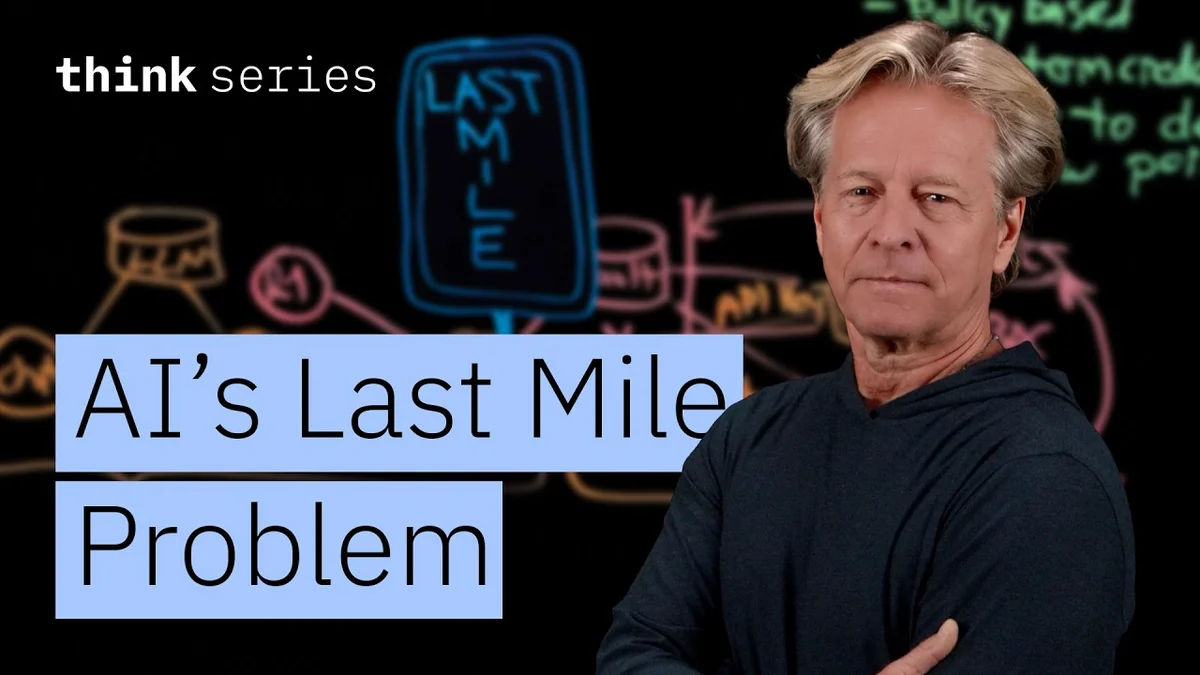
Grant Miller from IBM explaining AI agent security challenges with a diagram.
Image credit: IBM Think Series· IBM

In the rapidly evolving world of artificial intelligence, the concept of AI agents is rapidly gaining traction. These agents, capable of high-level reasoning and autonomous action, promise to revolutionize how we interact with technology. However, as IBM Distinguished Engineer Grant Miller explains in a recent video, their integration, particularly at the 'last mile,' presents significant challenges to established security frameworks like Zero Trust.

Visual TL;DR. AI Agents Emerge faces Last Mile Problem. Last Mile Problem creates Zero Trust Gap. Zero Trust Gap leads to Security Challenges. Security Challenges causes Break Zero Trust. Last Mile Problem causes Break Zero Trust. Securing AI Integrations addresses AI Agents Emerge.

  1. AI Agents Emerge: autonomous agents with high-level reasoning capabilities gaining traction
  2. Last Mile Problem: bridging AI reasoning to fragmented legacy infrastructure
  3. Zero Trust Gap: AI agents challenge established security frameworks like Zero Trust
  4. Security Challenges: complex integrations and fragmented infrastructure create vulnerabilities
  5. Securing AI Integrations: strategies to protect AI agents at the last mile
  6. Break Zero Trust: AI agents bypass security at the final connection point
Visual TL;DR
Visual TL;DR — startuphub.ai AI Agents Emerge faces Last Mile Problem. Last Mile Problem creates Zero Trust Gap. Last Mile Problem causes Break Zero Trust. Securing AI Integrations addresses AI Agents Emerge faces creates causes addresses AI Agents Emerge Last Mile Problem Zero Trust Gap Securing AI Integrations Break Zero Trust From startuphub.ai · The publishers behind this format
Visual TL;DR — startuphub.ai AI Agents Emerge faces Last Mile Problem. Last Mile Problem creates Zero Trust Gap. Last Mile Problem causes Break Zero Trust. Securing AI Integrations addresses AI Agents Emerge faces creates causes addresses AI Agents Emerge Last Mile Problem Zero Trust Gap Securing AIIntegrations Break Zero Trust From startuphub.ai · The publishers behind this format
Visual TL;DR — startuphub.ai AI Agents Emerge faces Last Mile Problem. Last Mile Problem creates Zero Trust Gap. Last Mile Problem causes Break Zero Trust. Securing AI Integrations addresses AI Agents Emerge faces creates causes addresses AI Agents Emerge autonomous agents with high-levelreasoning capabilities gaining traction Last Mile Problem bridging AI reasoning to fragmented legacyinfrastructure Zero Trust Gap AI agents challenge established securityframeworks like Zero Trust Securing AI Integrations strategies to protect AI agents at thelast mile Break Zero Trust AI agents bypass security at the finalconnection point From startuphub.ai · The publishers behind this format
Visual TL;DR — startuphub.ai AI Agents Emerge faces Last Mile Problem. Last Mile Problem creates Zero Trust Gap. Last Mile Problem causes Break Zero Trust. Securing AI Integrations addresses AI Agents Emerge faces creates causes addresses AI Agents Emerge autonomous agentswith high-levelreasoning… Last Mile Problem bridging AIreasoning tofragmented legacy… Zero Trust Gap AI agents challengeestablishedsecurity frameworks… Securing AIIntegrations strategies toprotect AI agentsat the last mile Break Zero Trust AI agents bypasssecurity at thefinal connection… From startuphub.ai · The publishers behind this format
Visual TL;DR — startuphub.ai AI Agents Emerge faces Last Mile Problem. Last Mile Problem creates Zero Trust Gap. Zero Trust Gap leads to Security Challenges. Security Challenges causes Break Zero Trust. Last Mile Problem causes Break Zero Trust. Securing AI Integrations addresses AI Agents Emerge faces creates leads to causes causes addresses AI Agents Emerge autonomous agents with high-levelreasoning capabilities gaining traction Last Mile Problem bridging AI reasoning to fragmented legacyinfrastructure Zero Trust Gap AI agents challenge established securityframeworks like Zero Trust Security Challenges complex integrations and fragmentedinfrastructure create vulnerabilities Securing AI Integrations strategies to protect AI agents at thelast mile Break Zero Trust AI agents bypass security at the finalconnection point From startuphub.ai · The publishers behind this format
Visual TL;DR — startuphub.ai AI Agents Emerge faces Last Mile Problem. Last Mile Problem creates Zero Trust Gap. Zero Trust Gap leads to Security Challenges. Security Challenges causes Break Zero Trust. Last Mile Problem causes Break Zero Trust. Securing AI Integrations addresses AI Agents Emerge faces creates leads to causes causes addresses AI Agents Emerge autonomous agentswith high-levelreasoning… Last Mile Problem bridging AIreasoning tofragmented legacy… Zero Trust Gap AI agents challengeestablishedsecurity frameworks… SecurityChallenges complexintegrations andfragmented… Securing AIIntegrations strategies toprotect AI agentsat the last mile Break Zero Trust AI agents bypasssecurity at thefinal connection… From startuphub.ai · The publishers behind this format

The Last Mile Problem for AI Agents

Miller begins by illustrating the fundamental challenge: bridging the gap between the sophisticated reasoning capabilities of AI agents and the often legacy, fragmented infrastructure they need to interact with. He uses a visual analogy of a global network connecting to individual homes, highlighting the difficulty of extending high-speed access to every endpoint. This 'last mile' problem, traditionally faced by internet providers, is now being amplified in the context of AI agents.

Related startups

The core issue, as Miller articulates, is that these AI agents operate in a fundamentally different way than traditional software. They are designed to understand context, reason, and execute complex tasks autonomously. This dynamic nature contrasts sharply with older systems built on static, well-defined interactions. When an AI agent needs to access data or perform an action, it often relies on a chain of interactions involving conversation, reasoning, and execution. The problem arises when this chain involves elements that lack the necessary identity verification and context.

The full discussion can be found on IBM's YouTube channel.

Why AI Agents Break Zero Trust at the Last Mile - IBM
Why AI Agents Break Zero Trust at the Last Mile — from IBM

Zero Trust and the AI Agent Gap

Miller points out that while we can verify the identity of a user or a specific application interacting with a system, it becomes far more complex with AI agents. The traditional Zero Trust model, which operates on the principle of 'never trust, always verify,' relies on strict identity checks and granular authorization for every access request. However, when an AI agent acts on behalf of a user, or even autonomously, the verification process can break down.
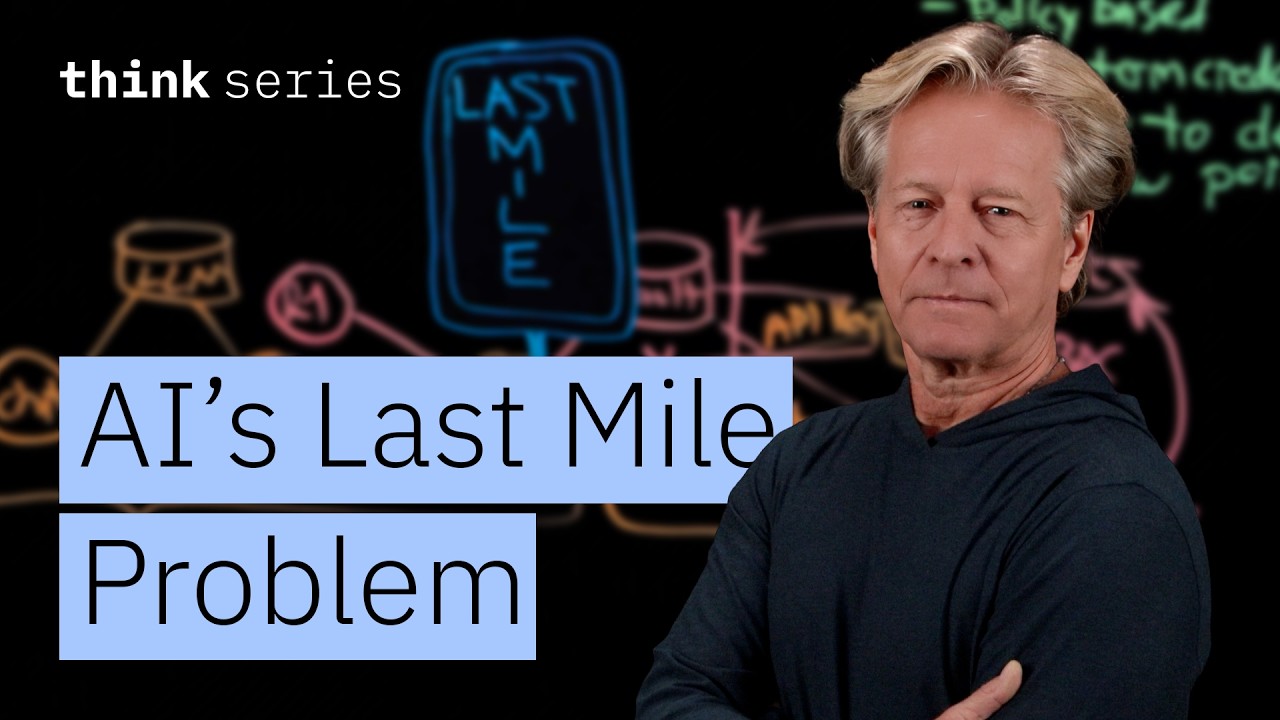
He breaks down the typical interaction flow: a user initiates a request, which is processed by an AI agent. This agent then uses its reasoning capabilities, potentially augmented by a Large Language Model (LLM), to interact with other systems, such as an API or a data store. The problem emerges at the end of this chain, where the AI agent interacts with the ultimate data or processes. Miller highlights that in many legacy systems, these endpoints lack the ability to verify the AI agent's specific intent or the context of its actions. This leaves a significant security vulnerability.

Miller emphasizes that the AI agent itself might be well-understood, but the 'last mile' interactions can be problematic. He draws a distinction between the 'front mile' where the user interacts with the AI, and the 'last mile' where the AI interacts with the backend systems. The latter is where the Zero Trust principles are most challenged.

Key Challenges in Implementing Zero Trust for AI Agents

Miller identifies several key challenges that emerge:

  • End-to-End Verification Failure: In a typical AI agent interaction, the entire chain from user to AI to backend system is interconnected. However, if the final step, the interaction with the backend data or process, lacks proper verification, the entire chain's security is compromised. Miller states, "End-to-end verification fails if the end doesn't verify the user."
  • Lack of Context: AI agents operate with a dynamic context that can be difficult to capture and verify. Traditional systems are not designed to handle this fluid context, making it hard to apply granular Zero Trust policies.
  • Delegation Issues: When an AI agent acts on behalf of a user, it inherits certain permissions. However, without clear visibility into the agent's specific intent and the context of its actions, this delegation can lead to over-permissioning and security risks.
  • Target for Attackers: The breakdown in verification and context makes the 'last mile' a prime target for attackers. If an attacker can compromise an AI agent or its interaction with backend systems, they can potentially gain unauthorized access.

Proposed Solutions and Strategies

To address these challenges, Miller proposes several strategies:

  • Validate Identity, Context, and Delegation: It's crucial to not only validate the identity of the AI agent but also the context of its actions and the delegation of permissions. This involves understanding what the AI is trying to achieve and ensuring it has the appropriate authorization.
  • Policy Enforcement via ABAC/PBAC: Implementing Attribute-Based Access Control (ABAC) or Policy-Based Access Control (PBAC) can help manage these complex interactions. These models allow for more dynamic and context-aware authorization decisions.
  • Connect Last Mile via Vaults: Miller suggests using secure vaults to store and manage credentials and access policies. This creates a more controlled and auditable path for AI agents to access backend systems. By connecting through a vault, the system can ensure that the AI agent's actions are validated and authorized based on its role and context.
  • Short-Term Credentials: Instead of long-lived, static credentials, using short-term, dynamically generated credentials for AI agents can significantly reduce the risk of compromise.
  • Telemetry for Insight: Collecting telemetry data on AI agent behavior, including their interactions, decisions, and access patterns, is vital. This data can be used to detect anomalies, enforce policies, and provide an audit trail for security investigations.

In essence, the challenge lies in extending the Zero Trust principles to the dynamic and often opaque interactions of AI agents. By implementing robust validation, context management, and policy enforcement mechanisms, organizations can begin to bridge the gap and secure the 'last mile' of AI integration, ensuring that these powerful tools can be deployed safely and effectively.

© 2026 StartupHub.ai. All rights reserved. Do not enter, scrape, copy, reproduce, or republish this article in whole or in part. Use as input to AI training, fine-tuning, retrieval-augmented generation, or any machine-learning system is prohibited without written license. Substantially-similar derivative works will be pursued to the fullest extent of applicable copyright, database, and computer-misuse laws. See our terms.