


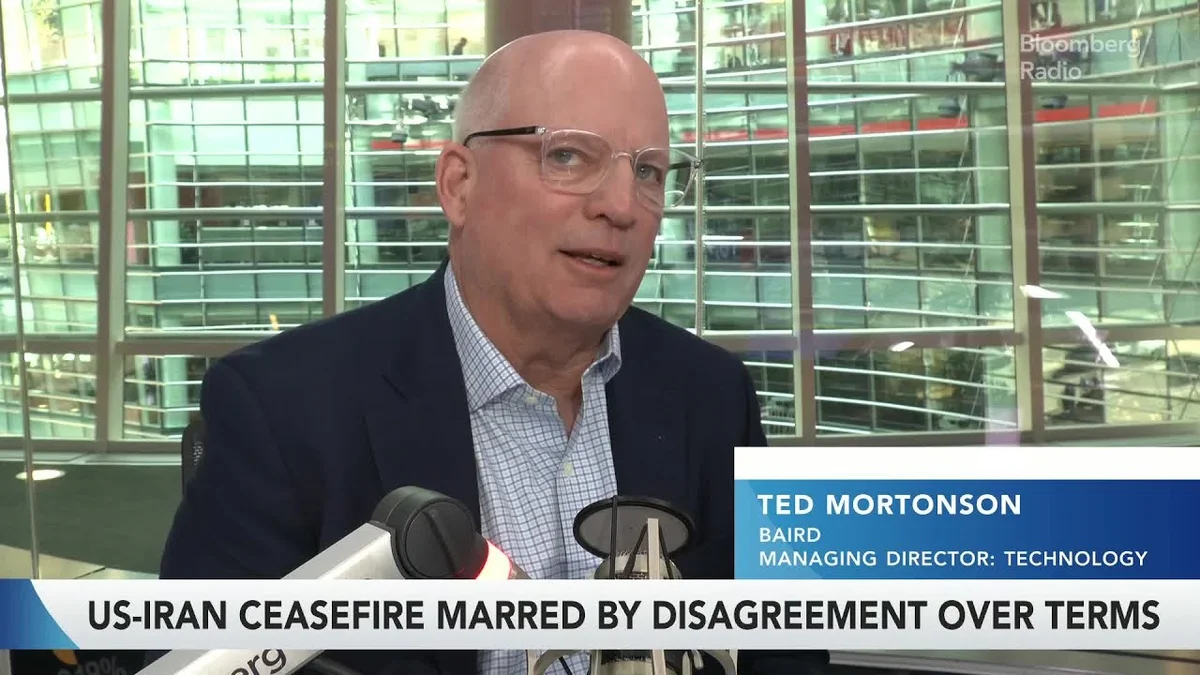
AI Agents and the Future of Software Development

Ted Mortonson, Managing Director of Technology at Baird, discusses how AI agents are causing a structural shift in software development and the broader economy.

4 min read
AI Agents and the Future of Software Development
Bloomberg Podcast

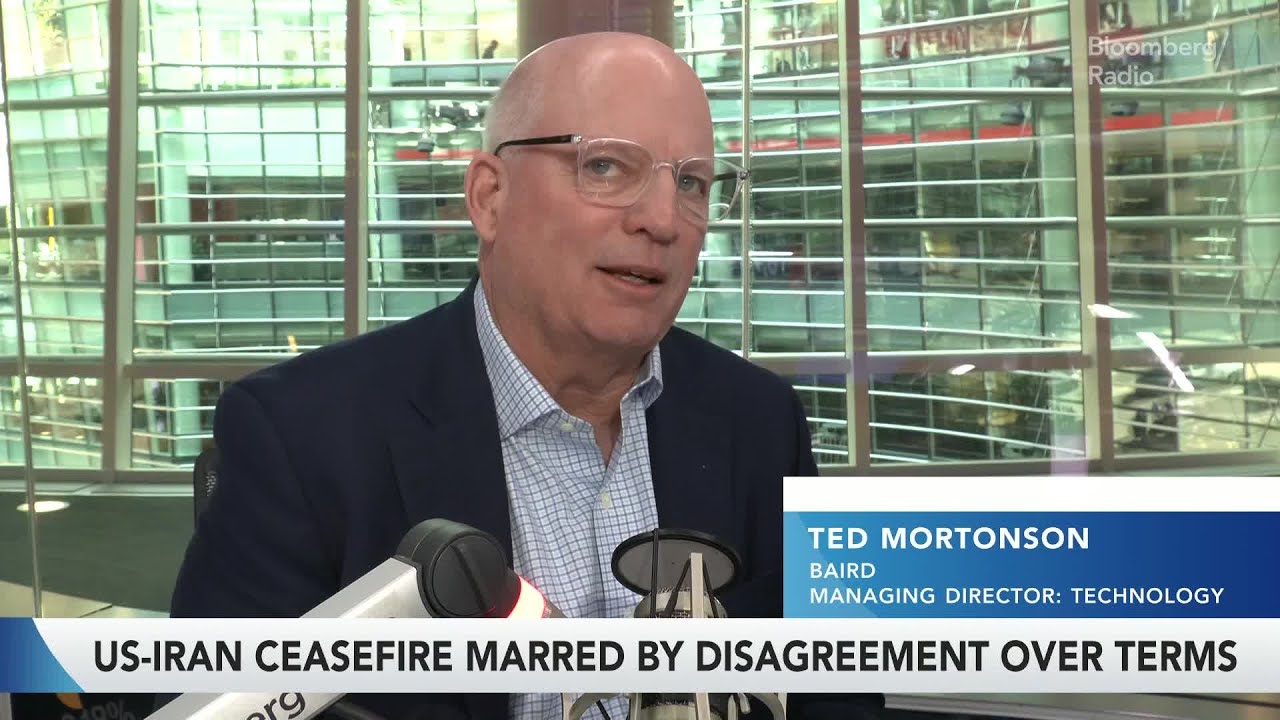
In a recent interview on Bloomberg Radio, Ted Mortonson, Managing Director of Technology at Baird, discussed the profound impact of AI agents on the software development industry. Mortonson, a seasoned technology analyst with extensive experience in the sector, highlighted how AI is not just an evolutionary step but a revolutionary force that will reshape how software is created and deployed.

Mortonson, who has witnessed numerous technological shifts throughout his career, drew parallels between the current AI boom and past transformative periods in technology. He emphasized that the current wave of AI is fundamentally different, representing a major inflection point rather than a gradual progression.
AI's Role in Software Development

Mortonson explained that AI agents are beginning to automate complex tasks previously requiring human intervention. He stated, "You can now do things with one or two people where you used to do with 20." This increased efficiency is driven by AI's ability to handle intricate coding, testing, and deployment processes. He further elaborated on the potential for AI to augment human capabilities, allowing developers to focus on higher-level strategic tasks.

Related startups

The full discussion can be found on Bloomberg Podcast's YouTube channel.

We're Seeing 'First Innings of AI' Being Put into Defense, Says Ted Mortonson - Bloomberg Podcast
We're Seeing 'First Innings of AI' Being Put into Defense, Says Ted Mortonson — from Bloomberg Podcast

The discussion touched upon the rapid advancement of AI, noting that it's not merely an evolution but a revolution. Mortonson compared the current AI surge to previous technological revolutions, such as the internet, suggesting that AI's impact will be even more far-reaching and transformative.

AI in the Military Context

The conversation also touched upon the application of AI in military operations. Mortonson mentioned that AI has been implemented in warfare with surprising speed and sophistication. He cited examples of AI being used in precision bombing and infrastructure targeting, noting that "AI is actually being implemented in warfare." He also referenced the significant human toll in such applications, highlighting the ethical considerations that arise with the use of AI in conflict zones. The extended deployments and the mental and physical toll on personnel were also discussed, with Mortonson observing that "we have a carrier problem, we have a logistical problem on having two carriers in market during a major conflict."

AI and the Workforce Transformation

Mortonson emphasized the significant implications of AI for the workforce. He stated, "I think your listeners or your readers are going to see massive productivity gains here." He believes that AI adoption will lead to a structural shift in how work is done, potentially displacing some jobs while creating new opportunities in others. The ability to perform tasks that previously required large teams with just a few individuals is a testament to AI's efficiency. He also drew upon his experience in the Navy, noting that even in demanding environments like military deployments, AI's potential for optimization is clear.

He contrasted the current AI revolution with previous technological shifts, such as the internet, suggesting that AI's impact is more profound. Mortonson highlighted the rapid pace of AI development, stating that "this is not the cycle that we saw in the late 90s or early 2000s." He believes that AI is fundamentally changing the nature of work and the skills required to succeed in the modern economy.

The Investor Perspective

From an investor's standpoint, Mortonson sees AI as a critical area of focus. He noted that companies are increasingly looking to AI to drive efficiency and gain a competitive edge. He also touched upon the challenges of scaling AI adoption, particularly in hardware-intensive fields like the Navy, where logistical constraints can limit the pace of integration. However, he remains optimistic about the potential for AI to drive significant growth and innovation across various industries.

© 2026 StartupHub.ai. All rights reserved. Do not enter, scrape, copy, reproduce, or republish this article in whole or in part. Use as input to AI training, fine-tuning, retrieval-augmented generation, or any machine-learning system is prohibited without written license. Substantially-similar derivative works will be pursued to the fullest extent of applicable copyright, database, and computer-misuse laws. See our terms.