
Agent to Agent Network Effects Hit Privacy Wall

Jean-Denis Greze reframes agent-to-agent as search for the perfect context window and details five privacy-constrained patterns plus their poisoning risks.

S
StartupHub.ai Staff
3 min read
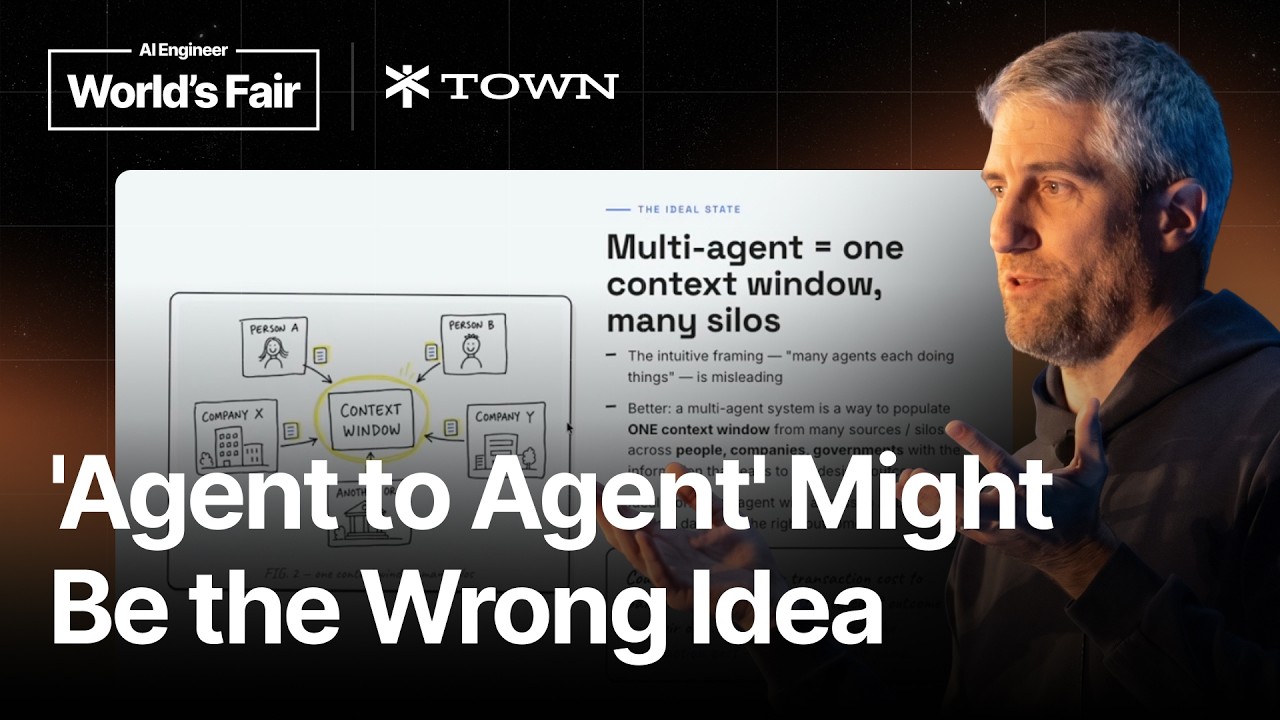
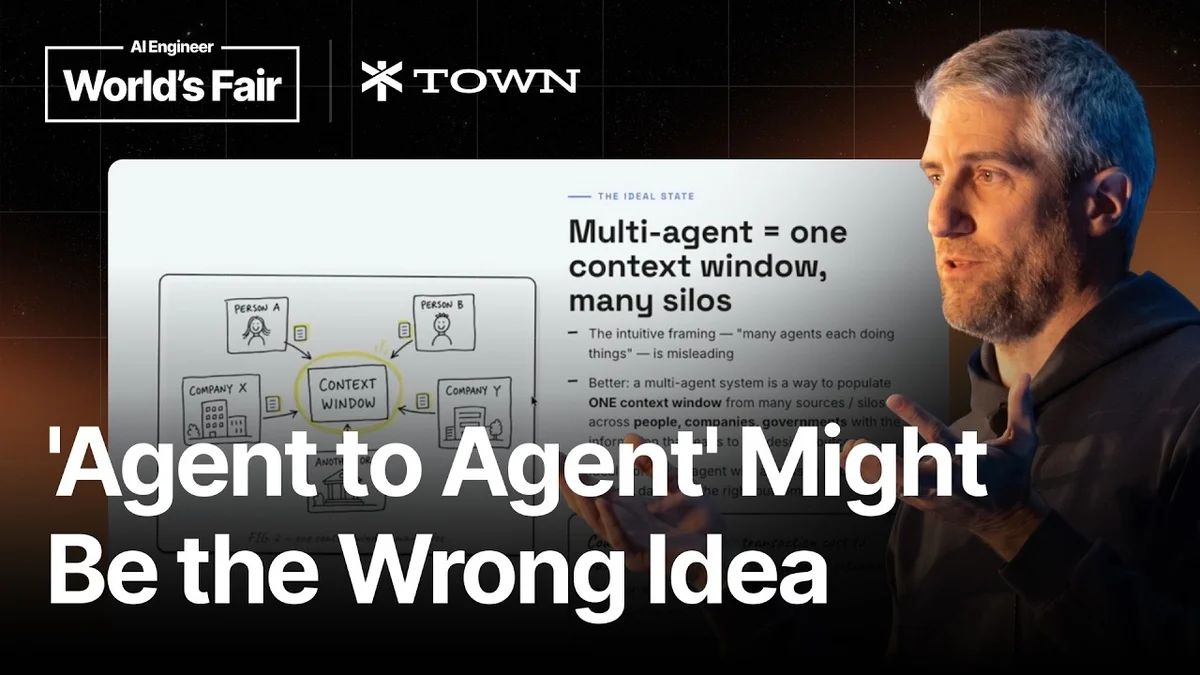
Diagram of agents searching across private silos to fill a context window
Jean-Denis Greze at AI Engineer on why agent-to-agent is a privacy-constrained search problem· AI Engineer
Contents(3)

In an AI Engineer talk, Jean-Denis Greze demoed five designs for agent to agent network effects that try to pull Gmail, Slack and wiki data into one context window without granting global access. He showed the failure needs no remote exploit, only local policy or prompt flaws.

StartupHub data

Companies working on this

Profiles of the companies named in this story, with funding and a one-liner from our database.
Agent
Agent is building an AI-powered platform to automate complex workflows and tasks for businesses.
Anthropic
Private / $100B+ est
Anthropic is an AI safety and research company building reliable, interpretable, and steerable AI systems, best known for the Claude family of models.
Agent to Agent Network Effects Hit Privacy Wall - AI Engineer
Agent to Agent Network Effects Hit Privacy Wall, from AI Engineer

Greze is CTO at Town and former CTO at Plaid, now building assistants for nontechnical users where agents have to work across personal and company silos.

How the attack actually works

Think of the context window as a courtroom table where only admitted evidence can be placed before the judge rules. Agents are just trying to get the right evidence on the table.

The five approaches are a shared agent inside a trust boundary, a scoring tool that hides raw emails, an auto-updated shared wiki or skill store, humans as manual conduits, and a black box router that scans all silos then asks only the relevant owner for approval.

The black box variant fails if policy is vague or prompt injection slips a malicious instruction into a silo, because a single poisoned note can be pulled into the shared space and then treated as truth.

What is broken and why it matters

Companies want network effects without creating a god agent that sees everything, so they're choosing tools and wikis that trade raw access for derived signals and that improve as models get better at enforcing policy.

Greze bets the near term winner is a sweeper AI that watches private silos and pushes low sensitivity facts to shared stores, with explicit human approval for finance and HR data and full logging for audit by security teams.

Anthropic already normalized auto mode for code approvals, and Greze sees the same path for privacy where more disclosures become automatic as policy encoding improves, though cross company sharing remains the hard unsolved beachhead.

No vendor here ships a verifiable black box today, and without reversible logs plus injection defenses the network effect becomes a disclosure liability.

© 2026 StartupHub.ai. All rights reserved. You may not republish this article in full without a license. Search engines and AI research tools may crawl and summarize for reference. Bulk reproduction or model training requires a license. See our terms.
S

Written by

StartupHub.ai Staff

Editorial team

The staff writers of StartupHub.ai, ranging from investment analysts to avid AI tool users, early adopters and critical enthusiasts. Backgrounds span engineering, business and the arts. We hold every piece to rigorous standards of research and review.