

Coding Agents Security Failed 70 Times, Same Bugs

Palo Alto Networks researchers pwned 10 coding agents 70+ times with the same command and file-system bugs, and even OS sandboxes fell to symlink tricks.

7 min read
Researcher demo showing coding agent executing injected command without approval
Black Hat Asia 2026 Bad Vibes talk demonstrated identical bypasses across 10 coding agents.· BlackHat
Visual TL;DR
Symlinks collapse sandboxesEffect
File system path tricks escape OS-level isolation completely
Agents self-policeDriver
Security still relies on the agent to restrict its own capabilities
From the article 9+ mentionsMost agents gate commands with a pre-approved list and ask for approval only when a command is not on it.
Prompt injection to RCEContext
Hidden prompts in files trigger same commands as direct user input
From the article 2 mentionsWhatever the agent will do for a user prompt it will also do for an injected prompt hidden in a file or issue, so the chain starts with injection and ends with RCE.
Allow lists bypassedDriver
Pre-approved command checks fail because injected prompts mimic approved usage
70+ flaws across 10 agentsOutcome
Palo Alto researchers pwned every tested coding agent identically
From the articleMore than 70 flaws across 10 coding agents fell to the same handful of bugs, according to BlackHat Asia 2026 talk Bad Vibes, and coding agents security still trusts the agent to police itself.
Agents self-policeDriver
Security still relies on the agent to restrict its own capabilities
From the article 9+ mentionsMost agents gate commands with a pre-approved list and ask for approval only when a command is not on it.
No novel exploits neededEffect
Same bugs work across every vendor without custom attack code
From the articleTwo vulnerability researchers from Palo Alto Networks (NASDAQ:PANW), Nila Shkenazi and Philip Zuckerman, walked the full kill chain from chat prompt to host takeover without a novel exploit.
Prompt injection to RCEContext
Hidden prompts in files trigger same commands as direct user input
From the article 2 mentionsWhatever the agent will do for a user prompt it will also do for an injected prompt hidden in a file or issue, so the chain starts with injection and ends with RCE.
Terminal tools execute commandsCore
From the article 2 mentionsThat assumption held in every agent they tested, because terminal tools are designed to run user supplied commands.
Allow lists bypassedDriver
Pre-approved command checks fail because injected prompts mimic approved usage
Symlinks collapse sandboxesEffect
File system path tricks escape OS-level isolation completely
70+ flaws across 10 agentsOutcome
Palo Alto researchers pwned every tested coding agent identically
From the articleMore than 70 flaws across 10 coding agents fell to the same handful of bugs, according to BlackHat Asia 2026 talk Bad Vibes, and coding agents security still trusts the agent to police itself.
Host takeover achievedOutcome
Kill chain completes from chat window to full machine control
From the articleTwo vulnerability researchers from Palo Alto Networks (NASDAQ:PANW), Nila Shkenazi and Philip Zuckerman, walked the full kill chain from chat prompt to host takeover without a novel exploit.
Contents(6)

More than 70 flaws across 10 coding agents fell to the same handful of bugs, according to BlackHat Asia 2026 talk Bad Vibes, and coding agents security still trusts the agent to police itself.

Coding Agents Security Failed 70 Times, Same Bugs - BlackHat
Coding Agents Security Failed 70 Times, Same Bugs, from BlackHat

Two vulnerability researchers from Palo Alto Networks (NASDAQ:PANW), Nila Shkenazi and Philip Zuckerman, walked the full kill chain from chat prompt to host takeover without a novel exploit.

How does prompt injection become remote code execution?

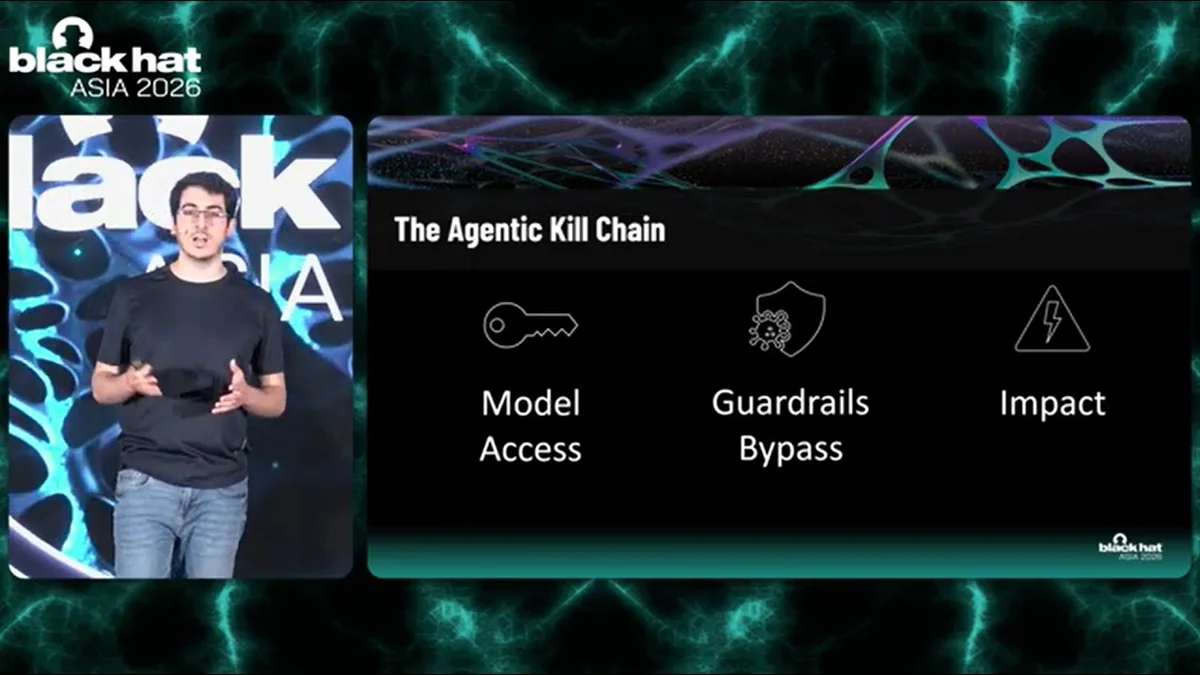
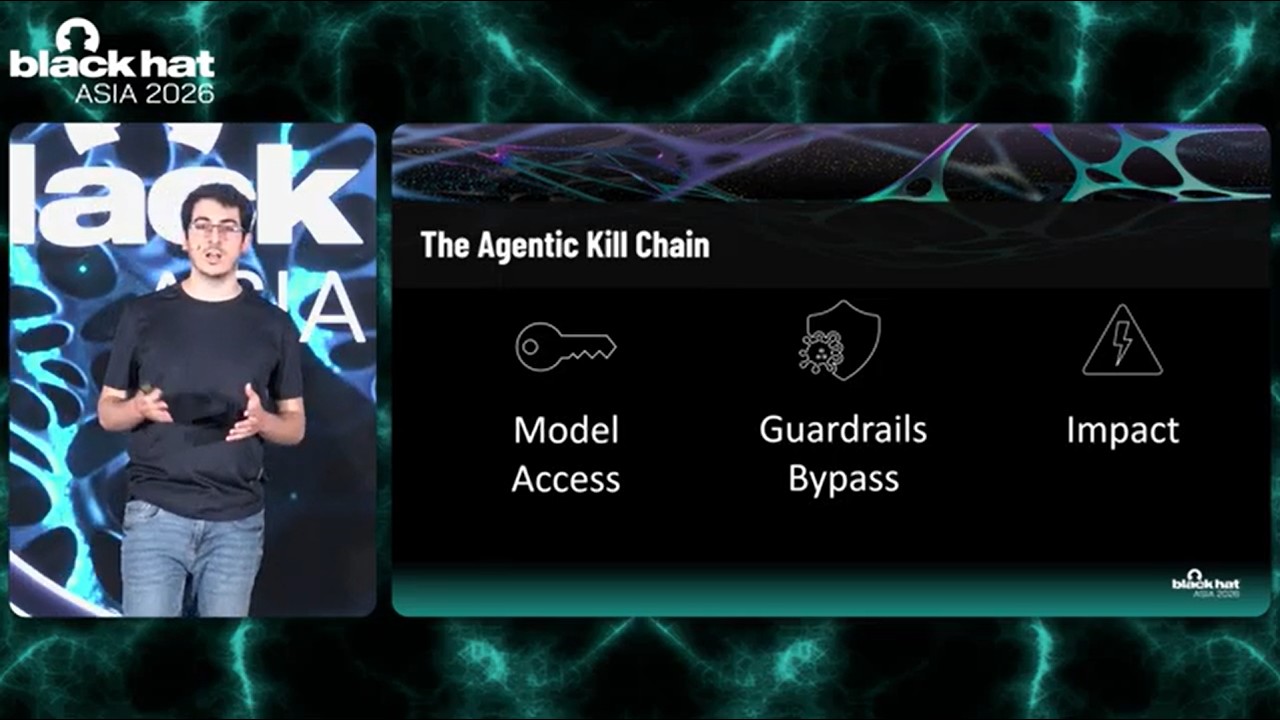
Their model is simple: model access plus guardrail bypass plus impact equals compromise, and they tested impact directly through the chat window.

Whatever the agent will do for a user prompt it will also do for an injected prompt hidden in a file or issue, so the chain starts with injection and ends with RCE.

That assumption held in every agent they tested, because terminal tools are designed to run user supplied commands.

Why did allow lists and command checks fail everywhere?

Most agents gate commands with a pre-approved list and ask for approval only when a command is not on it.

Compound commands broke the gate, because if dir was allowed but calc was not, dir and calc still ran in several agents.

Alphabet Inc. (NASDAQ:GOOGL) Gemini CLI tried to fix this by parsing PowerShell into an AST and checking command nodes, but a bug forced it to launch cmd instead and reduced the check to prefix matching.

How did file system checks fail the same way?

Agents must write inside the workspace, but that workspace contains sensitive configs like MCP server definitions, permission files, and git config that control future execution.

Path checks used exact suffix matching, so MCP.json and MCP.JSON were treated as different on case-insensitive Windows and macOS.

NTFS quirks made it worse, with short names like agent~1 and alternate data streams like file:$DATA letting the agent write to .cursor or .claude folders without triggering the deny.

How did the same tricks collapse the sandboxes?

Big vendors moved enforcement to the OS with namespace mounts on Linux and Seatbelt policies on macOS that deny writes to sensitive paths and allow writes to the workspace.

Those policies still failed on semantics, because writing to whatever.json then moving it to agent settings.json never matched a deny rule on the target path.

Symlink handling produced two more escapes, one that poisoned the next policy by linking temp to root and one classic time of check to time of use race where link flipped between a real file and a symlink outside the workspace.

Why does this repeat across every vendor?

Command line parsing cannot enumerate malicious behavior reliably, a lesson endpoint detection teams learned years ago, and file system semantics differ by OS in ways model-level prompts never see.

The same week, separate Black Hat USA research showed Gemini CLI and Claude Code flaws where harness code marked a value safe and later code executed it with higher privilege, leading to CVE-2026-12537 and CVE-2026-54316.

Palo Alto Networks filed 26 reports on command injection with 7 CVEs, 43 on file system with 9 CVEs, and 13 on sandbox escapes, totaling more than 81 reports and about 18 CVEs to date.

What should founders and teams do now?

Do not count CVEs to pick the most secure agent, because disclosure speed varies and some vendors fixed silently without CVEs while others argue prompt injection to RCE is not a boundary.

Run agents in an ephemeral container or VM you can nuke after each session, and treat WSL as no isolation since it shares the Windows user filesystem and can write to startup folders.

The talk closed with a blunt trade off: vendors are choosing between autonomy and endless approval prompts, and until OS enforcement covers file tools as well as terminals, that choice stays with you.

© 2026 StartupHub.ai. All rights reserved. Do not enter, scrape, copy, reproduce, or republish this article in whole or in part. Use as input to AI training, fine-tuning, retrieval-augmented generation, or any machine-learning system is prohibited without written license. Substantially-similar derivative works will be pursued to the fullest extent of applicable copyright, database, and computer-misuse laws. See our terms.