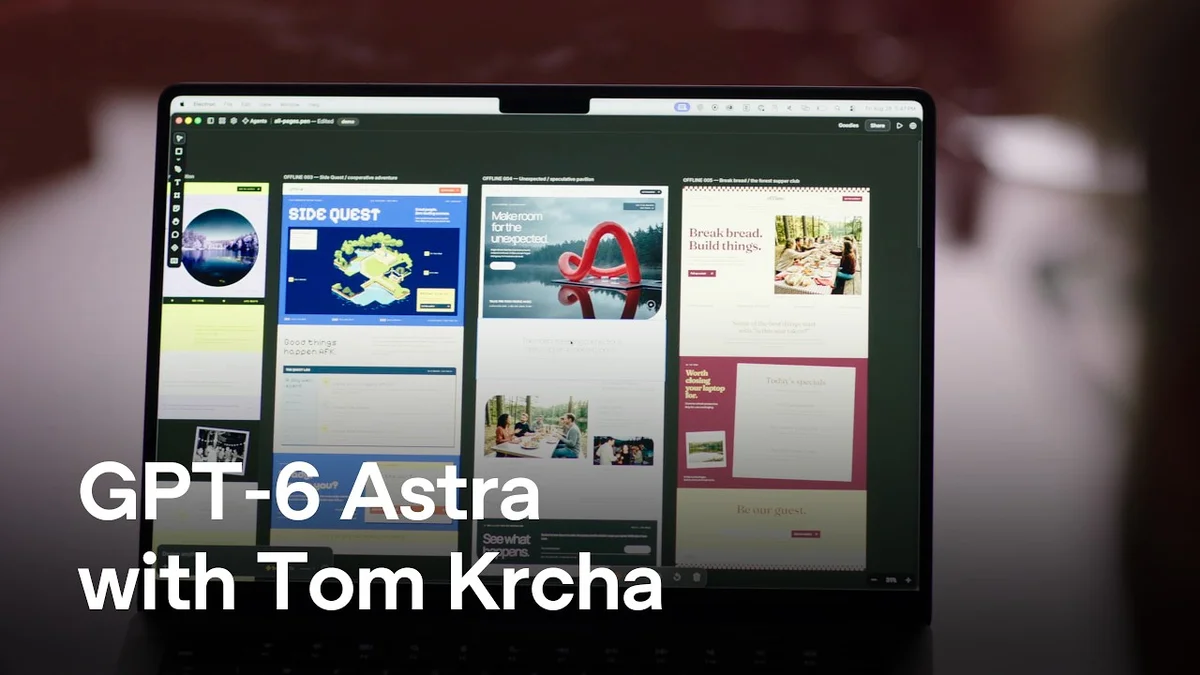
GPT-6 Astra is not pitched as a chatbot that draws pictures in the Tom Krcha OpenAI demo. It is pitched as a design engine that ships editable systems.
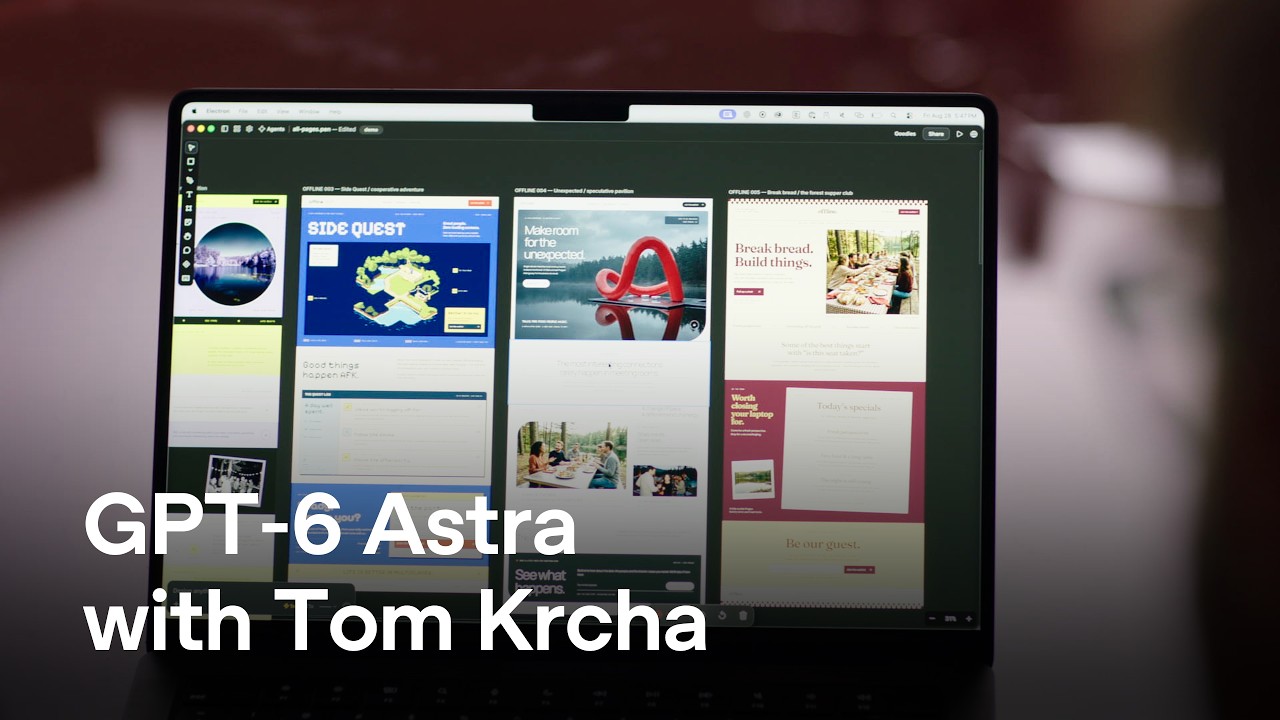
Krcha, a designer known for Pencil and earlier work on Adobe XD and Flash, shows three builds in OpenAI Youtube video. A logo designer that is fully parametric, a website for an offsite gathering that iterates coherence across furniture and clothing, and a film lab that applies shaders as adjustable layers on a real photo.
The full discussion can be found on OpenAI Youtube's YouTube channel.
No attack is demoed. No vulnerability or exploit is shown. Access is local prompt access to Astra itself, not remote code execution against a third party system.
How the demo actually works
The flow is prompt, generate, then tweak. Ask for a logo system and you get clickable variants where every property is a slider. Ask for a website and the model keeps the story consistent, wood table for the woods, steel for modern, matching pattern on cloth and clothes for rustic.
Think of it like briefing a technical designer who can also code. Krcha said he likely could not write the photo shaders himself without an engineer. Astra generates the shader as code on top of an existing image, and exposes its parameters for live play.
This is different from one-shot image generation. The artifact stays parametric and editable, so a designer can dream big and hand a direction to engineering to polish and ship.
Why this matters and what is not fixed
For builders the shift is from asset to system. Parametric output shortens the loop between idea and shippable prototype, and Krcha points to the next frontier as long-running goals where you give Astra inspiration and let it cook over a weekend.
For security the context is not in this clip. Astra is the same model family OpenAI said in August it cannot rule out for critical cybersecurity capabilities, triggering stricter controls under its Preparedness Framework and a pause on some internal work, as noted in our coverage of that flag.
That review cited agentic coding and autonomous vulnerability discovery. The design demo does not mitigate that risk and does not show safeguards, sandboxing or refusal behavior.
Teams evaluating GPT-6 Astra for creative workflows should treat it as powerful code-generating automation with dual use. Keep it in isolated environments, audit generated shaders and site code before production, and watch for OpenAI's updated controls and broader release gating.
Parametric is the tell. Astra is not selling renders, it is selling editable systems that keep running.