
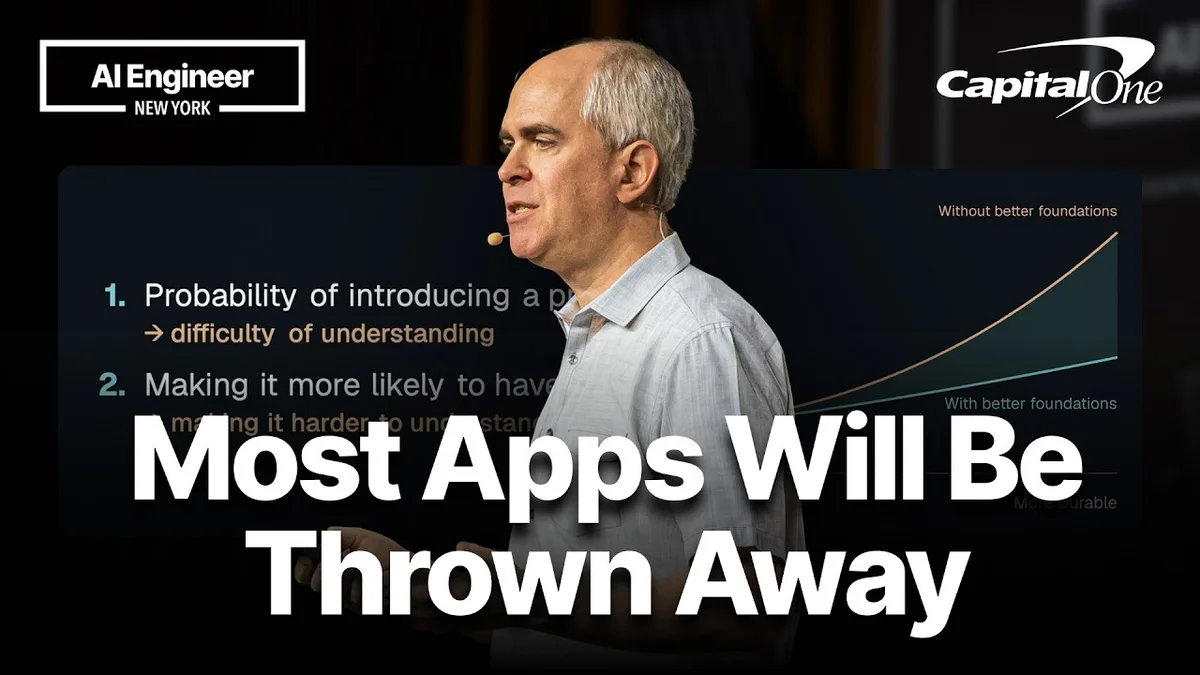
Max Kanat-Alexander of Capital One tied code quality to disposability on AI Engineer. He set a four factor test to place any system on that spectrum.
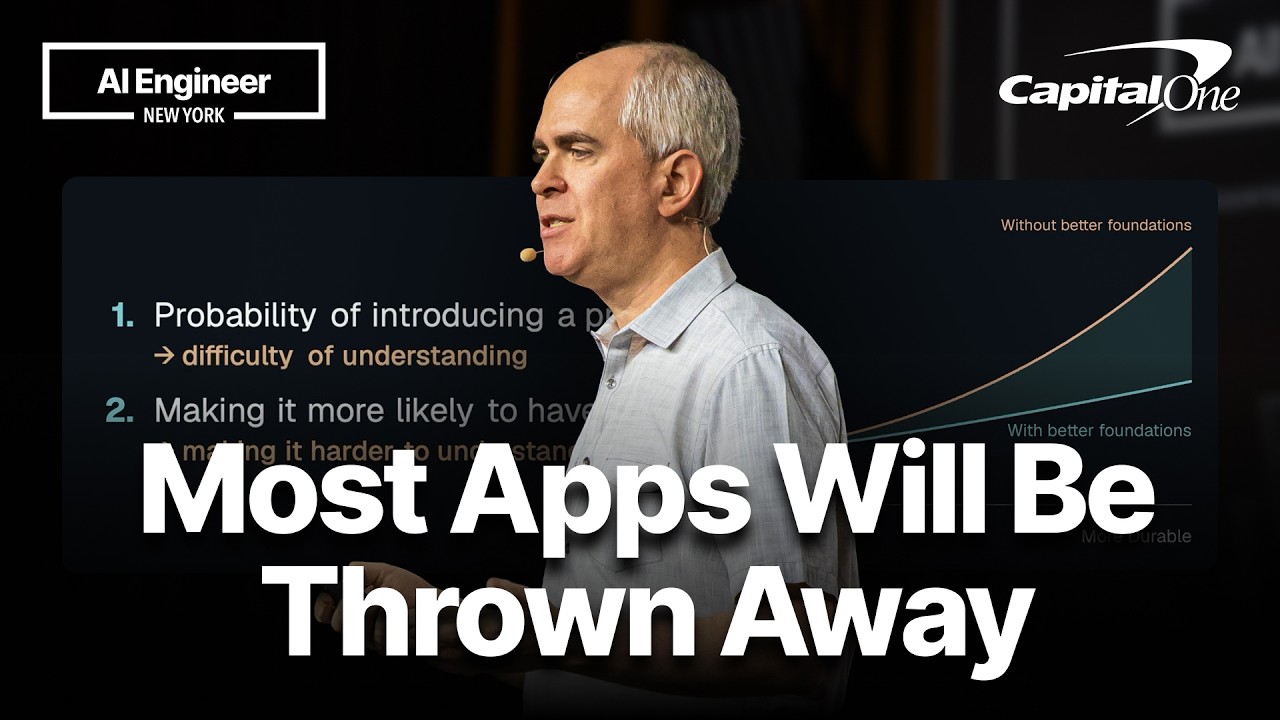
Before that line, he said all quality work serves only two goals: understanding behavior and safely changing it.
Every change carries two risks, he said: it can create a problem and it can make future changes harder. Those risks compound nonlinearly until every change causes trouble, a pattern he linked to 100 million line mainframe systems. "Code quality doesn't matter. Nobody cares," he said of truly disposable software.
Disposable means low failure consequences, replacement in hours or days, few dependents, and near zero maintenance. Durable means the opposite: years of life, millions of users, catastrophic failure costs, and heavy maintenance.
Gartner already lists disposable applications among its 2027 technology trends, defined as purpose built software designed to be intentionally retired when its purpose ends, according to ZDNET. Kanat-Alexander said teams can push systems toward disposability with isolated environments, enforced independence from production callers, redundant durable backups, and narrow scope.
He also argued for cutting the cost of rigor through standardization, inward flow tooling that runs automatically, easy deterministic tests with in memory fakes, and maximum strictness on linters. Cheaper rigor makes it safer to misjudge a system and harden it later.
He said durable software will still grow in absolute terms as AI coding tools make it easier to build. The more visible shift is volume: disposable systems become the most numerous kind, a category Gartner expects to track through 2027.


