

US Trade Deficit Widens as SoftBank and AI Chipmakers Shift Spending

The US trade deficit widened significantly in May, while SoftBank's shares fell amid concerns over OpenAI's IPO, and chipmakers like Samsung and SK Hynix plan massive AI investments.

3 min read
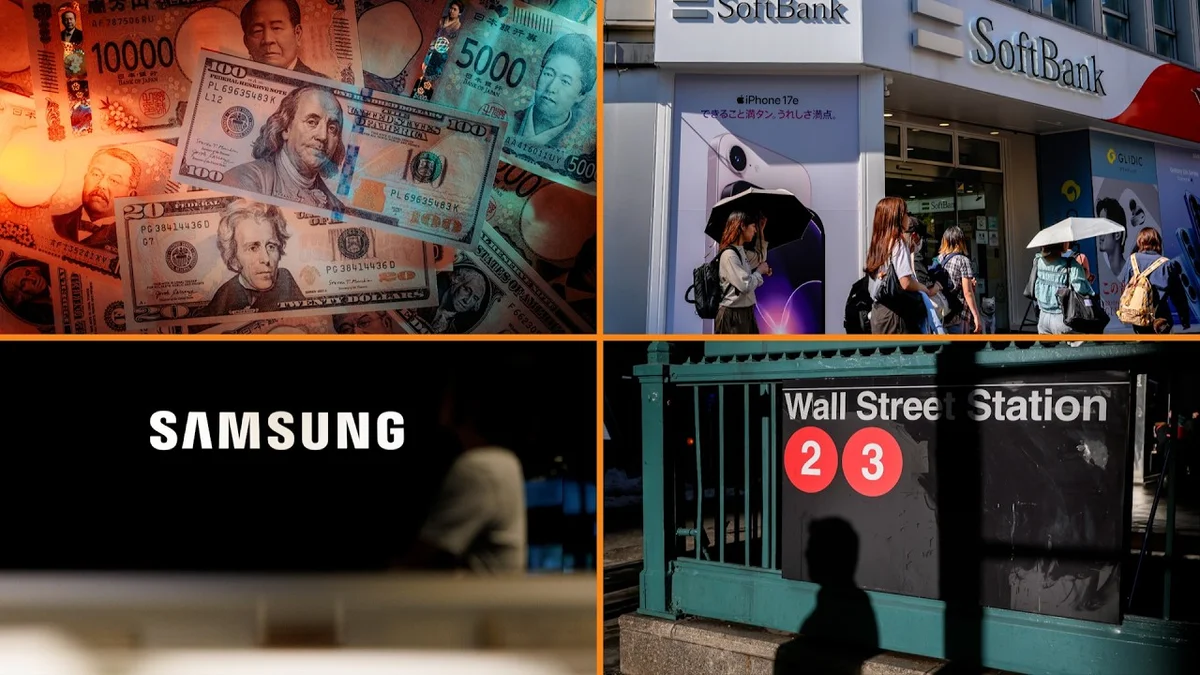
A collage of US dollar bills and Japanese yen notes, representing the US trade deficit and global economic shifts.
Bloomberg Podcast

The US trade deficit experienced a significant widening in May, reaching its highest point in over a year. This economic shift coincides with notable movements in the technology sector, particularly concerning artificial intelligence. SoftBank (TYO:9984), a major investor in AI, saw its stock decline amidst speculation about a delayed initial public offering (IPO) for OpenAI. Simultaneously, leading memory chip manufacturers are preparing to commit hundreds of billions of dollars to capitalize on the surging demand within the AI market.

US Trade Deficit Hits Yearly High

The US merchandise trade deficit expanded notably in May, reaching $105.8 billion. This figure represents a 27.4% increase from the previous month's shortfall in goods traded. The Commerce Department's data indicates that this is the largest trade deficit recorded in more than a year. Economists surveyed by Bloomberg had anticipated a smaller deficit of $85 billion, making the actual figure a significant miss and signaling underlying trade weakness.

Related startups

The widening deficit was primarily driven by a decrease in exports and a rise in imports. This imbalance suggests a potential softening in global demand for US goods while domestic consumption of foreign products remains robust. Such a trend can have implications for the dollar's strength and overall economic stability.

The full discussion can be found on Bloomberg Podcast's YouTube channel.
US Trade Deficit Widens as SoftBank and AI Chipmakers Shift Spending - Bloomberg Podcast
US Trade Deficit Widens as SoftBank and AI Chipmakers Shift Spending, from Bloomberg Podcast

SoftBank Shares Fall Amid OpenAI IPO Concerns

Shares of SoftBank (TYO:9984) experienced a significant drop, marking its largest decline since August 2024. The downturn was attributed to concerns that OpenAI, the developer of ChatGPT and a key SoftBank investment, might postpone its highly anticipated IPO until next year. A delay in OpenAI's public listing would inevitably slow the returns for its early backers, including SoftBank.

SoftBank's investment in OpenAI is slated to reach approximately $65 billion by October. The prospect of a prolonged waiting period for an IPO impacts investor sentiment, leading to the stock's slump. As a prominent player in venture capital and technology investments, SoftBank's performance is closely tied to the fortunes of its portfolio companies, particularly those in high-growth sectors like AI.

Chipmakers Plan Billions in AI Investments

The artificial intelligence market continues its rapid expansion, prompting the world's leading memory chipmakers to announce massive spending plans. South Korean media reports indicate that both Samsung (KRX:005930) and SK Hynix (KRX:000660) are preparing to unveil hundreds of billions of dollars in new investments. These significant capital injections are strategically aimed at bolstering their capabilities and market share in the booming AI sector.

The investments are expected to target areas such as advanced memory production, research and development for AI-specific chips, and expansion of manufacturing capacities. As AI models become more complex and data-intensive, the demand for high-performance memory and processing units continues to skyrocket. These planned investments underscore the fierce competition and immense potential that chipmakers see in catering to the foundational hardware needs of the AI revolution.

© 2026 StartupHub.ai. All rights reserved. Do not enter, scrape, copy, reproduce, or republish this article in whole or in part. Use as input to AI training, fine-tuning, retrieval-augmented generation, or any machine-learning system is prohibited without written license. Substantially-similar derivative works will be pursued to the fullest extent of applicable copyright, database, and computer-misuse laws. See our terms.