Something fundamental shifted in the past eighteen months. The coding tool category stopped being about autocomplete and became about autonomy. The question engineers now ask is not "will this suggest the next line?" but "can this handle the next ticket?" That reframing changes what belongs in a buyer's shortlist and what does not.
The old generation of tools, the ones that surfaced completions as you typed, had a ceiling. They accelerated the act of writing code but left the surrounding work untouched: planning, debugging, security review, deployment, observability. The new generation treats the software development lifecycle as the product surface. Agents plan tasks, write tests, patch vulnerabilities, and push to production. The human role shifts from typist to reviewer.
What makes comparison hard is that the category has fragmented into distinct layers. A tool like Cursor sits at the editing layer. Devin operates at the task layer. Snyk and SonarQube sit at the security and quality layer. LangSmith sits at the observability layer. Buyers who compare them directly are comparing different things. The twenty tools below are organized by overall score, but the more useful frame is which layer of your stack each one addresses.

What this list reveals, when you step back from individual scores, is a category that has splintered into at least five distinct layers: code writing and editing, task-level autonomy, security and quality gates, observability and evaluation, and deployment infrastructure. Vendors who appeared to compete two years ago, say Cursor and LangSmith, are now solving different problems for different buyers on different parts of the same team. The consolidation phase that typically follows a Cambrian explosion has not arrived yet, and there is a credible argument it will be slower here than in prior software waves because each layer requires genuinely different technical depth.
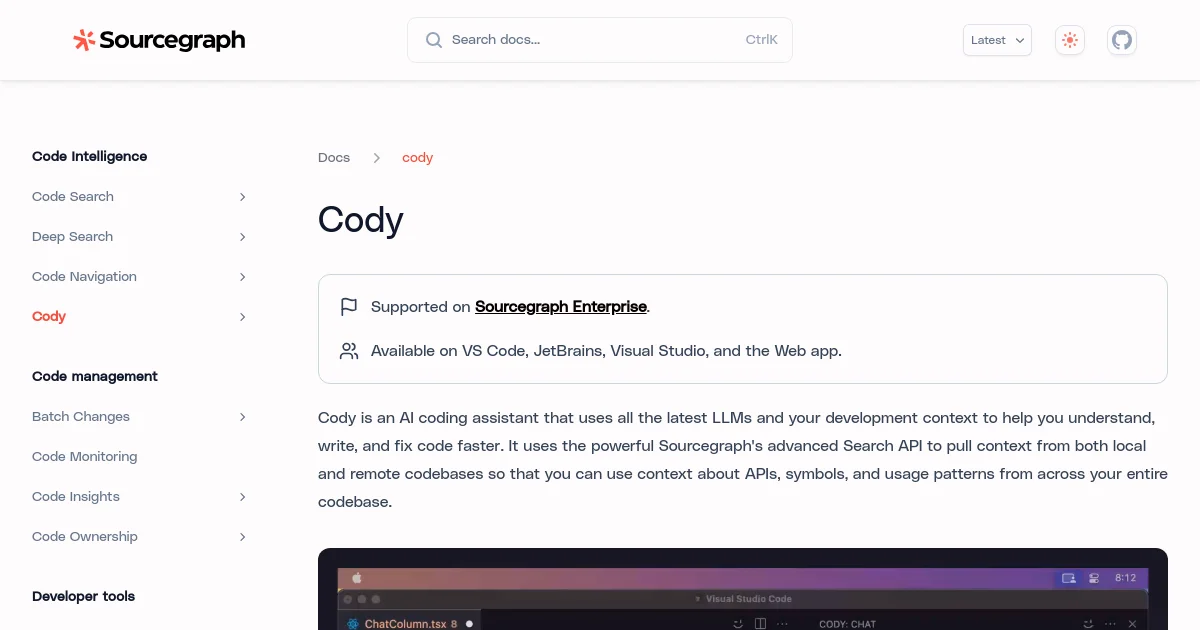
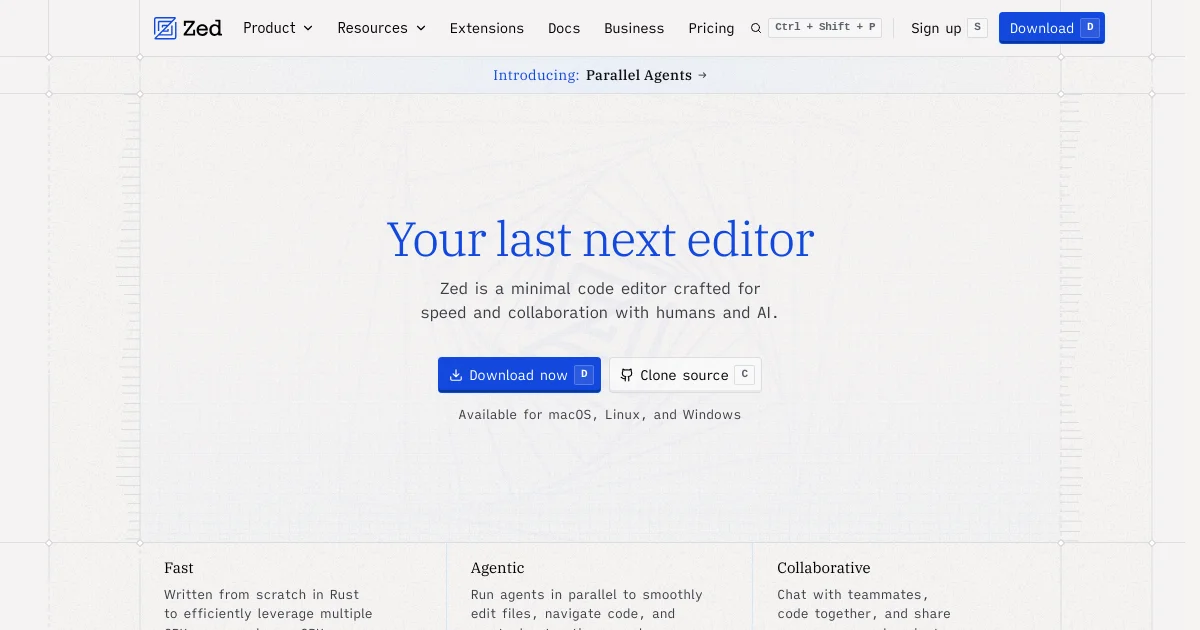
The most contested layer, by a wide margin, is code writing and editing. Cursor, Zed, Sourcegraph's Cody, poolside, and the browser-based platforms all occupy overlapping territory in the editor, and none has yet established the kind of workflow lock-in that made previous developer tools sticky. The next competitive inflection is likely to come from the integration between layers rather than within any single one. The team that solves the loop from agent-written code through security scanning, quality gating, observability, and back to the agent as structured feedback will have built something that is genuinely hard to displace. That loop is currently being stitched together manually by engineering teams, and the vendor who closes it automatically will define what the category looks like in 2028.
Frequently Asked Questions
What is agentic coding?
Agentic coding refers to software development workflows where autonomous agents handle multi-step tasks, such as writing a feature, running tests, fixing the resulting failures, and opening a pull request, without requiring a human prompt at each step. The agent operates against a goal rather than a single instruction, using tools like code execution, file editing, and terminal access to complete the work.
What is the best AI code editor in 2026?
Cursor leads on codebase-aware editing for professional engineers working in existing repositories, while Lovable and Replit serve users who need a deployed application rather than an IDE workflow. Zed is worth serious consideration for teams that prioritize editor performance and want simultaneous human-agent editing. The right answer depends on whether your priority is editing speed, autonomy, or deployment simplicity.
How do AI coding agents work?
Coding agents combine a language model with a set of tools: file read and write, terminal execution, web search, and API calls. The model receives a goal, plans a sequence of steps, executes each step using the available tools, observes the result, and adjusts the plan accordingly. Human checkpoints can be inserted at any stage, and the agent loops until the goal is met or it reaches a defined stopping condition.