
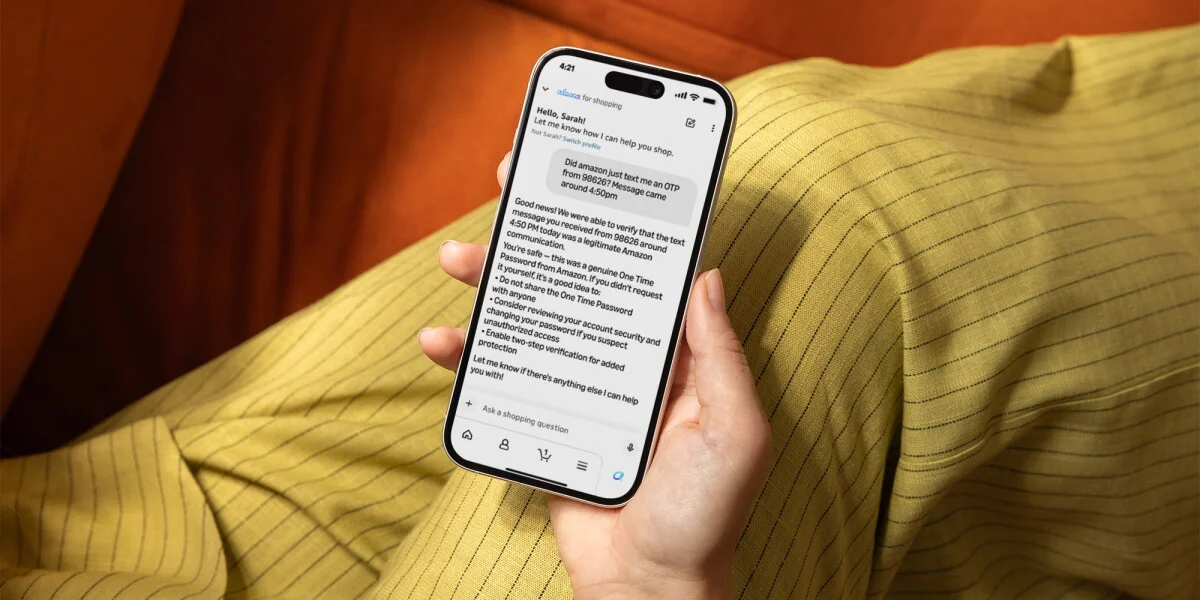
Amazon News says Amazon launched the Alexa for Shopping verification tool in the US to instantly check whether any text, email, call or WhatsApp message actually came from Amazon.
The move answers 360,000 annual contacts from customers asking if a message from Amazon is real.
Scammers don't need access to your device. They rely entirely on remote impersonation at scale.
How it actually works
Ask Alexa what you received, when it arrived and what it claimed.
The system matches sender, content, timing and formatting against Amazon's catalog of billions of outbound messages.
Think of it as a receipt check, not a spam filter. Only Amazon can say with certainty what Amazon sent.
Why it matters, and what it doesn't fix
Most scam detectors guess from URLs or language. Amazon confirms from its own sending history and auto-reports every submission to enforcement to map tactics and take down actors.
It returns only three answers: confirmed as Amazon, not from Amazon, or unable to verify, each with next steps like checking orders in the app and tips for passkeys and two-step verification.
The gap is coverage. Alexa verification is US-only for now, so global users must use [email protected] or the customer service verification form. Vague queries still fail without enough detail to resubmit.
If scammers win when verification is hard, Amazon just made verification conversational.


