

The Dawn of AI Agents: Building the First

Experts discuss the evolution of AI agents, from early experimental tools to indispensable collaborators in software engineering.

3 min read
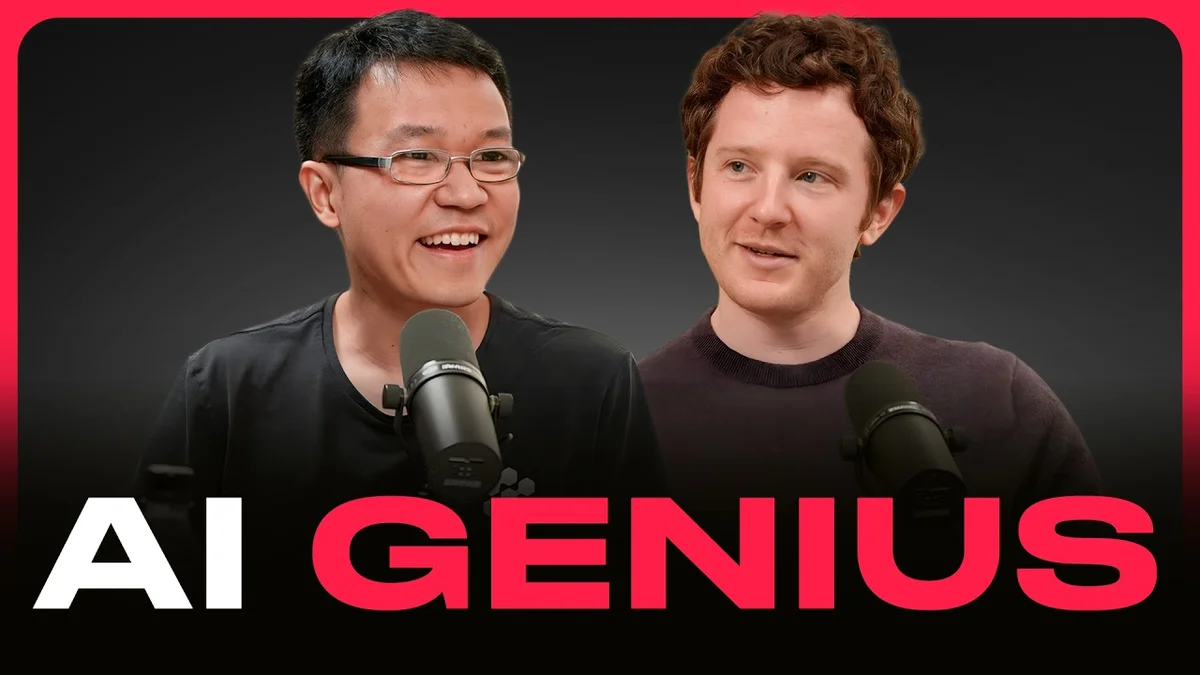
Two men sitting at a round table with microphones between them, discussing AI.
A discussion on the development and future of AI agents.· Joe Lonsdale

The concept of artificial intelligence agents has rapidly moved from theoretical discussions to tangible applications, fundamentally altering how software is built and maintained. In a recent discussion, experts explored the evolution and impact of these agents, highlighting their journey from nascent, experimental tools to sophisticated collaborators in the software development lifecycle.

The Genesis of AI Agents

When the first AI agents were launched, they represented a significant leap into the unknown. The early stages were marked by a focus on pushing the boundaries of what was technically feasible. The technology was described as being "at the edge of possible" for performing practical tasks, with a strong emphasis on the agent's ability to act as a primary contributor to software engineering endeavors.

Related startups

However, these early iterations were also acknowledged to be less reliable and more prone to errors. The infrastructure and codebases supporting them were less mature, necessitating a greater degree of human intervention and integration. This meant that while the potential was clear, the practical application required significant human guidance and a more intricate connection to the existing software architecture.

The full discussion can be found on Joe Lonsdale's YouTube channel.
How They Built the First AI Agent - Joe Lonsdale
How They Built the First AI Agent, from Joe Lonsdale

From Early Stages to Production Readiness

The progression of AI agents has been rapid, with significant improvements in their robustness and autonomy. The video highlights a critical milestone reached by summer 2024, when AI agents became capable of acting as the primary contributor to their own codebase. This signifies a shift from agents being mere assistants to becoming self-sufficient entities within the development process.

The discussion touched upon the scale of this transformation, noting that for many companies, especially those with vast and complex codebases, the adoption of AI agents is not just beneficial but increasingly essential. The ability for an agent to manage and optimize code across thousands of services, as seen in large enterprises, represents a substantial advancement in engineering efficiency.

The Impact of Software Abundance

The concept of "software abundance" was explored, suggesting that the sheer volume of existing software and the complexity of modern systems necessitate new approaches to development. The traditional model of human engineers meticulously writing and debugging code is being augmented, and in some cases supplanted, by AI agents.

The speakers emphasized that the impact of this shift is profound. For companies with millions of lines of code and intricate interdependencies, AI agents offer a way to manage complexity and accelerate development cycles. The ability to generate code, identify issues, and even self-correct errors allows human engineers to focus on higher-level strategic tasks and creative problem-solving.

The Future of Engineering with AI Agents

The conversation underscored a fundamental change in the role of the software engineer. Instead of focusing on the granular details of code writing, engineers are increasingly tasked with defining problems, setting objectives, and guiding the AI agents. This shift requires a new skill set, emphasizing strategic thinking, prompt engineering, and the ability to validate and refine AI-generated outputs.

The video suggests that as AI agents become more sophisticated, they will not only automate routine tasks but also contribute to more complex architectural decisions and optimizations. This evolution promises to democratize software development, enabling individuals and smaller teams to tackle projects of greater scale and complexity than ever before.

© 2026 StartupHub.ai. All rights reserved. Do not enter, scrape, copy, reproduce, or republish this article in whole or in part. Use as input to AI training, fine-tuning, retrieval-augmented generation, or any machine-learning system is prohibited without written license. Substantially-similar derivative works will be pursued to the fullest extent of applicable copyright, database, and computer-misuse laws. See our terms.