
Artificial Intelligence

OpenClaw: A Physical AI Terminal for LLMs

Lech Kalinowski from Callstack introduces OpenClaw, a physical AI terminal for LLM agents, featuring a dual-display system and local backend interaction.

StartupHub.ai Staff

By StartupHub.ai Staff, reviewed by Daniel Singer, Editor

4 min read

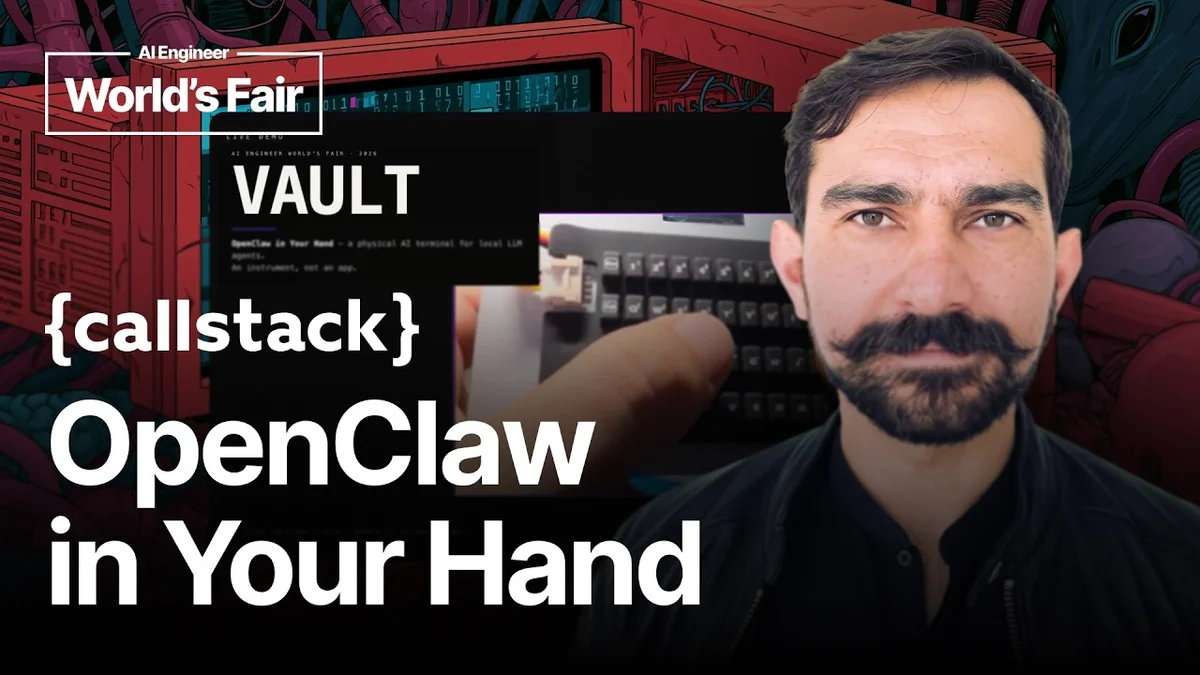
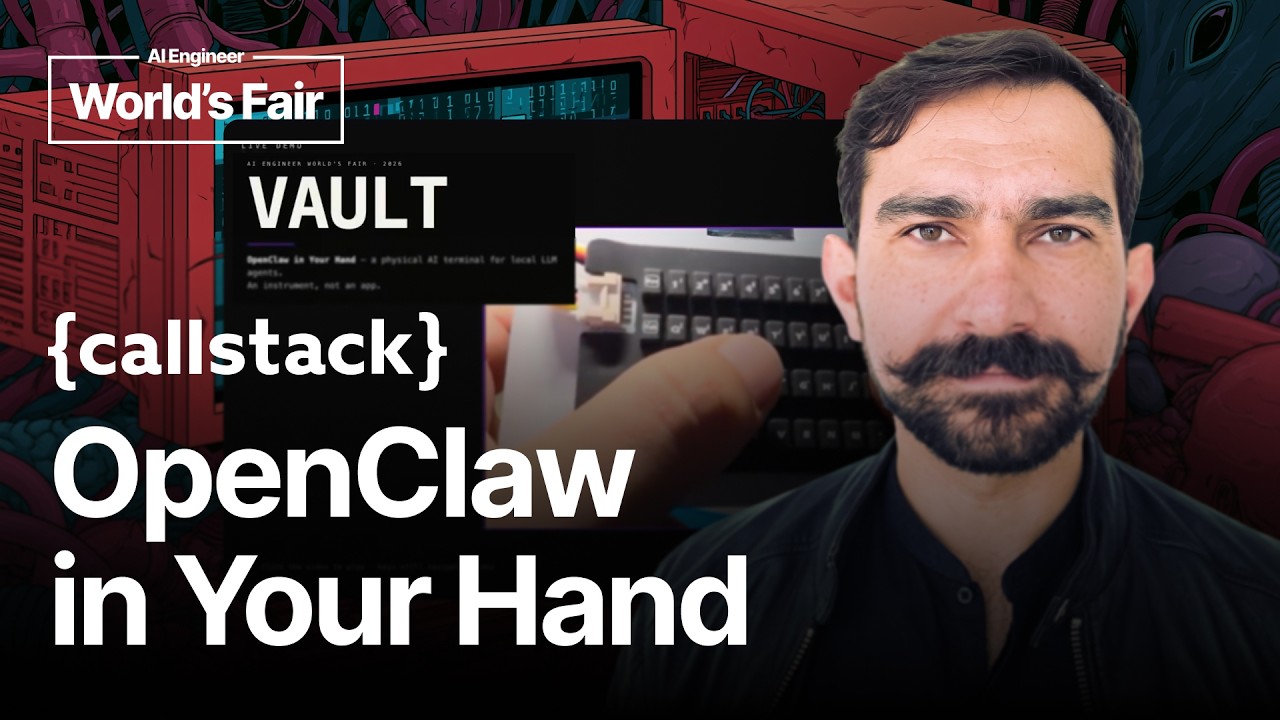
Lech Kalinowski presenting the OpenClaw physical AI terminal
Lech Kalinowski of Callstack demonstrates the OpenClaw, a physical terminal for interacting with LLM agents.Credit: AI Engineer
Visual TL;DR
Current AI interactionDriver
From the article 9+ mentionsKalinowski began by framing the current AI interaction paradigm, noting that "Most AI lives in a chat bubble on a glowing screen." He proposed OpenClaw as an alternative, leaning towards a "calm, text-first, made to be read" interface.
Key featuresCore
Dual-display, physical keyboard, local backend
From the articleTactile Input: Features a physical keyboard and rotary encoder for a more engaging user experience.
OpenClaw conceptContext
Physical terminal for LLM agents, calm text-first interface
From the article 6 mentionsIn a fascinating demonstration at AI Engineer World Fair 2024, Lech Kalinowski, a Senior AI System Engineer at Callstack, unveiled OpenClaw.
Dual-display systemCore
OLED for dynamic, e-ink for persistent output
From the article 7 mentionsKalinowski's presentation highlighted the device's dual-display system, emphasizing its potential to create a more engaging and efficient user experience for AI interactions.
Local backend interactionCore
Enables direct, efficient communication with LLM agents
From the article 4 mentionsKalinowski detailed the system's architecture, explaining that it operates on an "AI-native end-to-end" principle, connecting the device to a local backend that manages LLM interactions.
Tactile inputCore
Physical keyboard for more engaging user experience
From the article 3 mentionsThis innovative project presents a physical terminal designed to interact with Large Language Model (LLM) agents, offering a unique blend of tactile input and clear, persistent output.
Value propositionContext
Bridging physical and digital for better AI engagement
Engaging AI interactionEffect
From the article 9+ mentionsKalinowski's presentation highlighted the device's dual-display system, emphasizing its potential to create a more engaging and efficient user experience for AI interactions.
Contents(5)

In a fascinating demonstration at AI Engineer World Fair 2024, Lech Kalinowski, a Senior AI System Engineer at Callstack, unveiled OpenClaw. This innovative project presents a physical terminal designed to interact with Large Language Model (LLM) agents, offering a unique blend of tactile input and clear, persistent output. Kalinowski's presentation highlighted the device's dual-display system, emphasizing its potential to create a more engaging and efficient user experience for AI interactions.


OpenClaw: A Physical AI Terminal for LLMs - AI Engineer
OpenClaw: A Physical AI Terminal for LLMs, AI Engineer

The OpenClaw Concept

Kalinowski began by framing the current AI interaction paradigm, noting that "Most AI lives in a chat bubble on a glowing screen." He proposed OpenClaw as an alternative, leaning towards a "calm, text-first, made to be read" interface. The device itself is a testament to this philosophy, featuring a physical keyboard and a dual-display setup. The primary display is an OLED screen, offering a dynamic and responsive interface for live interactions. Complementing this is an e-paper display, designed for displaying persistent information with minimal power consumption, reminiscent of e-readers.

Hardware and Architecture

The OpenClaw terminal is powered by an ESP32-S3 microcontroller, a dual-core 240 MHz processor that handles the device's operations. The system utilizes an SSD1306 OLED display for immediate feedback and a Waveshare 4.20-inch e-paper display for more static content. Input is managed through a custom keyboard, featuring a rotary encoder with push functionality, allowing for intuitive navigation and command entry. The entire device is powered by a single 18650 lithium-ion cell, underscoring its focus on efficiency and portability.

Kalinowski detailed the system's architecture, explaining that it operates on an "AI-native end-to-end" principle, connecting the device to a local backend that manages LLM interactions. The workflow involves typing a query on the device, which is then sent to the backend. The backend processes the query, potentially involving multiple LLM calls and operations, and then sends the formatted response back to the device. The e-paper display is crucial for presenting this information in a clear, readable format, while the OLED display provides real-time status updates and immediate feedback.

LLM Interaction Modes

The OpenClaw terminal supports multiple modes of interaction, each tailored for specific tasks:

  • Shell Mode: This mode allows for direct interaction with local LLM agents, enabling commands and responses to be displayed on the device.
  • Control Mode: In this mode, the device acts as a physical interface to control LLM agents, with the e-paper display showing status updates and prompts.
  • AI Native: This mode focuses on the end-to-end interaction, where the device acts as a conduit between the user and LLM agents running on a local backend.

Kalinowski highlighted the flexibility of the system, noting that "Every peripheral is optional." This means that if the OLED display fails, the e-paper display can still function, and if the keyboard is removed, interaction can still occur via USB or Wi-Fi. This modularity ensures a robust and adaptable user experience.

The Value Proposition

The core appeal of OpenClaw lies in its ability to provide a more focused and less distracting interaction with AI. By utilizing an e-paper display, the device minimizes the visual noise often associated with glowing screens, allowing users to engage with LLM outputs in a more contemplative manner. Kalinowski stressed that the goal is to "Track narrative, not numbers," suggesting a shift towards understanding the qualitative aspects of AI interactions rather than just quantitative metrics.

He also touched upon the challenges and lessons learned during the development process, including the importance of reliable power management and the intricacies of interfacing with different display technologies. The project demonstrates a compelling vision for how physical devices can enhance our interaction with advanced AI, creating a more intuitive and personalized experience.

Key Features and Takeaways

  • Dual Display System: Combines a dynamic OLED for live interaction with a persistent e-paper display for information.
  • Local LLM Interaction: Enables direct interaction with LLM agents via a local backend, ensuring privacy and control.
  • Tactile Input: Features a physical keyboard and rotary encoder for a more engaging user experience.
  • Power Efficiency: Runs on a single 18650 battery, highlighting a focus on energy conservation.
  • Modularity: Designed with optional peripherals for increased flexibility and robustness.

OpenClaw represents a thoughtful approach to human-AI interaction, prioritizing clarity, focus, and a more tangible connection to the digital world.

TopicsLech KalinowskiCallstackOpenClawAILLMPhysical ComputingHardwareESP32-S3

StartupHub.ai StaffDaniel SingerWritten by StartupHub.ai Staff, Editorial teamReviewed by Daniel Singer, EditorAbout

StartupHub.ai Staff, Editorial team

The staff writers of StartupHub.ai, ranging from investment analysts to avid AI tool users, early adopters and critical enthusiasts. Backgrounds span engineering, business and the arts. We hold every piece to rigorous standards of research and review.

Daniel Singer, Editor

Daniel Singer is an AI expert who has been writing about, covering and building AI technology since 2018.

More from Daniel Singer

Get the free daily brief every morning

Every morning the day's AI news, new AI startups and new funding rounds. Free and takes a few minutes to read, unsubscribe at any time.

Join 64,000 other subscribers.

Test your Agent Readiness now

Paste your website. How well ChatGPT, Claude and the other agents can read and use a site, in about a minute.

The videos behind the news, one flip at a time

The feed mixes the videos from our articles with startup demos and you flip through them like TV channels for free with no signup.

