Visual TL;DR
AI Agent Dev ChallengesDriver
early AI agents like complex Rubik's Cube solving
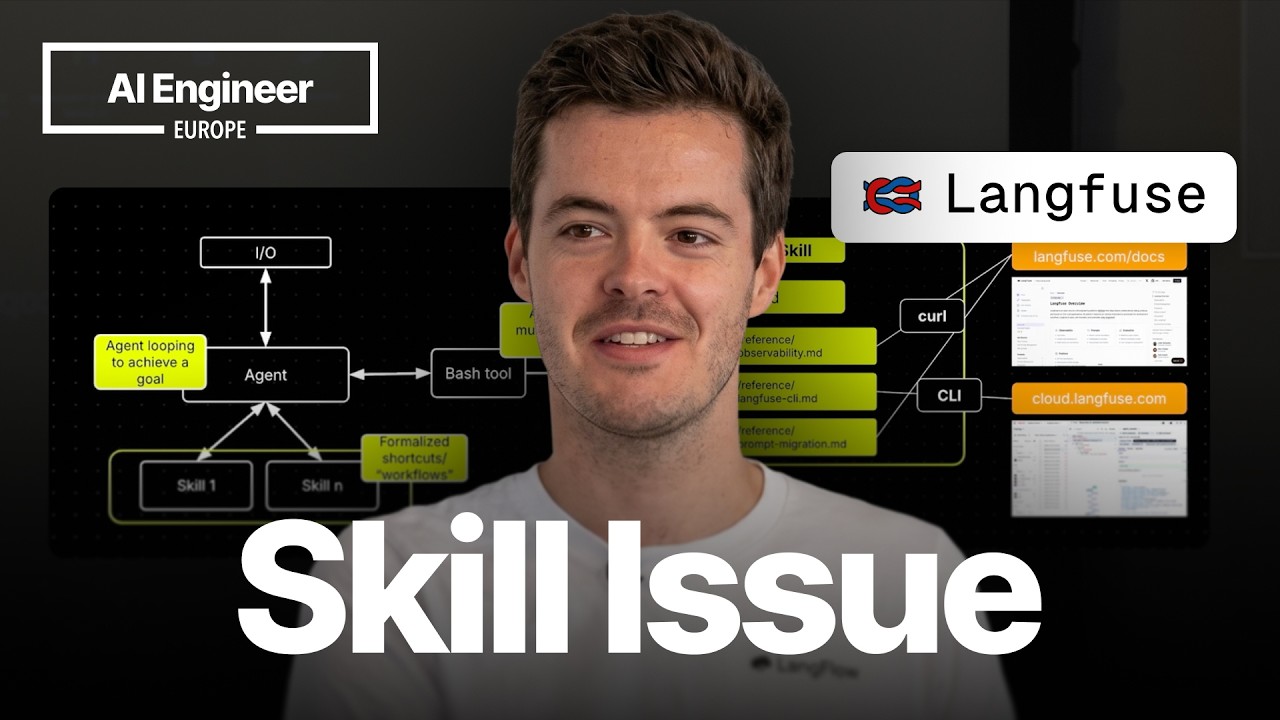
From the article 2 mentionsMarc Klingen, a co-founder of Langfuse, shared insights at AI Engineer London 2023 on the challenges and lessons learned in upskilling AI coding agents.
Need for ToolingDriver
managing and debugging AI coding agents is difficult
From the article 2 mentionsKlingen highlighted the critical need for robust tooling to effectively manage and debug these agents, emphasizing Langfuse's role in providing essential observability.
Langfuse SolutionCore
provides essential observability for AI agents
From the article 6 mentionsLangfuse aims to bridge this gap by providing a platform that helps agents effectively navigate documentation, API specifications, and best practices.
Structured Agent SystemsEffect
From the articleSimilarly, the development of AI agents is moving from ad-hoc, difficult-to-manage processes towards more structured and observable systems.
Workflows vs. AgentsContext
distinction between formalized paths and agent systems
From the article 9+ mentionsA key distinction Klingen made was between traditional workflows and agent-based systems.
Iterative ImprovementContext
importance of feedback loops for upskilling agents
From the article 4 mentionsThis iterative process, supported by tools like Langfuse, is essential for building reliable and capable AI agents.
Upskilled AgentsOutcome
streamlined and predictable AI agent development process
From the article 9+ mentionsKlingen drew a parallel between early attempts to solve the Rubik's Cube and the current state of AI agent development.