Jensen Huang: NVIDIA's Journey From Wrong Tech to AI Breakthroughs

NVIDIA CEO Jensen Huang shares insights on overcoming early tech missteps, learning from textbooks, and the power of systems thinking in building AI breakthroughs.

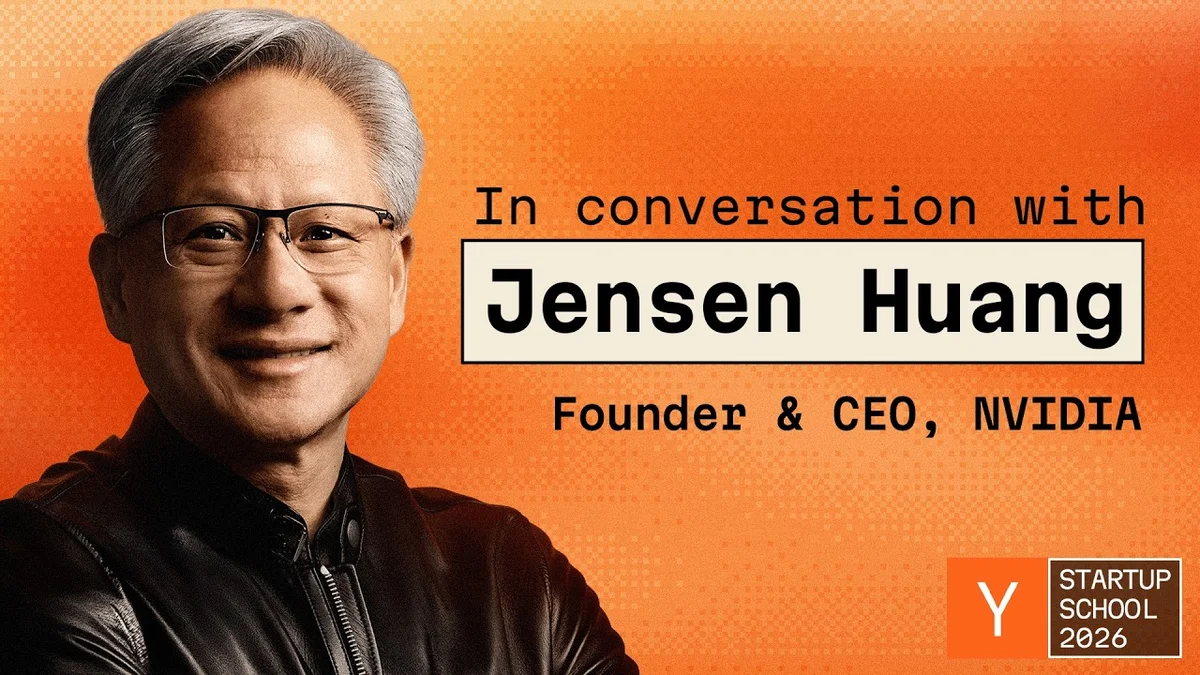
Jensen Huang, Founder & CEO of NVIDIA, speaking on stage.
YC
Visual TL;DR
Wrong initial techDriver
NVIDIA started with fundamentally flawed technology, facing an existential threat early on
Self-educationCore
solution came from textbooks purchased at Fry's Electronics, crucial for survival
From the articleThis act of self-education and adaptation was crucial for the company's survival and subsequent innovation.
Systems ThinkingContext
power of systems thinking and first-principles organizations guided breakthroughs
From the article 2 mentionsHuang stressed the evolving nature of software development, stating that "Systems thinking is the new coding." He elaborated that in today's complex technological landscape, understanding how different components interact and how to optimize the entire system is more critical than ever.
Pivot to AICore
critical decision to pivot technology towards AI, agents, and future computing
From the article 2 mentionsSpeaking with Garry Tan, President & CEO of Y Combinator, Huang recounted NVIDIA's early struggles, the critical decision to pivot their technology, and the enduring mindset that has guided the company's breakthroughs.
Resilience MindsetContext
enduring 'How Hard Can It Be?' mindset for overcoming challenges and innovation
From the article 3 mentionsThroughout the discussion, Huang underscored the importance of resilience for founders.
AI BreakthroughsOutcome
propelled company to forefront of modern computing and artificial intelligence
From the article 2 mentionsHe stressed that getting through one day at a time, day after day, is more critical than any single breakthrough.
Future ComputingEffect
building AI agents and shaping the future of computing with new paradigms
From the article 4 mentionsThis journey led them to focus on the fundamental algorithms and systems that would eventually power modern computing.
Contents(4)

In a candid conversation at Startup School 2026, NVIDIA Founder and CEO Jensen Huang shared insights into the pivotal moments and foundational principles that propelled his company to the forefront of modern computing and artificial intelligence. Speaking with Garry Tan, President & CEO of Y Combinator, Huang recounted NVIDIA's early struggles, the critical decision to pivot their technology, and the enduring mindset that has guided the company's breakthroughs.

StartupHub data

Y Combinator

A startup accelerator that provides seed funding, mentorship, and resources to early-stage companies.

Founded
2005
Location
San Francisco, United States

From Incorrect Algorithms to Textbooks at Fry's

Huang began by revealing that NVIDIA's initial technological direction was fundamentally flawed. "We started with the wrong technology," he stated, highlighting a critical juncture where the company faced an existential threat. The solution, he explained, came from an unexpected source: textbooks purchased at Fry's Electronics. This act of self-education and adaptation was crucial for the company's survival and subsequent innovation.

The full discussion can be found on YC's YouTube channel.

Jensen Huang: The Mindset That Built NVIDIA - YC
Jensen Huang: The Mindset That Built NVIDIA, from YC

The core of their pivot involved understanding and reinventing the entire technology stack. "We started learning our way into new domains," Huang explained, emphasizing that this iterative learning process was key to identifying NVIDIA's true potential. This journey led them to focus on the fundamental algorithms and systems that would eventually power modern computing.

The Power of Systems Thinking and First-Principles Organizations

Huang stressed the evolving nature of software development, stating that "Systems thinking is the new coding." He elaborated that in today's complex technological landscape, understanding how different components interact and how to optimize the entire system is more critical than ever. This philosophy, he noted, is central to building a first-principles organization.

He encouraged founders to build companies where decisions are driven by a deep understanding of fundamental truths rather than assumptions. This approach, he suggested, allows for more robust and adaptable solutions. Huang drew an analogy to building a car: "Build the car to fit your driving style," implying that technology should be tailored to the specific needs and goals of the user or company.

AI, Agents, and the Future of Computing

The conversation touched upon the transformative impact of AI, including the rise of agents and the implications for job creation. Huang suggested that AI is not just about automating tasks but also about augmenting human capabilities and creating new economic opportunities. He highlighted the potential of AI in areas like robotics, referencing the "ChatGPT moment for robots" and where physical AI might first manifest.

He also addressed the question of whether companies should own their own AI, suggesting that a hybrid approach, leveraging both proprietary and external AI models, might be the most effective path forward. Huang emphasized the importance of understanding where AI can provide the most significant leverage, whether it's in optimizing internal operations or creating new products and services.

Resilience and the "How Hard Can It Be?" Mindset

Throughout the discussion, Huang underscored the importance of resilience for founders. He shared his personal philosophy: "How hard can it be?" This mindset, he believes, encourages perseverance in the face of challenges. He stressed that getting through one day at a time, day after day, is more critical than any single breakthrough.

Reflecting on what still matters in learning and innovation, Huang pointed to the need for founders to remain curious, adaptable, and focused on fundamental principles. He also shared his recent decision to join X (formerly Twitter), indicating a continued commitment to understanding and shaping the future of technology and information dissemination.

The conversation also delved into NVIDIA's journey, including the $300 million IPO and key technological advancements like the reimagining of the full stack, highlighting how the company has consistently looked at emerging trends like AlexNet differently to drive its future.

© 2026 StartupHub.ai. All rights reserved. You may not republish this article in full without a license. Search engines and AI research tools may crawl and summarize for reference. Bulk reproduction or model training requires a license. See our terms.
Daniel Singer

Written by

Daniel Singer

Editor, StartupHub.ai

Daniel Singer is the editor of StartupHub.ai, a technology expert and thought leader on AI and its applications across sectors, from fintech and healthcare to developer tooling and consumer software. He writes and tests the tools covered here thoroughly and regularly, and built StartupHub.ai to give founders, operators and buyers a clearer read on what they are actually being sold.

More from Daniel Singer

