

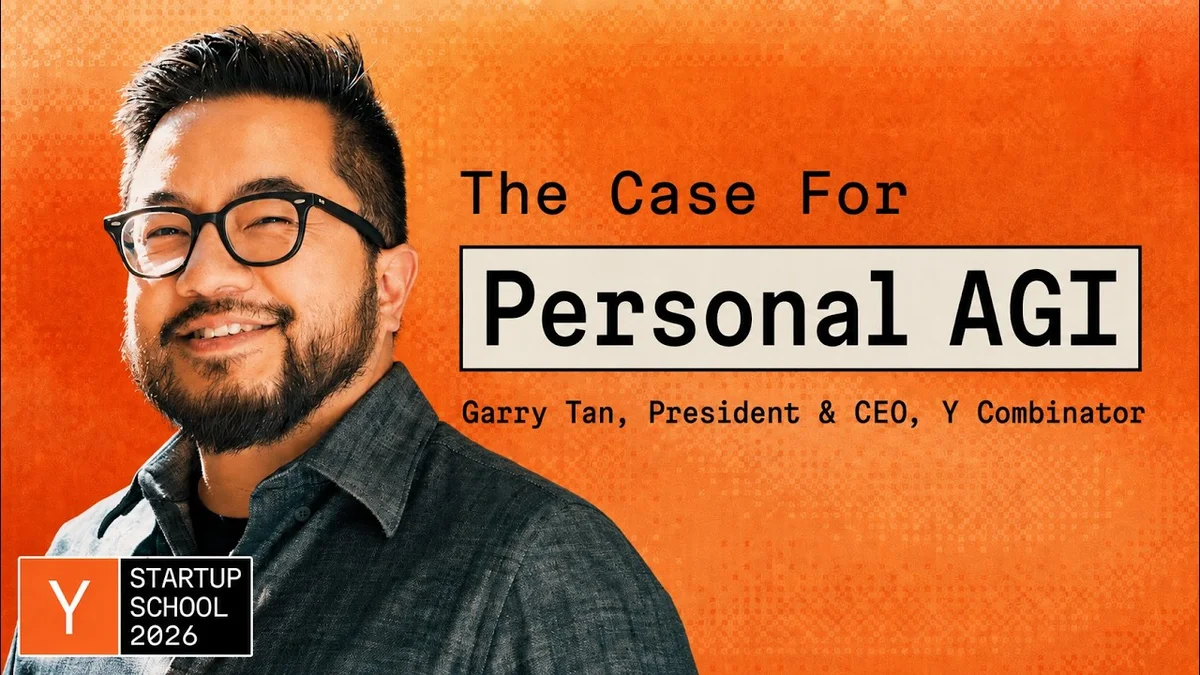
Garry Tan on Personal AGI and Spinoza

Garry Tan argues that Personal AGI is here, diffused as agents, and urges founders to build their own infrastructure, drawing lessons from Spinoza's resilience.

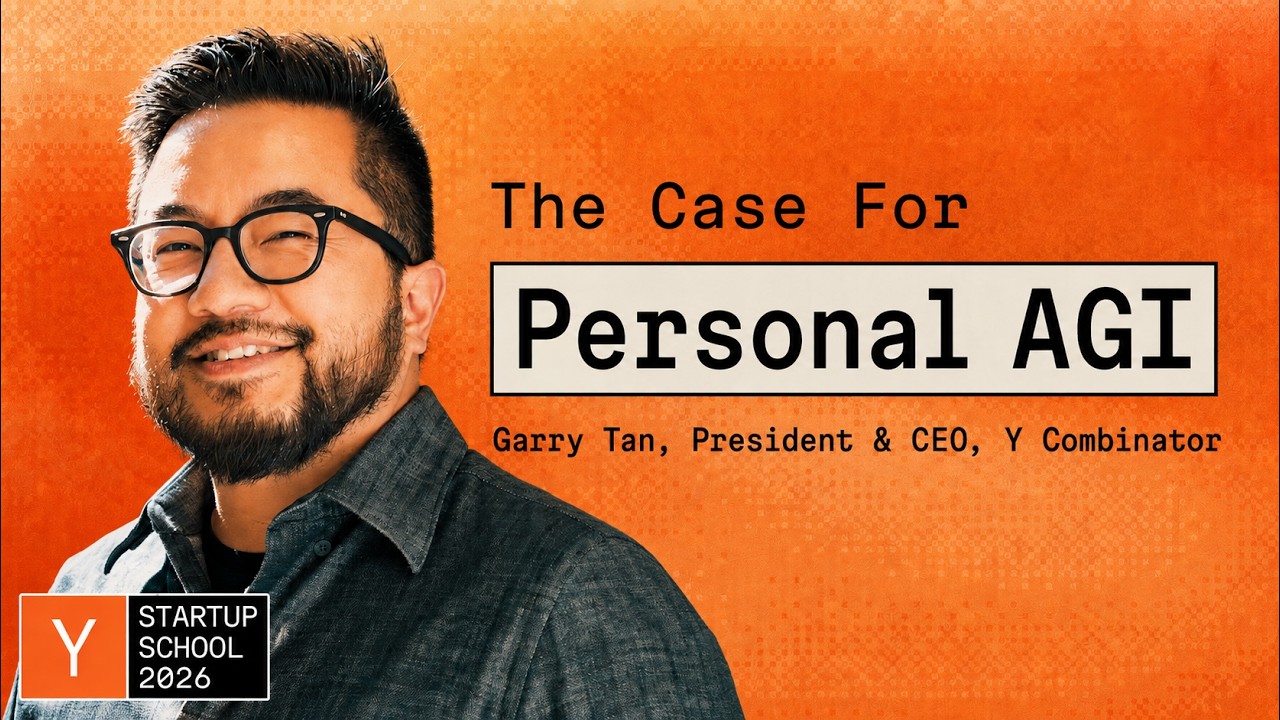
Garry Tan speaking on stage at Y Combinator Startup School
YC
Visual TL;DR
Spinoza: Truth over ComfortContext
persecuted philosopher prioritized truth despite excommunication and assassination attempts
From the articleTan opened by referencing Spinoza as one of history's most "cancelled" individuals, highlighting his excommunication from the Jewish community in 1656 for "evil opinions." Despite being offered a substantial salary to remain silent, Spinoza prioritized truth, famously stating he wanted truth, not comfort.
Personal AGI is HereCore
AGI is diffused as agents, not singular, enabling individual empowerment
From the article 6 mentionsTan challenged the common perception of Artificial General Intelligence (AGI) as a singular, future event, likening it to waiting for a "god in a data center." Instead, he argued, AGI is already here, arriving "diffused" as infrastructure like terminal windows, markdown files, and background jobs.
Conatus: Self-PreservationContext
Spinoza's concept of conatus, the striving for self-preservation, applies to AI
From the articleTan highlighted Spinoza's concept of conatus, the striving in every living thing to keep going and increase its power to act.
Founders need ResilienceEffect
Spinoza's resilience offers crucial lessons for startup founders facing challenges
From the articleThis resilience, Tan suggested, is a crucial lesson for startup founders.
Skill Files: New WorkforceOutcome
AI will transform the workforce, requiring new 'skill files' for adaptation
From the article 4 mentionsTan introduced the concept of "skill files," essentially executable pages of English instructions that define specific tasks.
Build Own InfrastructureEffect
founders urged to build their own infrastructure for agency and power
From the articleTan concluded by emphasizing that this personal AGI architecture is about controlling your cognitive abilities and staying "under your own power." He urged the audience to own their brains and skills from day one, as the difficulty and rarity of such capabilities are now within reach, poised for those who dare to build.
Ownership & AgencyOutcome
Personal AGI helps individuals maintain power and agency in the AI age
From the article 2 mentionsThis contrasts with corporate AGIs, which are rented, lack ownership, and can be reset or lobotomized based on corporate decisions.
Contents(5)

Garry Tan, President & CEO of Y Combinator, recently delivered a compelling talk drawing parallels between the persecuted 17th-century philosopher Baruch Spinoza and the current AI revolution, emphasizing the concept of "Personal AGI" as a tool for individual empowerment.

The Enduring Relevance of Spinoza

Tan opened by referencing Spinoza as one of history's most "cancelled" individuals, highlighting his excommunication from the Jewish community in 1656 for "evil opinions." Despite being offered a substantial salary to remain silent, Spinoza prioritized truth, famously stating he wanted truth, not comfort. This resilience, Tan suggested, is a crucial lesson for startup founders.

The full discussion can be found on YC's YouTube channel.

Garry Tan: "Personal AGI Is How You Stay Under Your Own Power" - YC
Garry Tan: "Personal AGI Is How You Stay Under Your Own Power", from YC

The talk delved into Spinoza's life, including an assassination attempt and his work grinding lenses to help people see further. His posthumously published works, Tan noted, inspired Enlightenment philosophers, demonstrating the power of sustained effort and independent thought.

AGI: Diffused, Not Singular

Tan challenged the common perception of Artificial General Intelligence (AGI) as a singular, future event, likening it to waiting for a "god in a data center." Instead, he argued, AGI is already here, arriving "diffused" as infrastructure like terminal windows, markdown files, and background jobs. It's not an event, but a process.

He introduced the concept of "Personal AGI", general intelligence for one person, you. This contrasts with corporate AGIs, which are rented, lack ownership, and can be reset or lobotomized based on corporate decisions. Personal AGI, he stressed, runs on your infrastructure, uses your owned memory and procedures, and compounds over time as it learns more about your life.

The Power of 'Conatus' and Personal Infrastructure

Tan highlighted Spinoza's concept of conatus, the striving in every living thing to keep going and increase its power to act. This inherent drive, he stated, is what fuels founders, not resumes or titles. He then transitioned to the tools that amplify this striving, focusing on personal infrastructure.

He explained that human working memory is limited to about seven items, and all human institutions are prosthetics for this limit. AI agents, however, can handle millions of tokens, a vast increase in cognitive capacity. Tan emphasized that the key is not just the model's quality, but the provided by the user's unique data.

Skill Files: The New Workforce

Tan introduced the concept of "skill files," essentially executable pages of English instructions that define specific tasks. He demonstrated this with an example of a skill file designed to process meeting recordings, extract commitments, and cross-reference individuals mentioned. He asserted that "Markdown is actually code now." If a human can follow clear instructions in English, an agent can execute them.

This shift means that non-programmers, like media people or finance teams, can become "managers of agents" by building skill files. The computation, he clarified, happens in both latent space (taste, judgment) and deterministic space (arithmetic, SQL queries), a crucial distinction for agent success.

Ownership and Agency in the Age of AI

A significant portion of the talk focused on ownership, specifically, owning your skills. Tan drew a parallel with craftsmen owning their tools, which afforded them freedom. He argued that knowledge workers, who assumed their cognition was safe in their heads, are now faced with a new reality where cognition can be extracted, stored, and owned.

He warned against comfortable arrangements where judgment compounds in someone else's repository, equating it to the offer Spinoza received: a professorship with freedom, provided he didn't disturb established religion. Tan stressed that "Model quality is rented. Your brain is owned."

He outlined a five-step process for building personal AGI:

  • Step 1: Pick a harness and run an agent on your own machine.
  • Step 2: Start your library with one folder of markdown files, exporting your notes and emails.
  • Step 3: Write your first skill file, explaining a hated task clearly.
  • Step 4: Wire it up as a recurring job.
  • Step 5: Never do one-off work; always skillify what you learn.

Tan concluded by emphasizing that this personal AGI architecture is about controlling your cognitive abilities and staying "under your own power." He urged the audience to own their brains and skills from day one, as the difficulty and rarity of such capabilities are now within reach, poised for those who dare to build.

© 2026 StartupHub.ai. All rights reserved. You may not republish this article in full without a license. Search engines and AI research tools may crawl and summarize for reference. Bulk reproduction or model training requires a license. See our terms.
Daniel Singer

Written by

Daniel Singer

Editor, StartupHub.ai

Daniel Singer is the editor of StartupHub.ai, a technology expert and thought leader on AI and its applications across sectors, from fintech and healthcare to developer tooling and consumer software. He writes and tests the tools covered here thoroughly and regularly, and built StartupHub.ai to give founders, operators and buyers a clearer read on what they are actually being sold.