Eon Co-Founders on AI, Data Infrastructure & Security

Eon co-founders Ofir Erlick and Gonen Stein discuss the critical need for new data infrastructure in the AI era, the security risks posed by AI agents, and the evolving enterprise data landscape.

7 min read
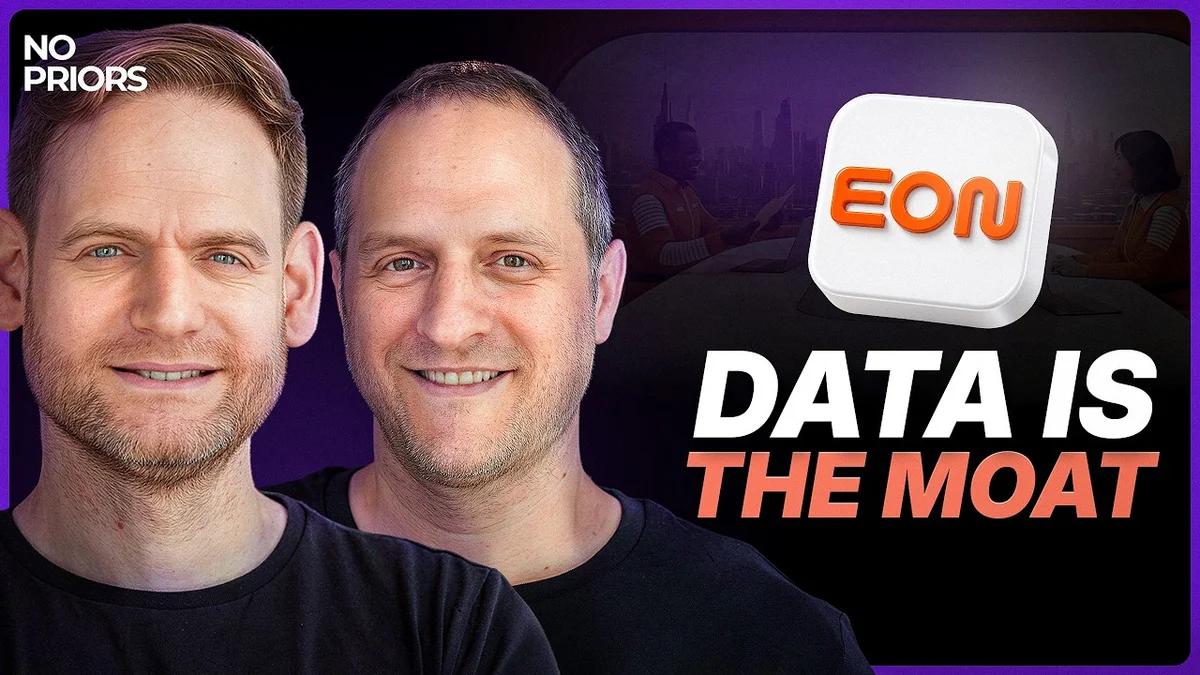
Ofir Erlick and Gonen Stein, co-founders of Eon, sitting in chairs in front of the EON logo.
NoPriors
Visual TL;DR
AI Era ChallengesDriver
new data infrastructure needed for evolving enterprise data landscape
From the article 3 mentionsA significant portion of the discussion focused on the implications of AI agents and the associated security challenges.
Eon SolutionCore
cloud-based data foundation to map, classify, ingest data
From the article 3 mentionsOn a recent episode of "No Prio," Elad Gil sat down with Ofir Erlick and Gonen Stein, the co-founders of Eon, a company focused on building a new data foundation for the AI era.
Data for AI/LLMsEffect
From the article 9+ mentionsThis foundation provides a cost-effective way to maintain data for protection and recovery while also making it accessible for AI models and LLMs.
Data as New GoldContext
underscoring data's growing recognition as a company's most valuable asset
From the article 9+ mentionsIn a world increasingly driven by artificial intelligence, the way businesses manage and utilize data is undergoing a profound transformation.
Transformed Data ManagementOutcome
profound transformation in how businesses manage and utilize data
AI Era ChallengesDriver
new data infrastructure needed for evolving enterprise data landscape
From the article 3 mentionsA significant portion of the discussion focused on the implications of AI agents and the associated security challenges.
AI Agents & SecurityDriver
growing security risks posed by autonomous AI agents
From the article 4 mentionsA significant portion of the discussion focused on the implications of AI agents and the associated security challenges.
Eon SolutionCore
cloud-based data foundation to map, classify, ingest data
From the article 3 mentionsOn a recent episode of "No Prio," Elad Gil sat down with Ofir Erlick and Gonen Stein, the co-founders of Eon, a company focused on building a new data foundation for the AI era.
Cloud vs. AI EraContext
transition from cloud-centric to AI-driven data management
From the article 4 mentionsErlick explained that while traditional concerns revolved around human threats like ransomware, the AI era introduces new risks from non-human actors with legitimate access to environments.
Data Protection & RecoveryEffect
From the article 2 mentionsThis foundation provides a cost-effective way to maintain data for protection and recovery while also making it accessible for AI models and LLMs.
Data for AI/LLMsEffect
From the article 9+ mentionsThis foundation provides a cost-effective way to maintain data for protection and recovery while also making it accessible for AI models and LLMs.
Data as New GoldContext
underscoring data's growing recognition as a company's most valuable asset
From the article 9+ mentionsIn a world increasingly driven by artificial intelligence, the way businesses manage and utilize data is undergoing a profound transformation.
Transformed Data ManagementOutcome
profound transformation in how businesses manage and utilize data
Contents(4)

In a world increasingly driven by artificial intelligence, the way businesses manage and utilize data is undergoing a profound transformation. On a recent episode of "No Prio," Elad Gil sat down with Ofir Erlick and Gonen Stein, the co-founders of Eon, a company focused on building a new data foundation for the AI era. Their discussion shed light on the critical intersection of data, AI, and the evolving enterprise infrastructure.

Eon Co-Founders on AI, Data Infrastructure & Security - NoPriors
Eon Co-Founders on AI, Data Infrastructure & Security, from NoPriors

The Eon Solution

Eon offers a cloud-based data foundation designed to help organizations map, classify, and ingest their data from various sources. This foundation provides a cost-effective way to maintain data for protection and recovery while also making it accessible for AI models and LLMs. Erlick highlighted that Eon's starting point was in backup and disaster recovery, but the team quickly realized the immense potential of this data for AI applications.

Data as the New Gold

The conversation underscored the growing recognition of data as a company's most valuable asset. Stein pointed to Google's acquisition of Spirit Airlines' data for $10 million as a prime example. "They didn't buy airplanes. They bought the data," he stated, emphasizing that this data is crucial for training models. The trend is clear: companies are actively seeking to acquire and leverage data that was previously considered dormant, recognizing it as the key differentiator in an AI-driven economy.

This shift is creating a new market for data, with companies actively trying to purchase data sets. "If you're a tech data CEO today, I can tell you that you constantly get questions: 'Are you willing to sell your data?'" Stein noted. He believes this trend will continue, with entities like hedge funds actively seeking to acquire data to analyze companies and gain market insights.

The Rise of AI Agents and Security Concerns

A significant portion of the discussion focused on the implications of AI agents and the associated security challenges. Erlick explained that while traditional concerns revolved around human threats like ransomware, the AI era introduces new risks from non-human actors with legitimate access to environments. "What we're seeing now on steroids is that the same type of threat is coming from non-human actors, agents that essentially have legitimate access to the environment with legitimate permissions," he said.

The velocity at which these AI-driven threats can manifest is extreme. The ease with which non-technical individuals can now build and deploy AI agents, potentially using other agents without fully understanding the implications, creates a complex web of actors within organizations. These actors may not be bound by organizational rules or operate within traditional premises, yet they handle sensitive data, posing significant risks of exposure and misuse.

The conversation also touched upon the current enterprise data stack, which was built around humans asking defined questions. With AI agents, this paradigm is shifting, as agents can operate more dynamically and reason over vast datasets. This necessitates a reimagining of how data is stored, accessed, and interacted with. While some traditional tools may persist, the overall data infrastructure will need to adapt to support this new agentic world.

The Cloud Era vs. The AI Era

Comparing the current AI transformation to the cloud migration of the past, Erlick stated it's like the cloud shift, but "on steroids." The speed of transformation is significantly faster, leading to a loss of control for many customers. This fear of things breaking or data leaking is causing organizations to pause and seek greater understanding and control over their AI initiatives.

However, Erlick also pointed out that AI is more universally understood than the abstract concept of the cloud. The widespread adoption of tools like ChatGPT has made the potential of AI tangible for everyone, from CEOs to the board. This, coupled with the fear of being left behind, is driving an unprecedented push for AI adoption across industries.

The discussion concluded with a look at the future, emphasizing that while the ride is wild, the evolution driven by AI will ultimately lead to a better world. The key for businesses is to adapt, embrace the new tools, and build a robust data infrastructure that can support the dynamic and ever-expanding capabilities of artificial intelligence.

© 2026 StartupHub.ai. All rights reserved. Do not enter, scrape, copy, reproduce, or republish this article in whole or in part. Use as input to AI training, fine-tuning, retrieval-augmented generation, or any machine-learning system is prohibited without written license. Substantially-similar derivative works will be pursued to the fullest extent of applicable copyright, database, and computer-misuse laws. See our terms.
