

AI Security: Daybreak vs. Mythos & LLM Vulnerabilities

OpenAI's Daybreak and Mistral's Mythos are discussed as AI cybersecurity tools, alongside the challenges and opportunities of AI in threat detection and defense.

8 min read
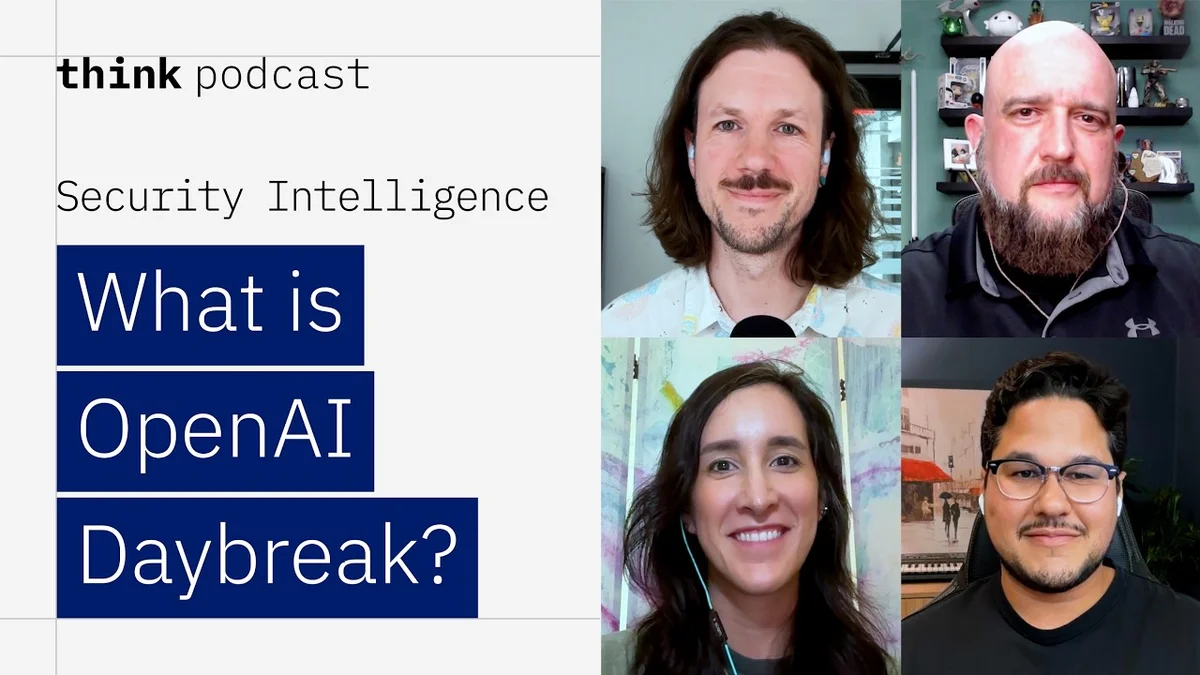
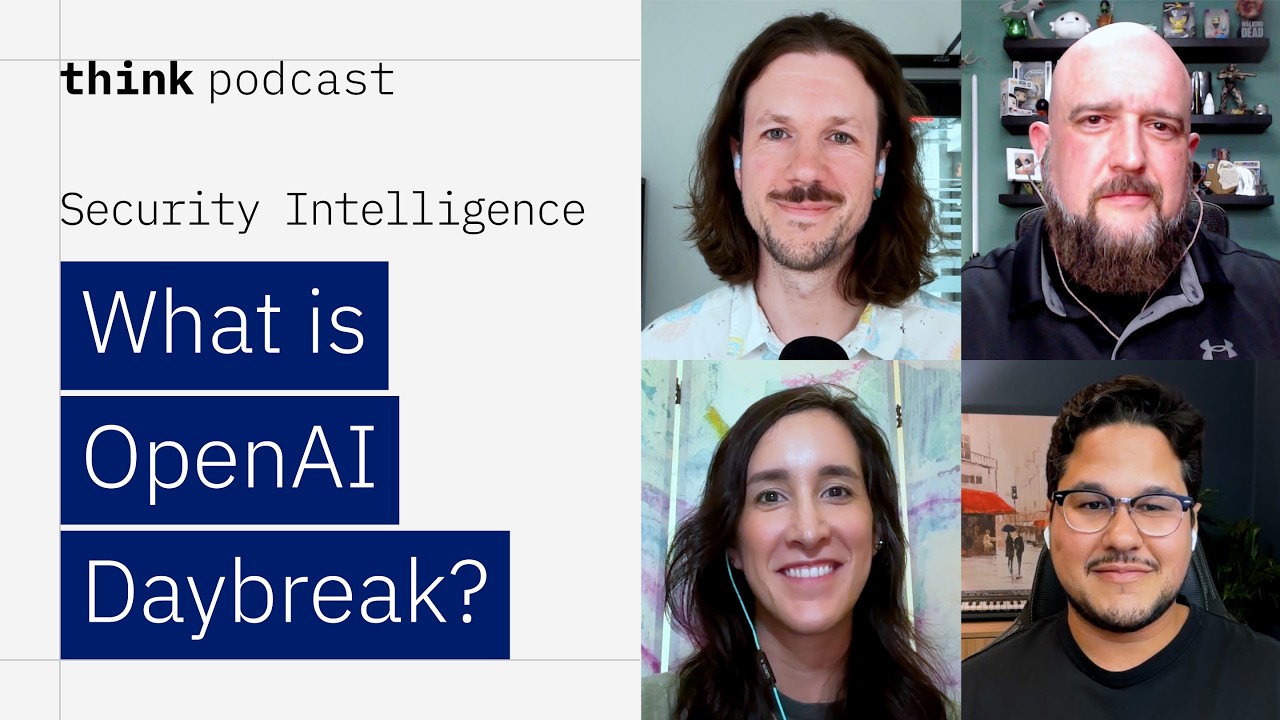
Panel discussion on AI cybersecurity with three experts
Image credit: Security Intelligence· IBM

The world of AI and cybersecurity is constantly evolving, and recent developments highlight the dynamic race between major players and the emerging challenges in securing AI systems. In this episode of the Security Intelligence podcast, host Matt Kosinski delves into the competitive landscape of AI-powered cybersecurity tools, featuring insights from Nick Bradley, Manager of X-Force Threat Intelligence at IBM, and Diego Matos Martins, LA Incident Response Leader at IBM.

Visual TL;DR. AI in Cybersecurity leads to Daybreak & Mythos. Daybreak & Mythos assist Threat Detection & Defense. Threat Detection & Defense creates Double-Edged Sword. Double-Edged Sword requires Human Oversight Needed. Double-Edged Sword influences Open Source Adoption. Human Oversight Needed informs Future Outlook. Open Source Adoption shapes Future Outlook.

  1. AI in Cybersecurity: evolving landscape of AI-powered cybersecurity tools
  2. Daybreak & Mythos: OpenAI's Daybreak and Mistral's Mythos as competitors
  3. Threat Detection & Defense: enhancing threat detection, vulnerability analysis, and incident response
  4. Double-Edged Sword: challenges and opportunities of AI in security
  5. Human Oversight Needed: importance of human oversight and balanced approaches
  6. Open Source Adoption: role of open source and broader AI adoption
  7. Future Outlook: key takeaways and future outlook on AI security
Visual TL;DR
Visual TL;DR — startuphub.ai AI in Cybersecurity leads to Daybreak & Mythos. Daybreak & Mythos assist Threat Detection & Defense. Threat Detection & Defense creates Double-Edged Sword assist creates AI in Cybersecurity Daybreak & Mythos Threat Detection & Defense Double-Edged Sword Future Outlook From startuphub.ai · The publishers behind this format
Visual TL;DR — startuphub.ai AI in Cybersecurity leads to Daybreak & Mythos. Daybreak & Mythos assist Threat Detection & Defense. Threat Detection & Defense creates Double-Edged Sword assist creates AI inCybersecurity Daybreak & Mythos Threat Detection& Defense Double-EdgedSword Future Outlook From startuphub.ai · The publishers behind this format
Visual TL;DR — startuphub.ai AI in Cybersecurity leads to Daybreak & Mythos. Daybreak & Mythos assist Threat Detection & Defense. Threat Detection & Defense creates Double-Edged Sword assist creates AI in Cybersecurity evolving landscape of AI-poweredcybersecurity tools Daybreak & Mythos OpenAI's Daybreak and Mistral's Mythos ascompetitors Threat Detection & Defense enhancing threat detection, vulnerabilityanalysis, and incident response Double-Edged Sword challenges and opportunities of AI insecurity Future Outlook key takeaways and future outlook on AIsecurity From startuphub.ai · The publishers behind this format
Visual TL;DR — startuphub.ai AI in Cybersecurity leads to Daybreak & Mythos. Daybreak & Mythos assist Threat Detection & Defense. Threat Detection & Defense creates Double-Edged Sword assist creates AI inCybersecurity evolving landscapeof AI-poweredcybersecurity tools Daybreak & Mythos OpenAI's Daybreakand Mistral'sMythos as… Threat Detection& Defense enhancing threatdetection,vulnerability… Double-EdgedSword challenges andopportunities of AIin security Future Outlook key takeaways andfuture outlook onAI security From startuphub.ai · The publishers behind this format
Visual TL;DR — startuphub.ai AI in Cybersecurity leads to Daybreak & Mythos. Daybreak & Mythos assist Threat Detection & Defense. Threat Detection & Defense creates Double-Edged Sword. Double-Edged Sword requires Human Oversight Needed. Double-Edged Sword influences Open Source Adoption. Human Oversight Needed informs Future Outlook. Open Source Adoption shapes Future Outlook assist creates requires influences informs shapes AI in Cybersecurity evolving landscape of AI-poweredcybersecurity tools Daybreak & Mythos OpenAI's Daybreak and Mistral's Mythos ascompetitors Threat Detection & Defense enhancing threat detection, vulnerabilityanalysis, and incident response Double-Edged Sword challenges and opportunities of AI insecurity Human Oversight Needed importance of human oversight and balancedapproaches Open Source Adoption role of open source and broader AIadoption Future Outlook key takeaways and future outlook on AIsecurity From startuphub.ai · The publishers behind this format
Visual TL;DR — startuphub.ai AI in Cybersecurity leads to Daybreak & Mythos. Daybreak & Mythos assist Threat Detection & Defense. Threat Detection & Defense creates Double-Edged Sword. Double-Edged Sword requires Human Oversight Needed. Double-Edged Sword influences Open Source Adoption. Human Oversight Needed informs Future Outlook. Open Source Adoption shapes Future Outlook assist creates requires influences informs shapes AI inCybersecurity evolving landscapeof AI-poweredcybersecurity tools Daybreak & Mythos OpenAI's Daybreakand Mistral'sMythos as… Threat Detection& Defense enhancing threatdetection,vulnerability… Double-EdgedSword challenges andopportunities of AIin security Human OversightNeeded importance of humanoversight andbalanced approaches Open SourceAdoption role of open sourceand broader AIadoption Future Outlook key takeaways andfuture outlook onAI security From startuphub.ai · The publishers behind this format

AI Models in Cybersecurity: Daybreak and Mythos

The conversation kicks off by touching on OpenAI's 'Daybreak' and Mistral AI's 'Mythos,' positioning them as significant competitors in the AI cybersecurity space. These models are designed to assist security professionals in identifying and mitigating threats. The participants discuss how these advanced AI tools are being developed with specific applications in mind, aiming to enhance threat detection, vulnerability analysis, and incident response capabilities.

Related startups

The Double-Edged Sword of AI in Security

While AI offers powerful solutions for cybersecurity, it also introduces new complexities. The discussion pivots to the inherent challenges that arise with the increasing sophistication of AI models. A key concern raised is the potential for these same AI tools, or similar ones, to be used maliciously. As Nick Bradley points out, "AI is going to accelerate portions of offensive security operations." This acceleration means that AI can be leveraged to discover vulnerabilities at a scale and speed that was previously unimaginable.

The full discussion can be found on IBM's YouTube channel.

OpenAI’s Daybreak and Mistral’s Mythos competitor - IBM
OpenAI’s Daybreak and Mistral’s Mythos competitor — from IBM

The concept of 'AI vulnerability hunting' is introduced, where AI models are trained to identify weaknesses in code and systems, much like human security researchers. This ability, while beneficial for defenders, also presents a significant risk if such capabilities fall into the wrong hands. The participants muse on the idea of 'AI fault injection,' where AI might be used to deliberately probe systems for flaws, a notion that underscores the dual-use nature of this technology.

The Need for Human Oversight and Balanced Approaches

Diego Matos Martins offers a nuanced perspective on the deployment of these AI tools. He emphasizes that while AI can automate many tasks, it doesn't negate the need for human expertise. "AI models are used for different purposes… they are good at some things and not others," he states, highlighting that AI tools often have pros and cons. The human element remains crucial for interpreting AI-generated findings, making strategic decisions, and ensuring the ethical application of these powerful technologies. Matos Martins suggests that the most effective approach involves a balance, where AI assists humans rather than replacing them entirely.

The conversation touches upon the practical implementation of these AI tools. For instance, OpenAI's 'Daybreak' offers access to three different models tailored for various workflows, including general-purpose tasks, fine-tuned models for trusted cyber defense, and more specialized models for offensive security research. Similarly, Microsoft's 'M-dash' and Mistral AI's 'Mythos' are also discussed in the context of their unique approaches and capabilities.

The Role of Open Source and Broader AI Adoption

A significant development highlighted is the trend towards open-sourcing AI models. While companies like OpenAI and Microsoft are developing proprietary solutions, others, like Mistral AI, are leaning into open-source strategies. This approach, as discussed, can foster broader adoption and faster innovation within the cybersecurity community. However, it also raises concerns about accessibility for malicious actors, a point that is acknowledged as a trade-off in the open-source model.

The discussion also touches on the ongoing challenge of maintaining a "human in the loop" for critical security operations. While AI can automate much of the detection and analysis, the final decision-making and strategic interpretation often require human judgment. This human-AI collaboration is seen as key to navigating the complex and rapidly evolving threat landscape.

Key Takeaways and Future Outlook

The episode concludes with a reflection on the rapid pace of AI development in cybersecurity. The participants agree that the field is constantly advancing, and staying ahead requires continuous learning and adaptation. The trend towards specialized AI models, the importance of ethical considerations, and the ongoing debate around open-source versus proprietary solutions are all critical factors shaping the future of AI in security.
Ultimately, the conversation underscores that while AI is a powerful tool for enhancing cybersecurity, it's the strategic integration of AI with human expertise and robust control mechanisms that will be crucial for effectively defending against the ever-evolving threat landscape.

© 2026 StartupHub.ai. All rights reserved. Do not enter, scrape, copy, reproduce, or republish this article in whole or in part. Use as input to AI training, fine-tuning, retrieval-augmented generation, or any machine-learning system is prohibited without written license. Substantially-similar derivative works will be pursued to the fullest extent of applicable copyright, database, and computer-misuse laws. See our terms.