

AI's Limits in Science & Self-Driving Labs

Joseph Krause of Radical AI discusses the limitations of AI in science and the necessity of self-driving labs for accelerating discovery.

8 min read
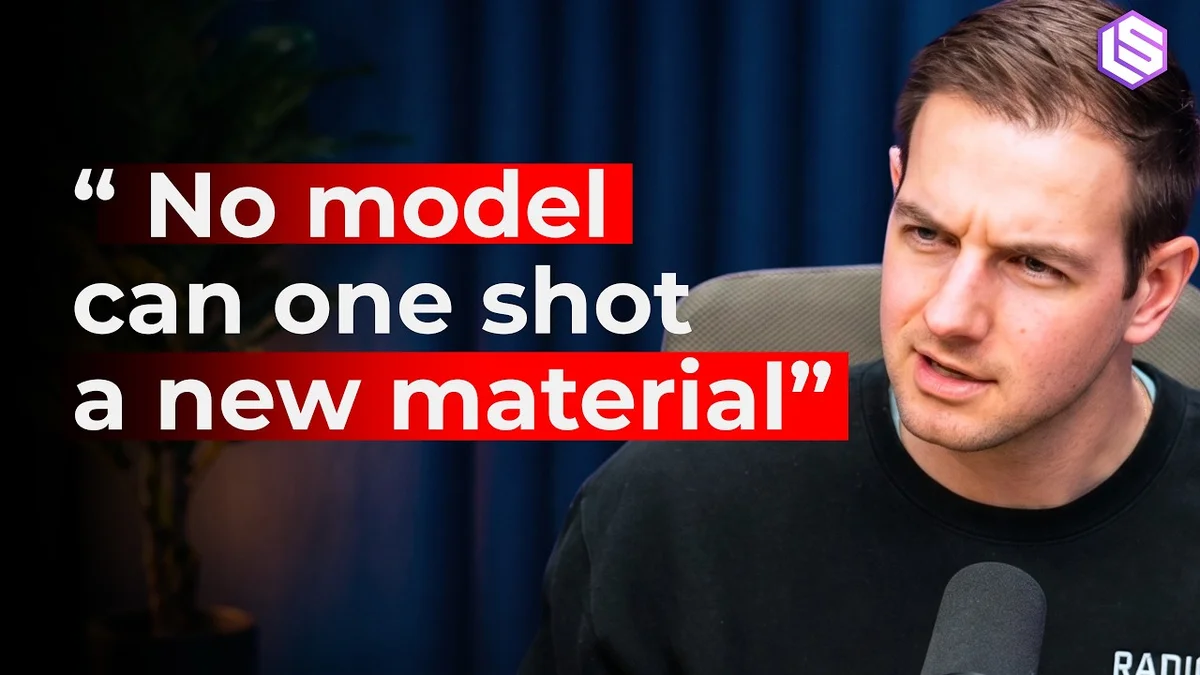
Joseph Krause, CEO at Radical AI, speaking at a podcast recording.
Latent Space

Joseph Krause, Co-Founder and CEO of Radical AI, recently highlighted the critical limitations of current artificial intelligence in advancing scientific discovery. Speaking on the Latent Space podcast, Krause articulated why the development of "self-driving labs" is essential for pushing the boundaries of what AI can achieve in science. He explained that while AI excels at processing structured data, scientific fields often generate vast amounts of unstructured, multi-modal data that current models struggle to interpret effectively.

AI's Limits in Science & Self-Driving Labs - Latent Space
AI's Limits in Science & Self-Driving Labs — from Latent Space

Visual TL;DR. AI's Scientific Limits leads to Data Challenge. Data Challenge requires Self-Driving Labs. Self-Driving Labs enables Bridging the Gap. Bridging the Gap relies on Experimental Data Role. Self-Driving Labs drives Autonomous Discovery.

Related startups

  1. AI's Scientific Limits: current AI struggles with unstructured, multi-modal scientific data
  2. Data Challenge: scientific data is complex, not easily structured like other AI fields
  3. Self-Driving Labs: autonomous systems for accelerated scientific discovery and experimentation
  4. Bridging the Gap: connecting AI insights to real-world scientific application and discovery
  5. Experimental Data Role: crucial for training AI and validating scientific hypotheses
  6. Autonomous Discovery: future of science driven by AI and self-driving lab integration
Visual TL;DR
Visual TL;DR — startuphub.ai AI's Scientific Limits leads to Data Challenge. Data Challenge requires Self-Driving Labs. Self-Driving Labs drives Autonomous Discovery leads to requires drives AI's Scientific Limits Data Challenge Self-Driving Labs Autonomous Discovery From startuphub.ai · The publishers behind this format
Visual TL;DR — startuphub.ai AI's Scientific Limits leads to Data Challenge. Data Challenge requires Self-Driving Labs. Self-Driving Labs drives Autonomous Discovery leads to requires drives AI's ScientificLimits Data Challenge Self-Driving Labs AutonomousDiscovery From startuphub.ai · The publishers behind this format
Visual TL;DR — startuphub.ai AI's Scientific Limits leads to Data Challenge. Data Challenge requires Self-Driving Labs. Self-Driving Labs drives Autonomous Discovery leads to requires drives AI's Scientific Limits current AI struggles with unstructured,multi-modal scientific data Data Challenge scientific data is complex, not easilystructured like other AI fields Self-Driving Labs autonomous systems for acceleratedscientific discovery and experimentation Autonomous Discovery future of science driven by AI andself-driving lab integration From startuphub.ai · The publishers behind this format
Visual TL;DR — startuphub.ai AI's Scientific Limits leads to Data Challenge. Data Challenge requires Self-Driving Labs. Self-Driving Labs drives Autonomous Discovery leads to requires drives AI's ScientificLimits current AIstruggles withunstructured,… Data Challenge scientific data iscomplex, not easilystructured like… Self-Driving Labs autonomous systemsfor acceleratedscientific… AutonomousDiscovery future of sciencedriven by AI andself-driving lab… From startuphub.ai · The publishers behind this format
Visual TL;DR — startuphub.ai AI's Scientific Limits leads to Data Challenge. Data Challenge requires Self-Driving Labs. Self-Driving Labs enables Bridging the Gap. Bridging the Gap relies on Experimental Data Role. Self-Driving Labs drives Autonomous Discovery leads to requires enables relies on drives AI's Scientific Limits current AI struggles with unstructured,multi-modal scientific data Data Challenge scientific data is complex, not easilystructured like other AI fields Self-Driving Labs autonomous systems for acceleratedscientific discovery and experimentation Bridging the Gap connecting AI insights to real-worldscientific application and discovery Experimental Data Role crucial for training AI and validatingscientific hypotheses Autonomous Discovery future of science driven by AI andself-driving lab integration From startuphub.ai · The publishers behind this format
Visual TL;DR — startuphub.ai AI's Scientific Limits leads to Data Challenge. Data Challenge requires Self-Driving Labs. Self-Driving Labs enables Bridging the Gap. Bridging the Gap relies on Experimental Data Role. Self-Driving Labs drives Autonomous Discovery leads to requires enables relies on drives AI's ScientificLimits current AIstruggles withunstructured,… Data Challenge scientific data iscomplex, not easilystructured like… Self-Driving Labs autonomous systemsfor acceleratedscientific… Bridging the Gap connecting AIinsights toreal-world… Experimental DataRole crucial fortraining AI andvalidating… AutonomousDiscovery future of sciencedriven by AI andself-driving lab… From startuphub.ai · The publishers behind this format

The Data Challenge in Scientific AI

Krause pointed out the stark difference between AI applications in areas like "AI for Bio" or "AI for Materials" where data can be more readily structured, compared to the complexities of understanding materials science. He elaborated that for materials science, AI needs to capture not just the basic elements and bonds of molecules, but also intricate details like supply chain, cost, microstructure, and the nuances of processing methods (e.g., additive manufacturing versus casting). This vast and varied data, often described as "smile strings" in computational chemistry, is difficult for current AI models to fully comprehend and utilize for predictive purposes.

The Need for Self-Driving Labs

The core of Krause's argument centers on the concept of "self-driving labs." He explained that the current process of scientific discovery is often bottlenecked by the sheer volume of experiments and the time it takes to analyze the results. Traditional methods involve scientists manually designing experiments, running them, collecting data, and then interpreting that data to inform the next steps. Krause argues that AI needs to automate this entire cycle. A self-driving lab, in his vision, would autonomously design experiments, execute them using robotic systems, collect data, analyze it, and then use that analysis to design the next iteration of experiments. This closed-loop system, driven by AI, would drastically accelerate the pace of scientific discovery.

Bridging the Gap: From Discovery to Application

Krause emphasized that the ultimate goal is not just discovery but also the ability to translate that discovery into practical applications. He noted that the data generated from initial experiments needs to be fed back into the AI engine to improve its predictive capabilities for real-world use. This means AI needs to move beyond simply identifying potential materials or compounds to understanding how they can be manufactured, scaled, and integrated into products like smartphones or spacecraft. He highlighted that the AI must encompass "more than just discovery" and be able to predict materials that will ultimately "end up in your iPhone or Starship."

The Limits of Current AI Models

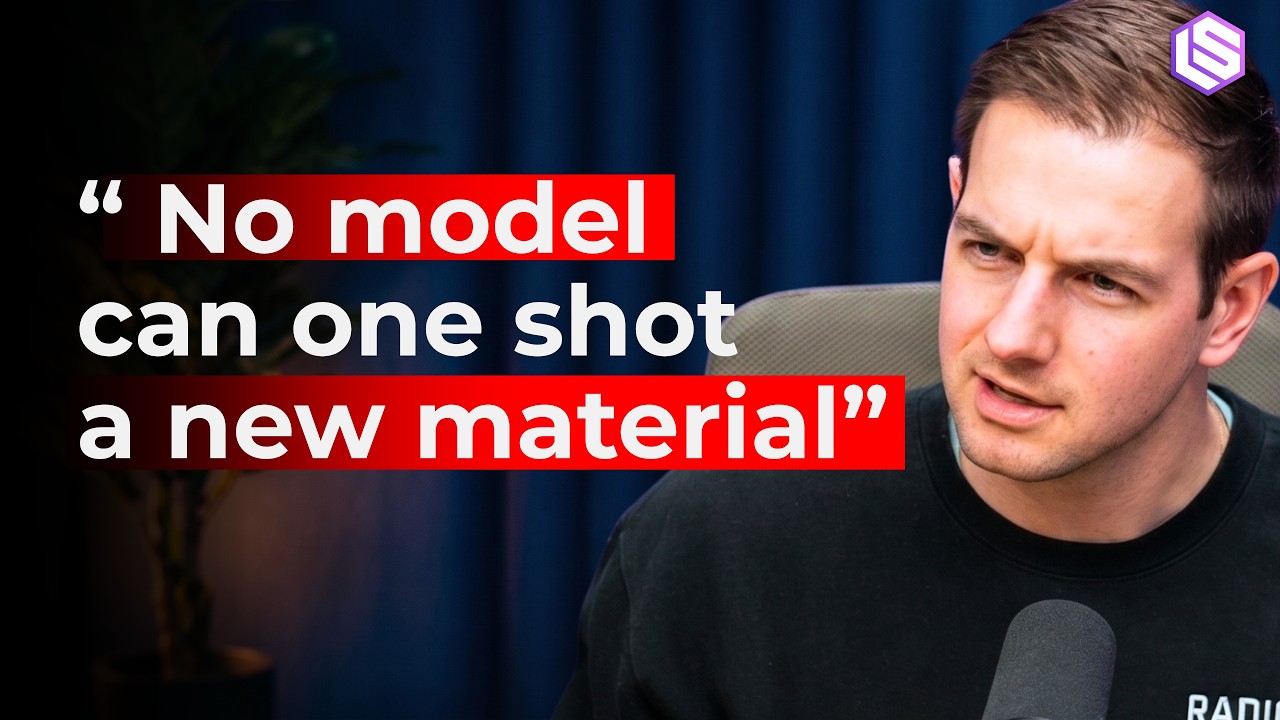
A significant challenge, according to Krause, is that current AI models are not inherently built to handle the complex, multi-faceted data of materials science. He stated, "There is no one model that can one-shot a new material that ends up in your iPhone that ends up on Starship." This highlights the gap between current AI capabilities and the requirements for true scientific innovation. The process involves not just identifying a material but also understanding its manufacturability and scalability, which often requires a more integrated approach than current AI models can provide.

The Role of Experimental Data

Krause stressed the critical importance of experimental data in the advancement of AI for science. He stated, "What makes us different is our deep belief in experimental data." He explained that while theoretical models are important, the real-world behavior of materials and systems is ultimately determined by experimental validation. The ability to capture, analyze, and learn from this data is paramount. He pointed out that the industry is increasingly recognizing this, with many players focusing on building self-driving labs that can operate across the entire discovery and development pipeline.
The Future: Self-Driving Labs and Autonomous Discovery

Krause concluded by reiterating that the future of scientific discovery will be driven by AI systems capable of not just predicting but also executing experiments autonomously. This vision of "self-driving labs" will enable scientists to tackle more complex problems and accelerate the development of new materials and technologies. He believes that the current fragmented approach, where data is often siloed and not effectively shared between discovery and manufacturing, needs to be overcome by integrated, AI-driven systems.

© 2026 StartupHub.ai. All rights reserved. Do not enter, scrape, copy, reproduce, or republish this article in whole or in part. Use as input to AI training, fine-tuning, retrieval-augmented generation, or any machine-learning system is prohibited without written license. Substantially-similar derivative works will be pursued to the fullest extent of applicable copyright, database, and computer-misuse laws. See our terms.