

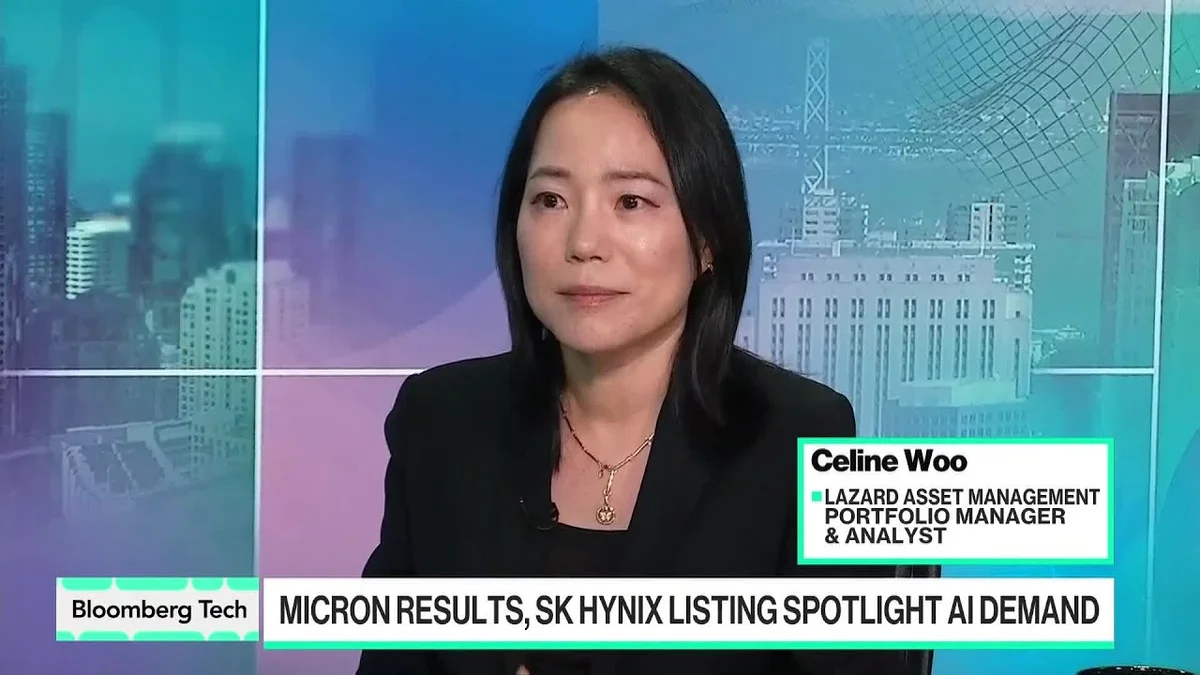
AI's Impact on Memory Demand: A Less Cyclical Future

Celine Woo of Lazard Asset Management discusses how AI is making memory demand less cyclical, creating sustained growth opportunities for tech companies.

8 min read
Two people seated at a Bloomberg news desk with a backdrop showing the Golden Gate Bridge.
Bloomberg Technology

The semiconductor industry, particularly the memory sector, has historically been characterized by boom-and-bust cycles. However, the pervasive integration of Artificial Intelligence (AI) is poised to reshape this dynamic, creating a more stable and predictable demand. Celine Woo, Portfolio Manager and Analyst at Lazard Asset Management, discussed this evolving landscape, highlighting how AI's insatiable need for processing power is creating a new baseline for memory consumption.

Visual TL;DR. Cyclical Memory Market shifts to AI Integration. AI Integration drives AI's Memory Needs. AI's Memory Needs creates Structural Demand Driver. Structural Demand Driver leads to Less Cyclical Future. Less Cyclical Future enables Sustained Growth. Structural Demand Driver establishes New Baseline Consumption. Less Cyclical Future impacts Investment Implications.

Related startups

  1. Cyclical Memory Market: historically boom-and-bust cycles in semiconductor industry
  2. AI Integration: pervasive integration of Artificial Intelligence across applications
  3. AI's Memory Needs: insatiable need for processing power and continuous access
  4. Structural Demand Driver: AI applications require continuous, high-volume memory access
  5. Less Cyclical Future: creating a more stable and predictable demand for memory
  6. Sustained Growth: creating sustained growth opportunities for tech companies
  7. New Baseline Consumption: creating a new baseline for memory consumption
  8. Investment Implications: discussing investment implications in the AI era
Visual TL;DR
Visual TL;DR, startuphub.ai Cyclical Memory Market shifts to AI Integration. AI Integration drives AI's Memory Needs. AI's Memory Needs creates Structural Demand Driver. Structural Demand Driver leads to Less Cyclical Future shifts to drives creates leads to Cyclical Memory Market AI Integration AI's Memory Needs Structural Demand Driver Less Cyclical Future From startuphub.ai · The publishers behind this format
Visual TL;DR, startuphub.ai Cyclical Memory Market shifts to AI Integration. AI Integration drives AI's Memory Needs. AI's Memory Needs creates Structural Demand Driver. Structural Demand Driver leads to Less Cyclical Future shifts to drives creates leads to Cyclical MemoryMarket AI Integration AI's Memory Needs Structural DemandDriver Less CyclicalFuture From startuphub.ai · The publishers behind this format
Visual TL;DR, startuphub.ai Cyclical Memory Market shifts to AI Integration. AI Integration drives AI's Memory Needs. AI's Memory Needs creates Structural Demand Driver. Structural Demand Driver leads to Less Cyclical Future shifts to drives creates leads to Cyclical Memory Market historically boom-and-bust cycles insemiconductor industry AI Integration pervasive integration of ArtificialIntelligence across applications AI's Memory Needs insatiable need for processing power andcontinuous access Structural Demand Driver AI applications require continuous,high-volume memory access Less Cyclical Future creating a more stable and predictabledemand for memory From startuphub.ai · The publishers behind this format
Visual TL;DR, startuphub.ai Cyclical Memory Market shifts to AI Integration. AI Integration drives AI's Memory Needs. AI's Memory Needs creates Structural Demand Driver. Structural Demand Driver leads to Less Cyclical Future shifts to drives creates leads to Cyclical MemoryMarket historicallyboom-and-bustcycles in… AI Integration pervasiveintegration ofArtificial… AI's Memory Needs insatiable need forprocessing powerand continuous… Structural DemandDriver AI applicationsrequire continuous,high-volume memory… Less CyclicalFuture creating a morestable andpredictable demand… From startuphub.ai · The publishers behind this format
Visual TL;DR, startuphub.ai Cyclical Memory Market shifts to AI Integration. AI Integration drives AI's Memory Needs. AI's Memory Needs creates Structural Demand Driver. Structural Demand Driver leads to Less Cyclical Future. Less Cyclical Future enables Sustained Growth. Structural Demand Driver establishes New Baseline Consumption. Less Cyclical Future impacts Investment Implications shifts to drives creates leads to enables establishes impacts Cyclical Memory Market historically boom-and-bust cycles insemiconductor industry AI Integration pervasive integration of ArtificialIntelligence across applications AI's Memory Needs insatiable need for processing power andcontinuous access Structural Demand Driver AI applications require continuous,high-volume memory access Less Cyclical Future creating a more stable and predictabledemand for memory Sustained Growth creating sustained growth opportunitiesfor tech companies New Baseline Consumption creating a new baseline for memoryconsumption Investment Implications discussing investment implications in theAI era From startuphub.ai · The publishers behind this format
Visual TL;DR, startuphub.ai Cyclical Memory Market shifts to AI Integration. AI Integration drives AI's Memory Needs. AI's Memory Needs creates Structural Demand Driver. Structural Demand Driver leads to Less Cyclical Future. Less Cyclical Future enables Sustained Growth. Structural Demand Driver establishes New Baseline Consumption. Less Cyclical Future impacts Investment Implications shifts to drives creates leads to enables establishes impacts Cyclical MemoryMarket historicallyboom-and-bustcycles in… AI Integration pervasiveintegration ofArtificial… AI's Memory Needs insatiable need forprocessing powerand continuous… Structural DemandDriver AI applicationsrequire continuous,high-volume memory… Less CyclicalFuture creating a morestable andpredictable demand… Sustained Growth creating sustainedgrowthopportunities for… New BaselineConsumption creating a newbaseline for memoryconsumption InvestmentImplications discussinginvestmentimplications in the… From startuphub.ai · The publishers behind this format

Woo noted that while traditional memory demand was often driven by discrete product cycles, AI applications, from large language models to advanced analytics and autonomous systems, require continuous, high-volume memory access. This persistent demand is a significant departure from the more sporadic nature of past cycles.

The full discussion can be found on Bloomberg Technology's YouTube channel.

Why AI Makes Memory Demand Less Cyclical - Bloomberg Technology
Why AI Makes Memory Demand Less Cyclical, from Bloomberg Technology

AI as a Structural Driver of Memory Demand

The conversation underscored that AI is not merely a temporary surge but a structural shift in computing. As AI models become more sophisticated and widespread, the underlying hardware, including memory, must constantly scale to meet these demands. Woo pointed out that this ongoing need for memory is evident across various sectors, from cloud computing to edge devices and specialized AI accelerators.

The data presented, including top fund holdings from Lazard's Teky ETF, showed significant allocations to companies like SK Hynix, NVIDIA Corp, and Taiwan Semiconductor Manufacturing. These companies are at the forefront of producing the advanced memory and processing capabilities that power AI. Woo's analysis suggests that the consistent investment in these areas reflects a belief in AI's ability to sustain demand.
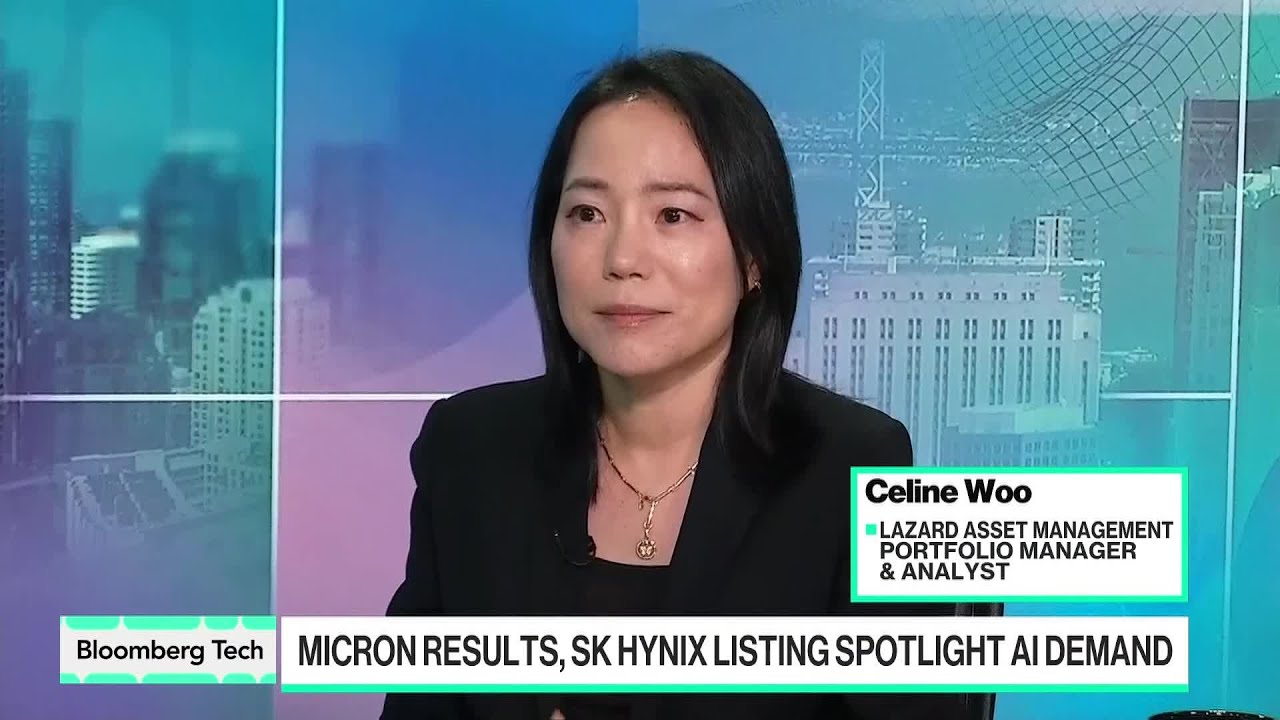
From Cyclical to Structural: The Memory Market's Evolution

Historically, the memory market has experienced periods of oversupply and price drops followed by periods of scarcity and price increases. Woo explained that AI's influence is changing this pattern by introducing a persistent, foundational demand. This means that even as other sectors might see demand fluctuations, the core need for memory driven by AI workloads is likely to remain more robust.

Woo elaborated on the concept of AI creating new end markets, stating, "We think of physical AI as a multi-trillion dollar long-term opportunity." She highlighted how companies that can integrate AI into their offerings, such as those in AI hardware and specialized software platforms, are likely to benefit from this sustained demand. This includes companies involved in advanced semiconductor manufacturing, like those producing high-bandwidth memory (HBM) essential for AI training and inference.

Investment Implications in the AI Era

The discussion also touched upon how investors are positioning themselves in this new environment. Woo mentioned that the Lazard's Teky ETF's portfolio reflects a strategy focused on companies that are critical enablers of AI. This includes not only chip manufacturers but also companies providing the infrastructure and software that support AI development and deployment.

Woo emphasized that the key to navigating this evolving market lies in understanding which companies are best positioned to capitalize on the structural shift. She stated, "What I find interesting about the composition of it is that we have AI hardware suppliers, and then we have the capital expenditures that are going into data centers, and then we have the companies that receive that capital expenditure." This suggests a holistic view of the AI value chain is crucial for investors.

The conversation concluded with Woo reiterating her optimism for the future of AI and its impact on the memory market. The sustained investment in AI development and the continuous need for more powerful computing resources point towards a less cyclical, more consistently growing demand for memory components. This shift could redefine growth expectations for semiconductor companies and related technology firms in the coming years.

© 2026 StartupHub.ai. All rights reserved. Do not enter, scrape, copy, reproduce, or republish this article in whole or in part. Use as input to AI training, fine-tuning, retrieval-augmented generation, or any machine-learning system is prohibited without written license. Substantially-similar derivative works will be pursued to the fullest extent of applicable copyright, database, and computer-misuse laws. See our terms.