

AI Adoption 'Incredibly Shallow,' Says Economist

Dr. Rebecca Homkes of London Business School argues that while AI adoption is high, it remains "incredibly shallow," with most organizations failing to achieve significant, measurable gains beyond basic productivity.

7 min read
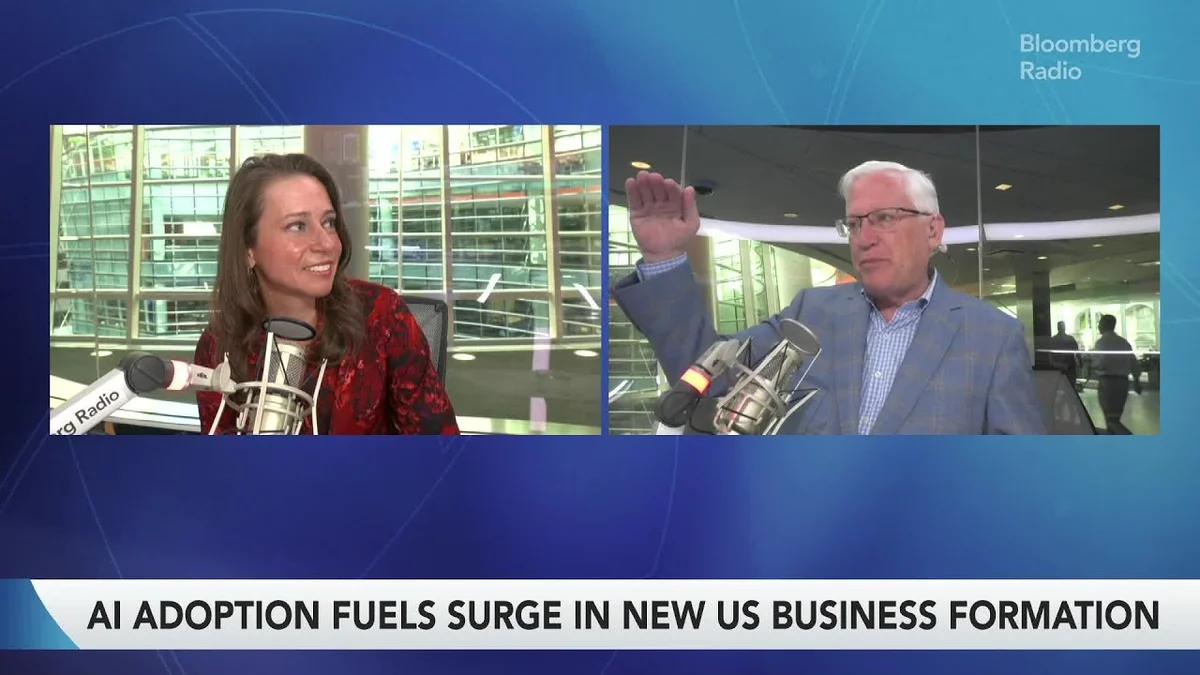
Dr. Rebecca Homkes speaking on a Bloomberg Radio broadcast.
Dr. Rebecca Homkes, economist and lecturer at London Business School.· Bloomberg Podcast

Dr. Rebecca Homkes, an economist and lecturer at the London Business School, has stated that while AI adoption is widespread, it is often "incredibly shallow." In a recent discussion, Homkes highlighted that many organizations are not yet seeing significant growth or value creation from their AI initiatives, with only an estimated 10-15% of businesses truly integrating AI effectively into their operations.

Visual TL;DR. High AI Adoption but Shallow Integration. Shallow Integration leads to Basic Productivity Focus. Shallow Integration results in Limited Value Creation. Limited Value Creation quantified by 10-15% Effective Use. Shallow Integration requires Need Strategy & Governance. Dr. Rebecca Homkes observes High AI Adoption.

Related startups

  1. High AI Adoption: widespread experimentation with AI tools and technologies
  2. Shallow Integration: most organizations not achieving significant, measurable gains
  3. Basic Productivity Focus: AI used for simple tasks like cost reduction
  4. Limited Value Creation: few businesses seeing substantial revenue or competitive advantage
  5. 10-15% Effective Use: only a small fraction truly integrating AI deeply

  6. Need Strategy & Governance: organizations must plan for transformative AI applications
  7. Dr. Rebecca Homkes: economist from London Business School highlights the issue
Visual TL;DR
Visual TL;DR — startuphub.ai High AI Adoption but Shallow Integration. Shallow Integration results in Limited Value Creation. Limited Value Creation quantified by 10-15% Effective Use but results in quantified by High AI Adoption Shallow Integration Limited Value Creation 10-15% Effective Use From startuphub.ai · The publishers behind this format
Visual TL;DR — startuphub.ai High AI Adoption but Shallow Integration. Shallow Integration results in Limited Value Creation. Limited Value Creation quantified by 10-15% Effective Use but results in quantified by High AI Adoption ShallowIntegration Limited ValueCreation 10-15% EffectiveUse From startuphub.ai · The publishers behind this format
Visual TL;DR — startuphub.ai High AI Adoption but Shallow Integration. Shallow Integration results in Limited Value Creation. Limited Value Creation quantified by 10-15% Effective Use but results in quantified by High AI Adoption widespread experimentation with AI toolsand technologies Shallow Integration most organizations not achievingsignificant, measurable gains Limited Value Creation few businesses seeing substantial revenueor competitive advantage 10-15% Effective Use only a small fraction truly integrating AIdeeply From startuphub.ai · The publishers behind this format
Visual TL;DR — startuphub.ai High AI Adoption but Shallow Integration. Shallow Integration results in Limited Value Creation. Limited Value Creation quantified by 10-15% Effective Use but results in quantified by High AI Adoption widespreadexperimentationwith AI tools and… ShallowIntegration most organizationsnot achievingsignificant,… Limited ValueCreation few businessesseeing substantialrevenue or… 10-15% EffectiveUse only a smallfraction trulyintegrating AI… From startuphub.ai · The publishers behind this format
Visual TL;DR — startuphub.ai High AI Adoption but Shallow Integration. Shallow Integration leads to Basic Productivity Focus. Shallow Integration results in Limited Value Creation. Limited Value Creation quantified by 10-15% Effective Use. Shallow Integration requires Need Strategy & Governance. Dr. Rebecca Homkes observes High AI Adoption but leads to results in quantified by requires observes High AI Adoption widespread experimentation with AI toolsand technologies Shallow Integration most organizations not achievingsignificant, measurable gains Basic Productivity Focus AI used for simple tasks like costreduction Limited Value Creation few businesses seeing substantial revenueor competitive advantage 10-15% Effective Use only a small fraction truly integrating AIdeeply Need Strategy & Governance organizations must plan for transformativeAI applications Dr. Rebecca Homkes economist from London Business Schoolhighlights the issue From startuphub.ai · The publishers behind this format
Visual TL;DR — startuphub.ai High AI Adoption but Shallow Integration. Shallow Integration leads to Basic Productivity Focus. Shallow Integration results in Limited Value Creation. Limited Value Creation quantified by 10-15% Effective Use. Shallow Integration requires Need Strategy & Governance. Dr. Rebecca Homkes observes High AI Adoption but leads to results in quantified by requires observes High AI Adoption widespreadexperimentationwith AI tools and… ShallowIntegration most organizationsnot achievingsignificant,… BasicProductivity… AI used for simpletasks like costreduction Limited ValueCreation few businessesseeing substantialrevenue or… 10-15% EffectiveUse only a smallfraction trulyintegrating AI… Need Strategy &Governance organizations mustplan fortransformative AI… Dr. RebeccaHomkes economist fromLondon BusinessSchool highlights… From startuphub.ai · The publishers behind this format

The Shallow Reality of AI Adoption

Homkes observed that while the buzz around AI is undeniable, the practical application is lagging. Many companies are experimenting with AI for basic tasks like productivity improvements or cost reductions, but the deeper, transformative applications that could drive significant revenue or competitive advantage are not yet widespread. She noted that only about 10% to 15% of businesses are actively using AI in ways that yield substantial gains, indicating a significant gap between adoption rates and impactful implementation.

From Dabbling to Deliberate Integration

The economist traced the evolution of AI adoption in organizations from a phase of cautious experimentation to a more deliberate approach. Initially, companies were hesitant, testing AI without a clear strategy. This was followed by a period of "dabbling," where AI tools were adopted without a deep understanding of their potential or limitations. Homkes emphasized that the current phase is about moving towards a more considered, deliberate integration of AI, where the focus is on redesigning workflows and ensuring ethical deployment. This shift is crucial for organizations to realize the full potential of AI.

The full discussion can be found on Bloomberg Podcast's YouTube channel.

AI Adoption High, but 'Incredibly Shallow' Says Dr. Rebecca Homkes - Bloomberg Podcast
AI Adoption High, but 'Incredibly Shallow' Says Dr. Rebecca Homkes — from Bloomberg Podcast

Measuring AI's True Impact

A key challenge identified by Homkes is the difficulty in measuring the true return on investment for AI. While companies can track metrics like compute cost and licensing fees, they often fail to measure the impact on outcomes and value creation. Homkes pointed out that many organizations excel at tracking the output of AI systems but struggle to link these outputs to tangible business results. This lack of clear, outcome-oriented measurement hinders progress and makes it difficult to justify further investment.

The Importance of Strategy and Governance

Homkes stressed that successful AI integration requires more than just implementing new technologies. It necessitates a clear strategy, robust governance, and a focus on organizational change. She highlighted that companies with clear boundaries and well-defined governance structures are more likely to see faster and more impactful results from their AI efforts. This includes upskilling teams, ensuring ethical considerations are addressed, and aligning AI initiatives with broader business objectives.

The economist concluded that organizations that are making the most progress with AI are those that are not only focused on the technology itself but also on the human and organizational aspects of its implementation. This involves understanding how AI can reshape jobs, how to foster ethical AI practices, and how to measure success beyond mere output metrics.

© 2026 StartupHub.ai. All rights reserved. Do not enter, scrape, copy, reproduce, or republish this article in whole or in part. Use as input to AI training, fine-tuning, retrieval-augmented generation, or any machine-learning system is prohibited without written license. Substantially-similar derivative works will be pursued to the fullest extent of applicable copyright, database, and computer-misuse laws. See our terms.