

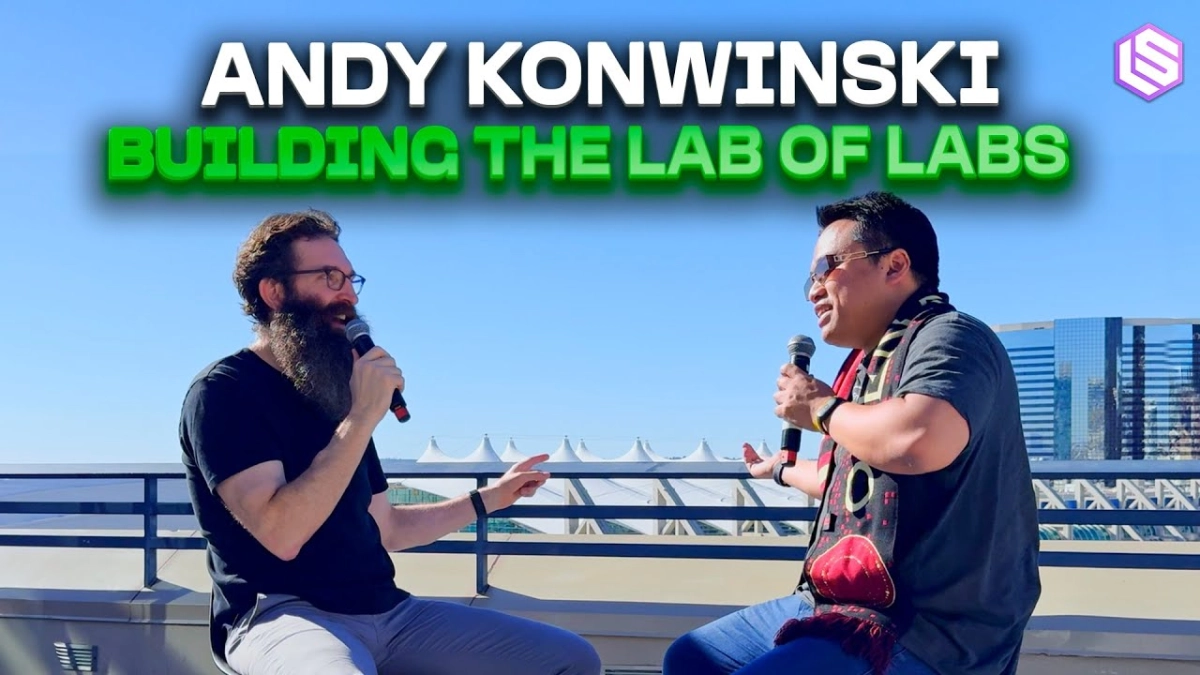
The most consequential companies in the history of modern technology—from Google to Databricks—did not emerge from a vacuum of capital and talent, but rather from a deep, collaborative foundation of open academic research. This is the central thesis underpinning the Laude Institute, a hybrid venture fund and nonprofit founded by Databricks and Perplexity AI co-founder Andy Konwinski, which seeks to formalize and accelerate the path from research breakthrough to market breakout. Konwinski, speaking live at NeurIPS 2025, detailed Laude’s mission: to provide the “right resource, right researcher, right time” to unlock the next generation of world-changing companies.
Konwinski’s experience co-founding two multi-billion dollar companies rooted in university research—Databricks evolving from the Berkeley AMPLab and Perplexity emerging from generative AI research—has shaped his view that the academic-to-startup pipeline is not an anomaly, but the new gold standard. He argues that the large, cohesive founding teams common in these spinouts—like the eight co-founders of Databricks—are inherently de-risked. These teams have already navigated years of deep collaboration, understanding each other’s strengths and weaknesses, thereby mitigating the catastrophic "founder divorce risk" that plagues smaller, less established teams. This established trust and shared intellectual property provide a robust platform for scaling paradigm-shifting ideas.



