

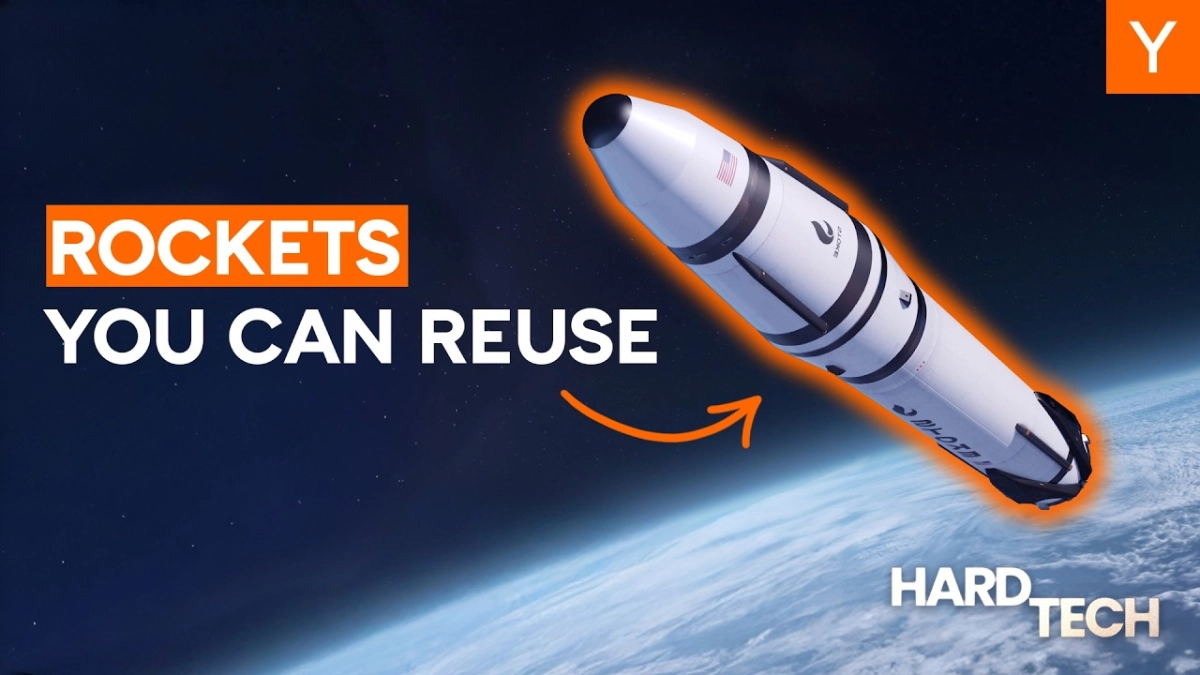
The iteration speed afforded by modern software and AI is not just accelerating digital products; it is fundamentally changing the calculus of "hard tech" industries like aerospace. This radical shift is the core principle behind Stoke Space, a startup tackling the seemingly intractable problem of fully reusable rockets. This commitment to marrying rapid, software-driven iteration with complex physical engineering is key to achieving a feat long considered the Holy Grail of rocketry: the reusable second stage.
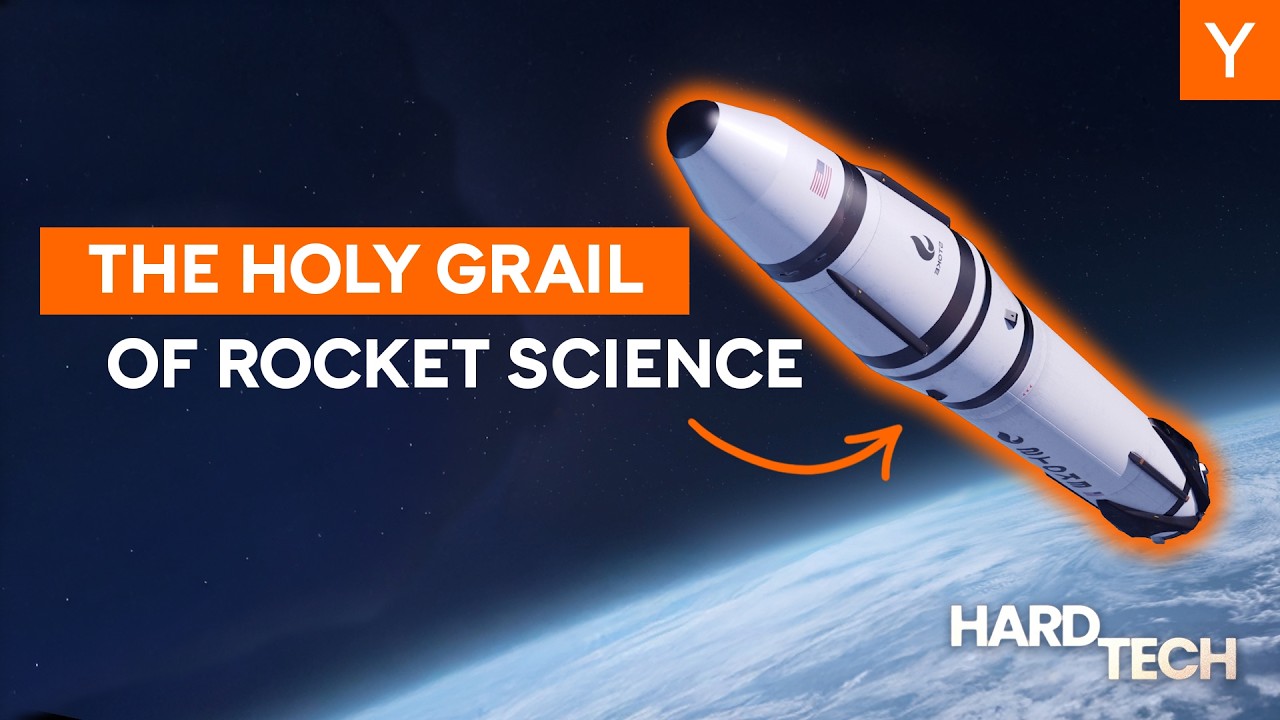
In a recent segment of Y Combinator’s Hard Tech series, General Partner Aaron Epstein spoke with Stoke Space co-founders Andy Lapsa (CEO) and Tom Feldman (CTO) about their quest to achieve complete rocket reusability and the engineering philosophy driving their ambitious mission. Lapsa emphasized that the current launch market is constrained by both cost and availability, noting that even with record-setting annual commercial launches, the total number, around 150, is a "drop in the bucket" compared to the demand that would be unleashed by scalable, aircraft-like reusability. "With only 150 potential transactions [commercial launches] and most of them getting taken up by Starlink, there’s just not that much availability," Lapsa stated, confirming that high cost remains a massive barrier to enabling new space verticals.
While the reusability of the first stage has been largely solved by industry leaders, the second stage presents a far greater technical challenge. The upper stage, designed to reach orbital velocity, re-enters the atmosphere at speeds around 17,000 miles per hour. This subjects the vehicle to immense thermal and kinetic stress, leading to temperatures that often incinerate the structure. Existing solutions rely on disposable components, maintaining the high cost and low frequency that plagues the industry.
The challenge of atmospheric reentry for the upper stage is brutal, exposing the capsule to temperatures exceeding 2,700 degrees Fahrenheit. Stoke Space’s Andromeda capsule utilizes a proprietary heat shield that employs cold liquid hydrogen flowing through a heat exchanger, absorbing the extreme thermal load.
This unique thermal management system, coupled with 24 small thrusters, allows the upper stage to execute a controlled, vertical landing back on Earth. This radical approach is central to Stoke’s Nova vehicle, a two-stage-to-orbit rocket designed for rapid turnaround. The first stage functions similarly to other reusable boosters, punching the vehicle out of the atmosphere before returning. The second stage, however, is the differentiating factor, designed to survive the high-speed return from orbit and land gently at a predetermined site.