

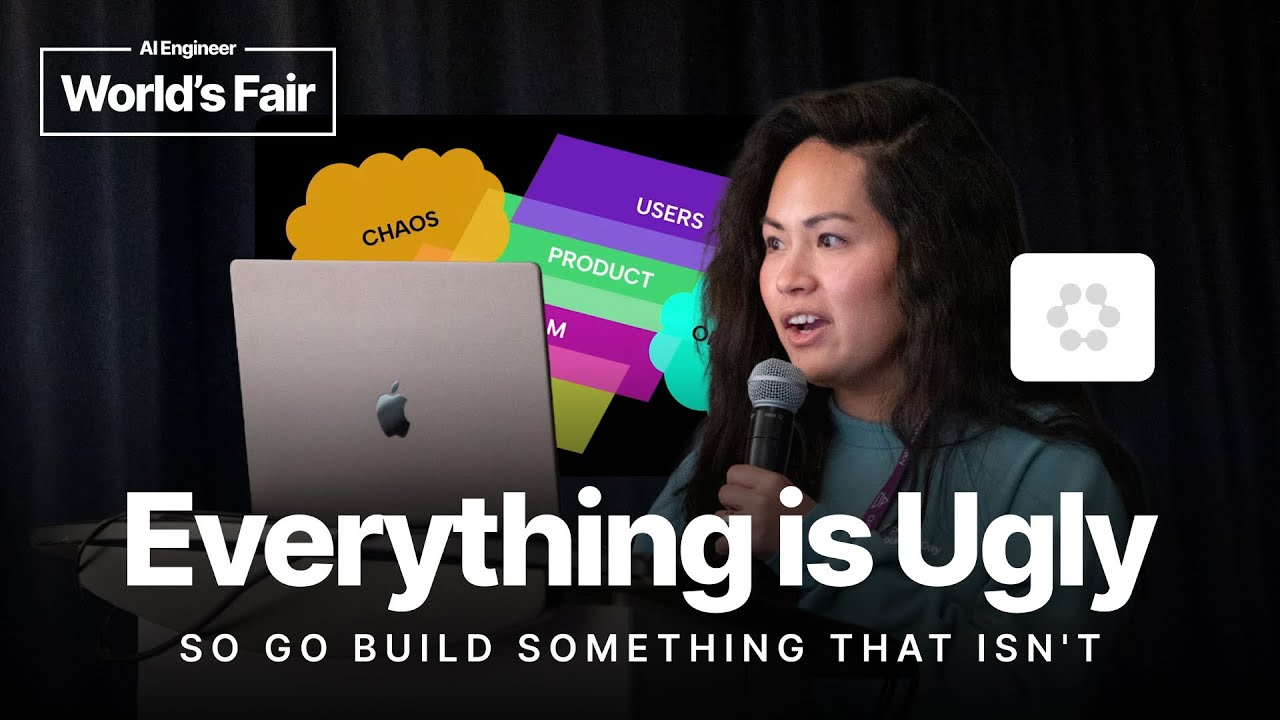
"Everything we are using is the ugliest that it will ever be." This provocative declaration from Raiza Martin, product leader and founder of Huxe (formerly Google's NotebookLM), sets the stage for a critical discussion on the future of AI product design. Speaking at the AI Engineer World's Fair in San Francisco, Martin illuminated the current "awkward adolescent phase" of AI interfaces, arguing that this chaotic moment presents an unparalleled opportunity for innovation.
Martin’s commentary centered on a multi-layered understanding of product development in the age of generative AI, where traditional roles are blurring and user expectations are rapidly evolving. She posited that the very definition of "product" is shifting, urging professionals to reconsider their individual contributions, team dynamics, and the ultimate purpose of their creations.
One core insight from Martin's address is the profound impact of AI on professional roles. "It's easier than ever to access expertise or simulate it... in a world where the jobs are blending together, I feel like it's even more important to understand where are you coming from? What is the value that you bring?" This blurring means product managers, engineers, and UX designers increasingly wear multiple hats, requiring a deeper self-awareness of their unique contributions.
The current landscape, according to Martin, is ripe for a "rebuilding revolution." Existing products, designed in a pre-AI paradigm, often feel clunky and unintuitive when imbued with AI capabilities. This presents a unique chance to rethink fundamental user experience patterns from first principles.
Central to this rebuilding is "clarity." Martin emphasized that true innovation stems from personal clarity of vision, purpose, and taste. She warned against "AI demo disease," where products are built to showcase model capabilities rather than deliver genuine user outcomes. "You are either shipping model capabilities or actual new outcomes (there is no in between)."