

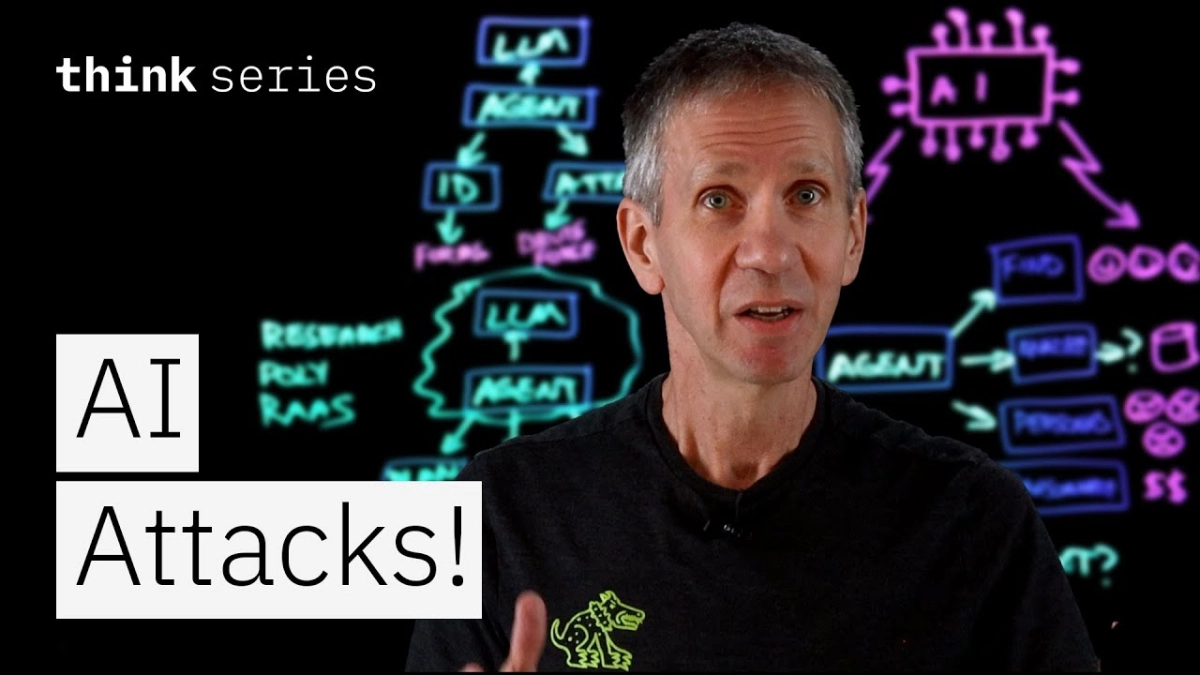
"While AI is doing amazing things to reshape our businesses and our lives in positive ways, it's also amping up the threat by putting more and more power in the hands of the bad guys." This stark assessment by Jeff Crume, a Distinguished Engineer at IBM, encapsulates the central tension explored in his recent presentation on AI attacks. Crume, speaking on the IBM Think series, laid bare the escalating landscape of cyber threats, illustrating how artificial intelligence, once hailed primarily as a tool for progress, is now being rapidly weaponized by malicious actors, fundamentally altering the calculus of cybersecurity.
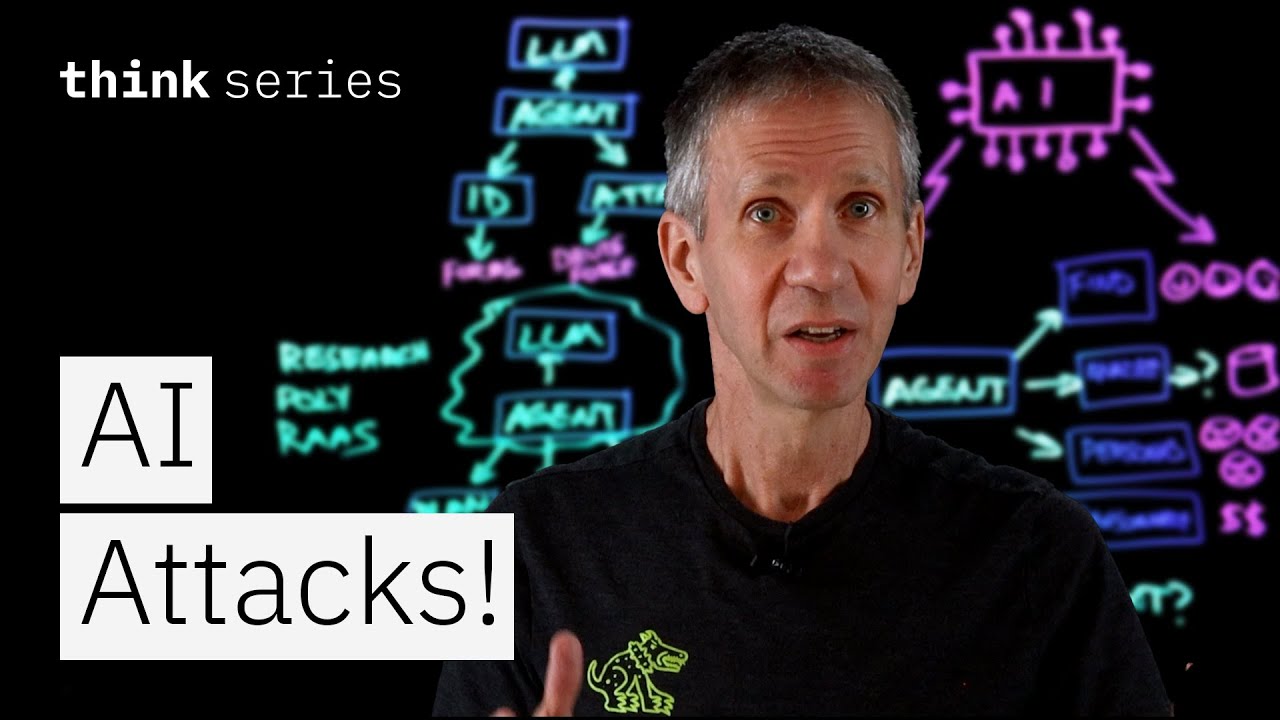
The era of AI has ushered in unprecedented capabilities, but this advancement is not unilaterally beneficial. Crume meticulously detailed how AI agents, large language models (LLMs), and generative AI are not just enhancing existing cyber threats but creating entirely new paradigms of attack. The core insight is clear: AI is drastically lowering the "skill floor" required for complex cyber warfare, empowering even novice attackers with tools previously reserved for elite specialists.
Consider the evolution of login attacks. Crume explained how "Bruteforce AI" utilizes an autonomous agent and an LLM to identify login pages with remarkable accuracy, around 95%. This AI then parses the page to pinpoint login forms, subsequently launching sophisticated brute force or password spraying attacks. The human attacker simply initiates the process; the AI handles the intricate details, efficiently testing vulnerabilities. This automation democratizes brute-force capabilities, making them accessible to a wider array of adversaries.
The shift extends to ransomware, which is transforming into a sophisticated, autonomous service. Crume introduced "Prompt Lock," a research project demonstrating how an AI agent, powered by an LLM, can orchestrate an entire ransomware operation. This includes planning the attack, analyzing target systems for sensitive data, generating the malicious code to encrypt files, and even executing the ransom demand. Crucially, this AI-driven approach can create "polymorphic" attacks, where each instance of the malware appears unique, making traditional signature-based detection exceedingly difficult. Such a system effectively offers "Ransomware as a Service" (RaaS), available on cloud platforms, significantly scaling the threat.
Phishing, a perennial cyber threat, is also being supercharged by AI. Historically, tell-tale signs like poor grammar and spelling were red flags for phishing attempts. However, Crume emphasized, "We need to untrain all of our users from that. Because now with AI, we're not going to see this kind of stuff much anymore." LLMs can generate perfectly crafted, hyper-personalized phishing emails in multiple languages, making them virtually indistinguishable from legitimate communications. An IBM experiment highlighted this disparity: AI generated effective phishing emails in just five minutes, rivaling the quality of those produced by humans over sixteen hours. The economic advantage for attackers is undeniable, and the AI's ability to learn and improve will only widen this gap.