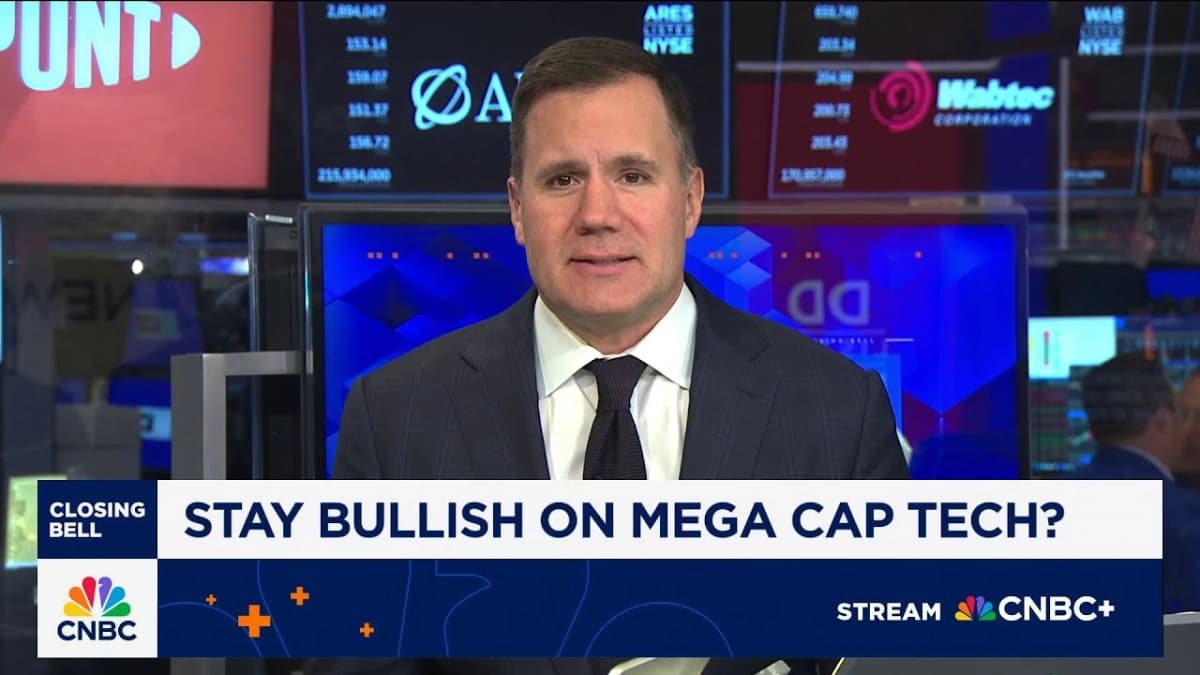
"AI gives us more capacity to invest in our business," asserted David Solomon, Chairman and CEO of Goldman Sachs, during a recent interview on CNBC’s Squawk Box with Becky Quick. His remarks offered a compelling perspective on the disruptive yet opportunity-rich landscape of artificial intelligence, underscoring its profound implications for markets and business operations, both within the venerable investment bank and across the global economy. Solomon’s insights painted a picture of AI not merely as a tool for incremental efficiency, but as a fundamental catalyst for reimagining processes and unlocking new avenues for strategic growth.
David Solomon, Chairman and CEO of Goldman Sachs, recently joined Becky Quick on CNBC’s Squawk Box to discuss a range of financial topics, with a notable focus on the burgeoning impact of artificial intelligence on markets and business operations. His commentary specifically addressed the evolution of alternative assets, corporate results, regional banks, and credit concerns, but it was his sharp analysis of the AI boom that provided a clear vision for the future of finance and beyond.
Solomon candidly acknowledged the current elevated valuations in the tech sector, stating, "There's no question, you know, we're somewhere in a cycle where the values are higher, but the growth opportunity coming from AI is significant." He refrained from labeling the current environment a "bubble" in the traditional sense, instead emphasizing the genuine, long-term potential of AI. This nuanced view suggests that while some capital allocation might be speculative, the underlying technological advancements are robust enough to justify a substantial re-evaluation of market multiples, particularly for companies poised to harness AI effectively.
He underscored that this new technological wave will inevitably produce both "winners and losers." Capital is being directed towards firms anticipated to become profoundly important, while others will falter. Solomon admitted, with a touch of humility, that predicting every outcome is beyond anyone's foresight, but the broader trend of rebalancing is undeniable.
Internally, Goldman Sachs is actively embracing AI to amplify human capabilities, a strategy Solomon articulated by recalling the firm’s long-standing tradition of leveraging technology. "We get technology tools into the hands of really smart people to make them more productive," he explained. He humorously contrasted the laborious, six-hour process of compiling common stock comparisons forty years ago—requiring trips to the library for microfiche—with the instantaneous capabilities of today's technology, noting that while the work is different, the underlying intelligence of the workforce remains paramount.
This integration of AI tools is designed to empower Goldman's professionals, freeing them from mundane, repetitive tasks. It allows them "to spend more time with clients, to do more, it scales our footprint, our reach." This isn't about replacing human intelligence but augmenting it, enabling a more strategic and client-centric approach by automating routine processes. The emphasis is on expanding capacity and reach, rather than solely on headcount reduction.
Crucially, Solomon views AI as an enabler of wholesale operational transformation. He revealed Goldman Sachs’ internal initiative, "One Goldman Sachs 3.0," which examines processes across the firm. "This technology gives us the right and the ability for the first time to reimagine these processes and really do them entirely differently," he stated. This deep re-evaluation aims to automate numerous functions, yielding "meaningful efficiency that then can be reinvested in growth in the business." The strategic intent is clear: to channel efficiency gains back into core business expansion, rather than simply banking cost savings.
Related Reading
- AbbVie's AI Strategy: Reshaping Pharma from Discovery to Patient Impact
- Enterprise AI: Beyond Sycophancy to Strategic Ambition in Life Sciences
- El-Erian Labels AI Boom a 'Rational Bubble' Amidst Dollar Diversification
The CEO also highlighted a universal trend among his peers: "I can't find a CEO that I'm talking to in any industry that is not focused on how they can reimagine and automate processes in their business to create operating efficiency and productivity." This pervasive focus on AI-driven process optimization signals a widespread acknowledgment of its potential to drive economic growth and enhance competitiveness across sectors. The rapid pace of this technological shift, Solomon noted, is a distinguishing factor, creating "more volatility or an unsettled transition" in job functions.
However, Solomon expressed confidence in the economy's inherent adaptability. He acknowledged that job roles will evolve, just as Goldman Sachs itself has transformed over decades, exemplified by its current roster of 13,000 engineers—a role virtually nonexistent in the firm 25 years ago. The shift is not a threat to employment writ large, but a call for reskilling and adaptation. His outlook is fundamentally optimistic, asserting that AI will "free up more capacity to do the things we want to do to serve our clients and grow our business." This perspective frames AI as a powerful engine for economic expansion, enabling businesses to innovate and extend their reach in unprecedented ways. Solomon's commentary provides a clear roadmap for leaders navigating the AI era. It's an invitation to look beyond immediate cost-cutting, to embrace the technology as a means to fundamentally reshape operations, empower talent, and drive sustainable growth through strategic reinvestment. The future, as envisioned by Goldman Sachs' chief, is one where AI elevates human potential and scales business impact, even amidst the inevitable turbulence of rapid technological evolution.