

The era of hand-engineered autonomous vehicle systems, once the industry standard, is rapidly giving way to a new paradigm of end-to-end deep learning. This profound shift, dubbed Autonomous Driving 2.0, represents a fundamental re-architecture of how intelligent machines perceive, plan, and navigate the physical world, promising scalability and generalization that eluded its predecessors.

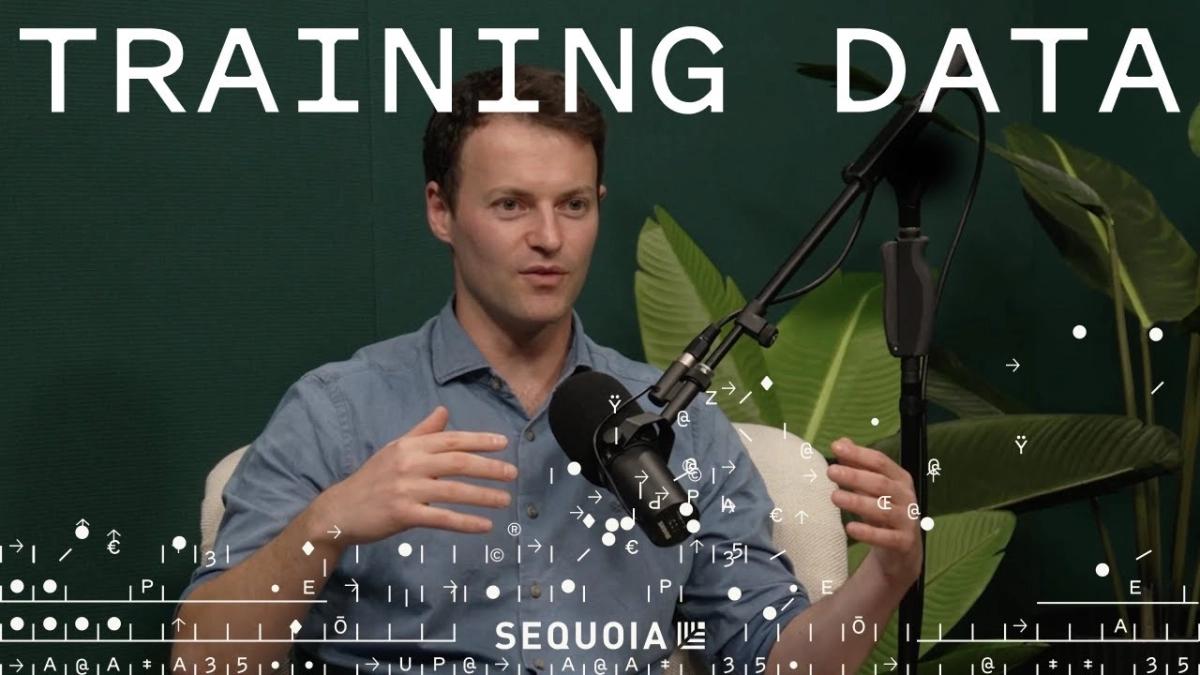
Alex Kendall, CEO of Wayve, recently articulated this transformative vision in an interview with Pat Grady and Sonya Huang of Sequoia. Kendall highlighted the stark contrast between the traditional, modular robotics approach and Wayve's pioneering generalization-first strategy, emphasizing the pivotal role of foundation models and world models in accelerating autonomous capabilities.
In the nascent stages of autonomous vehicle development, the prevailing approach, or AV 1.0, was rooted in classical robotics. Companies meticulously hand-engineered distinct components for perception, planning, mapping, and control. This method, while seemingly logical, created massive C++ codebases, each module painstakingly crafted to address specific scenarios and environments. The inherent complexity and brittleness of this segmented architecture meant that deploying autonomous vehicles required extensive, often prohibitive, re-engineering for every new city or vehicle type, relying heavily on high-definition maps and expensive LiDAR systems.
Wayve, founded in 2017, took a contrarian stance, betting on a unified, end-to-end deep learning network. Kendall explained, "We thought that the future of robots would be intelligent machines that have the onboard intelligence to make their own decisions. And of course the best way we know how to build an AI system is with end-to-end deep learning." This single neural network processes raw sensor data directly to produce driving commands, bypassing the need for explicit, hand-coded rules for every conceivable edge case.
A core insight underpinning Wayve's strategy is the imperative of generalization for scale. The traditional AV 1.0 model struggled to adapt to novel situations or geographies without significant human intervention and re-coding. Wayve's end-to-end approach, conversely, is designed to learn from diverse data, enabling it to generalize across varied environments, vehicle types, and sensor configurations. This allows for rapid deployment and adaptation to new cities and automotive platforms, drastically reducing the time and cost associated with expansion. Kendall emphasized this need, stating, "We need to be able to generalize. We need to be able to amortize our cost over one large intelligence... and to be able to very quickly adapt to each different application that our customers care about." This architectural choice positions Wayve not as a vertically integrated robo-taxi operator, but as an embodied AI foundation model provider for a broad spectrum of automotive OEMs and fleets.
Another critical insight is the emphasis on safety and reasoning through world models, moving beyond simply feeding more data into the system. In safety-critical applications like autonomous driving, merely increasing data volume is insufficient to eliminate "hallucinations" or unpredictable behaviors. Wayve addresses this by designing architectures that are "safe by design," incorporating reasoning capabilities through advanced world models like "Gaia." These generative world models can simulate complex, multi-agent scenarios and predict future outcomes, allowing the AI to "reason" about situations it has never explicitly encountered in training data. This capability fosters emergent, human-like driving behaviors, such as cautiously nudging forward at an obscured intersection until a clear view is established, or adapting speed in adverse weather conditions like fog. Kendall articulated this: "Reasoning in the physical world can be really well expressed as a world model." This allows the system to understand what might happen next, crucial for robust and safe decision-making.
Wayve’s path to market is characterized by a strategic partnership model with global automotive OEMs, including Nissan. By providing an autonomous driving stack that integrates natively with manufacturers' existing hardware – standard cameras, radar, and increasingly, LiDAR – Wayve avoids the costly and complex retrofitting common in AV 1.0. This allows OEMs to leverage their mass production capabilities and existing supply chains, accelerating the deployment of advanced autonomous features from driver assistance to eyes-off and eventually driverless functionalities. This collaborative approach opens up the vast consumer automotive market, moving beyond niche robo-taxi services to potentially powering the "88 million vehicles sold every year."
Related Reading
- How AI is reshaping work
- Top investors gauge AI opportunity: Here's what to know
- AI Chip Spending: The Looming Depreciation Cliff
The continuous collection of diverse data from various global sources, including dashcams, fleets, and different manufacturers' vehicles, fuels Wayve's foundation models. This diverse data, coupled with sophisticated unsupervised learning techniques, enables the models to identify unusual or anomalous driving scenarios, driving an efficient learning curriculum. The integration of language models further enhances the system, not only by improving pre-training but also by enabling natural language interaction. This could lead to a "chauffeur experience" where users can converse with their vehicle, ask for explanations of its driving decisions, or even personalize its driving style. The ambition is to create an AI that can understand and execute human instructions, making autonomous driving more intuitive and accessible.
The shift towards end-to-end learning and foundation models in autonomous driving represents a fundamental re-evaluation of how complex intelligent systems are built. While challenges remain in areas such as real-time onboard compute and the ultimate validation of safety, the trajectory set by companies like Wayve suggests a future where intelligent machines are not just programmed for specific tasks, but possess a generalized understanding of the world, capable of safe, adaptable, and human-like navigation across diverse environments. This evolution in physical AI promises to unlock unprecedented opportunities across various mobility applications, fundamentally altering our relationship with vehicles.


