China's AI Hardware Surge: A Manufacturing-Driven Edge in the Global Race

4 min read
China's AI Hardware Surge: A Manufacturing-Driven Edge in the Global Race

China is aggressively carving out its strategic advantage in the global artificial intelligence race, not just through software innovation, but by leveraging its unparalleled manufacturing capabilities to flood the market with a diverse array of AI-powered devices. This calculated pivot towards hardware, as highlighted in CNBC's "China Lens" report, signals a significant shift in the competitive landscape, where the sheer volume and practical application of AI gadgets are poised to accelerate China's technological ascent.

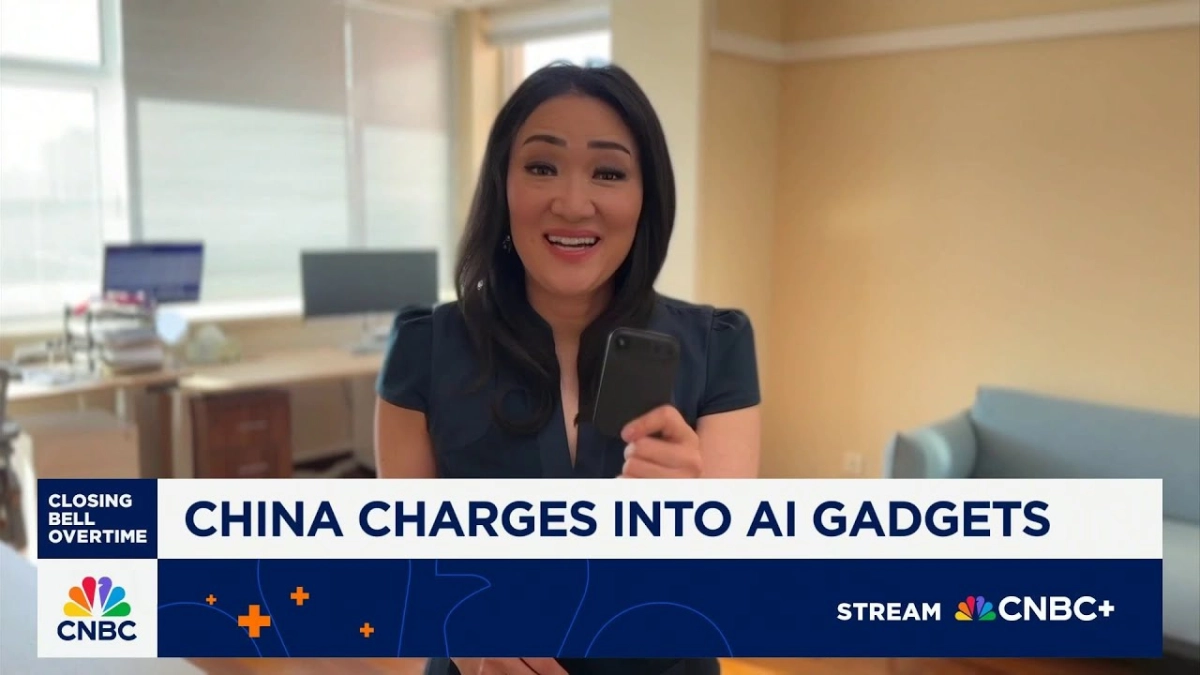
CNBC's Eunice Yoon, reporting from Beijing, showcased this burgeoning ecosystem, detailing how China's long-standing industrial strength is now being channeled into creating a new generation of smart devices. She spoke with industry leaders like Dr. Kai-Fu Lee, CEO of 01.AI, and Tom van Dillen, Managing Partner at Greenkern, about Beijing's strategic advantage in AI hardware manufacturing and the rapid proliferation of these gadgets across the nation. This deep dive revealed a concerted effort, backed by both private enterprise and government support, to integrate AI into the fabric of daily life and professional workflows through tangible, accessible products.

Dr. Kai-Fu Lee articulates this fundamental strength, stating that "The advantage comes from the fundamental root that China is a nation of manufacturing." While the United States has historically dominated AI software and models, China's expertise in large-scale production, from chips to final consumer products, positions it uniquely to lead the next wave of AI adoption. Lee further posits that while "Today, the competition is on the software, the models, the agents, the applications," it will "soon... move to devices." This foresight underpins China's current aggressive investment, recognizing that the physical manifestation of AI will be key to widespread integration and market dominance.


Related startups

The market in China is already teeming with these new AI devices, far beyond what many outside the country might anticipate. More than 70 Chinese companies are actively developing AI glasses, mirroring and often expanding upon the functionalities seen in Western products like Meta's AI glasses. Brands such as Inmo and Rokid are selling their AI-powered eyewear overseas, while domestic giants like Xiaomi and Alibaba are developing devices exclusively for the Chinese market, embedding their proprietary AI. These glasses offer features like real-time translation, displaying translated text directly in the wearer's field of vision, or providing augmented reality overlays for navigation and information.

Beyond wearables, the ingenuity extends to more specialized workplace tools. The Alibaba DingTalk A1, a credit card-sized AI device, exemplifies this practical application. Designed for meeting environments, it can record, transcribe, summarize, and analyze discussions, offering a comprehensive AI assistant for corporate settings. Such devices streamline productivity, reducing the need for manual note-taking and ensuring critical information is captured and synthesized efficiently. This focus on immediate, tangible benefits for businesses and individuals drives rapid adoption.

Another innovative product highlighted is an AI-powered neck-worn device, utilizing AI from Tencent and iFLYTEK. This gadget is marketed as a tool to help Chinese parents learn English naturally, transforming them into "English-speaking foreigners" in a matter of seconds. Conversely, it also assists foreign visitors in Beijing to converse seamlessly with locals. These devices underscore a core insight: China's AI strategy is deeply rooted in addressing practical, everyday challenges with accessible technological solutions, fostering an environment where AI isn't just a concept but a practical utility.

Tom van Dillen of Greenkern observes the sheer volume of these products, noting that "When you still hear people outside China talking about what the future of an AI device might be, the market is full of AI devices here already." This high density of AI hardware in the Chinese market creates a powerful feedback loop. Extensive user data and real-world application allow for continuous refinement and improvement of the underlying AI models and hardware designs. This iterative development cycle, accelerated by a massive user base and competitive market, is a significant advantage.

Eunice Yoon's personal experience testing these devices offers a nuanced perspective. She admits that some products felt "a little bit clunky" initially, such as the translator device that drew curious stares on the street. Yet, she was "surprisingly quick" to get them plugged in, set up, and functioning effectively. This speaks to the rapid pace of development and the acceptable trade-off users are making for immediate utility, even if the user experience isn't always perfectly polished from the outset. The government's backing and push further galvanize companies to innovate and iterate at an unprecedented speed.

The confluence of China's manufacturing might, a vast domestic market eager for technological adoption, and substantial government and corporate investment is creating a robust ecosystem for AI hardware. This strategic focus on devices, from smart glasses to workplace assistants and language learning tools, positions China not merely as a follower in the AI software race, but as a formidable leader in bringing AI directly into the hands and daily lives of millions.

© 2025 StartupHub.ai. All rights reserved. Do not enter, scrape, copy, reproduce, or republish this article in whole or in part. Use as input to AI training, fine-tuning, retrieval-augmented generation, or any machine-learning system is prohibited without written license. Substantially-similar derivative works will be pursued to the fullest extent of applicable copyright, database, and computer-misuse laws. See our terms.