


Bridging the AI Chasm: From Hype to Operational Reality

3 min read
Bridging the AI Chasm: From Hype to Operational Reality

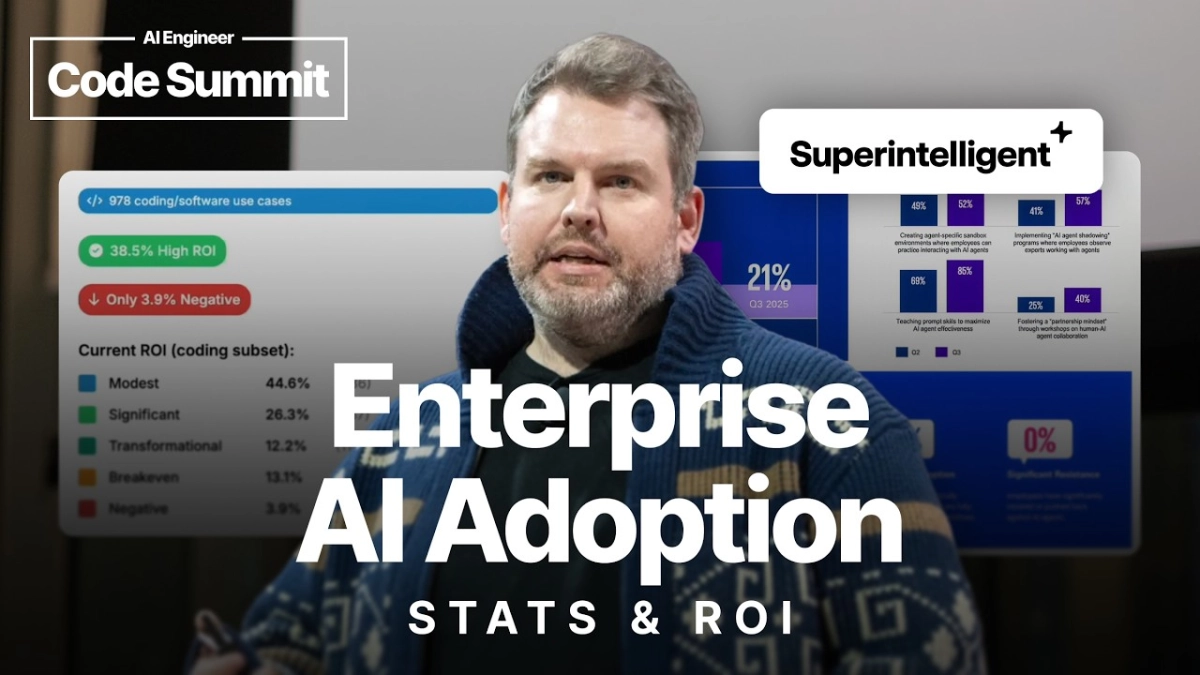
The prevailing narrative surrounding artificial intelligence often paints a picture of seamless integration and immediate, transformative power. Yet, as Nathaniel Whittemore, CEO of Super.ai and host of the AI Daily Brief, elucidates in a recent interview, the reality for many organizations is a struggle to move beyond pilot projects to derive tangible, sustained value. He highlights that the true challenge isn't merely accessing powerful AI models, but rather in navigating the "last mile" of implementation, where the complexities of data, workflow, and human integration often derail promising initiatives.

Whittemore, speaking with an interviewer from Super.ai, offered a grounded perspective on the practicalities of AI adoption, drawing from his vantage point leading an AI solutions company and observing the broader industry through his popular daily brief. His insights centered on the critical bottlenecks preventing widespread AI success, particularly for large enterprises and those venturing beyond theoretical applications into production environments. The conversation underscored that while foundational models have democratized access to AI capabilities, the path to leveraging them for specific business outcomes remains fraught with significant, often underestimated, hurdles.

One of the most profound insights from Whittemore is the pervasive "last mile" problem in AI implementation. Organizations frequently find themselves stuck in a cycle of proof-of-concepts, unable to scale AI solutions into their core operations. This isn't a failure of the technology itself, but rather a reflection of the intricate demands of integrating AI into existing systems, workflows, and human processes. "The hardest part is not building the model, it's getting the data and getting it into production in a way that actually drives value," Whittemore observed, cutting through the hype to reveal a fundamental truth about enterprise AI. This gap between potential and practical application represents a significant investment risk for many companies.

The core of this last mile challenge, Whittemore argues, lies in data. Despite advancements in large language models and other foundational AI, the vast majority of real-world business problems require highly specific, high-quality, and often human-labeled data. This data is rarely pristine; it's often siloed, inconsistent, and requires extensive preparation, a process that is both time-consuming and expensive. Companies consistently underestimate the effort and infrastructure required to collect, clean, annotate, and manage the data necessary to train and fine-tune AI models for their unique contexts. It is a monumental undertaking.

Furthermore, Whittemore emphasized that successful AI implementation is fundamentally a workflow problem, not solely a technological one. Deploying AI effectively necessitates a deep understanding of how human teams operate, identifying specific pain points, and then designing solutions that augment, rather than simply replace, human capabilities. The concept of "human-in-the-loop" AI, where human intelligence is strategically integrated into automated processes, becomes critical. This collaborative approach ensures accuracy, handles edge cases, and builds trust within the organization, fostering adoption rather than resistance.

The implications for founders, VCs, and AI professionals are clear: the market is maturing beyond raw algorithmic power to demand practical, outcome-driven solutions. Investing in AI without a clear strategy for data preparation, workflow integration, and human-centric design is increasingly a recipe for frustration. Whittemore’s company, Super.ai, directly addresses these challenges by providing managed data operations and workflow automation platforms, underscoring the market's need for partners who can bridge the chasm between cutting-edge AI research and operational reality. "A lot of companies just need help getting their data ready and integrating AI into their existing systems," he stated, highlighting the enduring demand for practical, hands-on support. The focus must shift from merely building AI to successfully deploying and managing it within complex organizational ecosystems.

© 2025 StartupHub.ai. All rights reserved. Do not enter, scrape, copy, reproduce, or republish this article in whole or in part. Use as input to AI training, fine-tuning, retrieval-augmented generation, or any machine-learning system is prohibited without written license. Substantially-similar derivative works will be pursued to the fullest extent of applicable copyright, database, and computer-misuse laws. See our terms.