


The burgeoning era of artificial intelligence, often discussed in terms of sophisticated algorithms and transformative applications, is fundamentally underpinned by a massive, tangible investment in physical infrastructure. This critical reality was starkly illuminated by CNBC’s MacKenzie Sigalos, reporting on Amazon’s latest strategic moves. Sigalos delivered breaking news to the CNBC anchors regarding Amazon’s monumental infrastructure investments, particularly detailing a substantial new AI data center campus in Northern Indiana. Her report underscored a series of Amazon initiatives that collectively paint a clear picture of the escalating demands for AI-ready computing power.
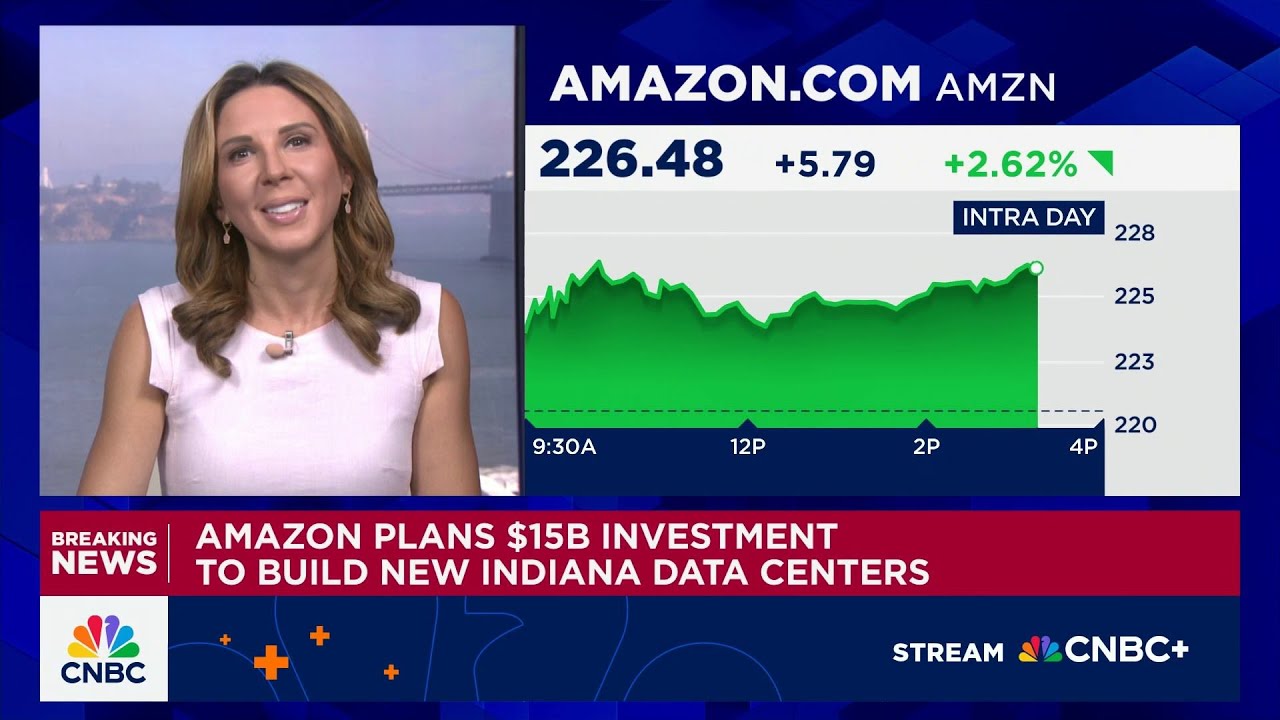
Amazon's latest commitment involves an additional $15 billion allocated to Northern Indiana for the development of a cutting-edge AI data center campus. This significant outlay follows previous investments, bringing Amazon’s total capital expenditure in the state since 2010 to over $31 billion. The scale of this investment signals a profound understanding of the foundational requirements for the AI revolution. As Sigalos noted, "Amazon [is] investing another $15 billion into Northern Indiana to build an AI data center campus." This is not merely an expansion; it is a strategic fortification of the company's position as a dominant cloud infrastructure provider in an increasingly AI-centric world.
Crucially, this new data center campus is designed to serve a diverse array of customers. Sigalos clarified that the project "will serve multiple customers and a source tells me it's not directly tied to that new OpenAI contract." This distinction is vital for founders and VCs to grasp: Amazon’s strategy extends beyond exclusive partnerships, aiming to provide generalized, robust AI infrastructure accessible to a broad market. It underscores a diversified approach to capturing the burgeoning demand for AI compute, positioning AWS as the indispensable backbone for countless AI innovators and enterprises.
The sheer power requirements of modern AI models are staggering, and Amazon's investment directly addresses this. The Indiana project is set to add 2.4 gigawatts of capacity to the grid, a colossal amount of energy. To put this into perspective, Sigalos stated, it is "enough to power 1.8 million homes." This immense power demand highlights the often-underestimated energy footprint of artificial intelligence. As AI models grow in complexity and usage, the need for reliable, high-capacity energy sources will only intensify, making site selection a paramount strategic decision.
Indiana's emergence as a prime location for such investments is no accident. The state offers a compelling mix of strategic advantages that are critical for AI infrastructure development. Indiana is rapidly becoming an AI infrastructure hub thanks to an abundance of nuclear and coal power, plus generous local incentives. This energy abundance, coupled with attractive state policies, positions the region as a magnet for compute-intensive operations. These factors are not unique to Amazon; they are also drawing other industrial giants, with companies like GM and Samsung building manufacturing plants in the vicinity.