Altman's "Code Red": OpenAI's Battle for AI-Native Dominance

Dec 19, 2025 at 12:45 AM4 min read
Altman's "Code Red": OpenAI's Battle for AI-Native Dominance

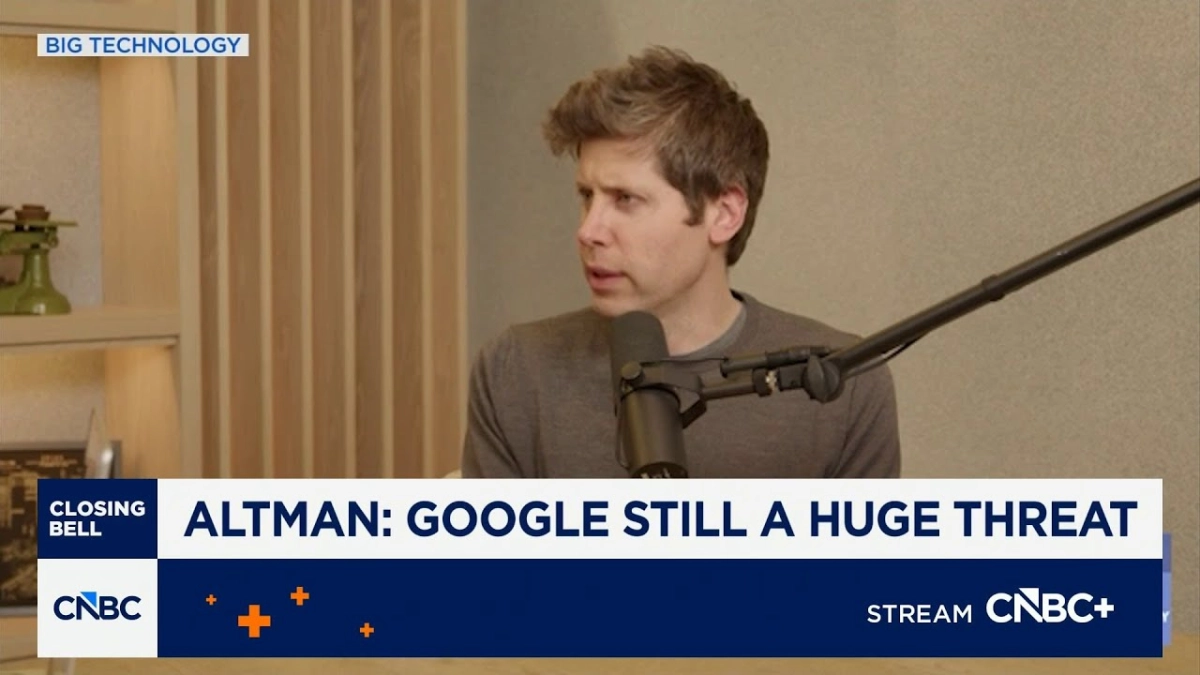
OpenAI CEO Sam Altman holds no illusions about the formidable competitive landscape in artificial intelligence, especially concerning Google. In a recent podcast interview with Alex Kantrowitz, founder of Big Technology, whose insights were later shared on CNBC's "Closing Bell," Altman candidly admitted, "Google is still a huge threat... extremely powerful company. If Google had really decided to take us seriously in 2023, let's say, we would have been in a really bad place. I think they would have just been able to smash us." This stark assessment underscores a prevailing "code red" mentality within OpenAI, acknowledging the immense resources and entrenched market positions of tech giants.

Kantrowitz, a CNBC contributor, elaborated on the key takeaways from his conversation with Altman, painting a picture of a strategic battle unfolding in the nascent yet rapidly expanding AI sector. While Google's approach involves integrating AI capabilities into its vast existing product suite—search, Gmail, Maps, YouTube—OpenAI, under Altman's leadership, is pursuing a fundamentally different path: the development of "AI-native" software. This distinction is crucial for founders and investors observing the evolving dynamics. Rather than merely bolting AI onto legacy systems, OpenAI aims to create entirely new paradigms for how users interact with technology, built from the ground up with AI at their core.


One of the core insights from Altman's perspective, as relayed by Kantrowitz, is the profound importance of user stickiness. Altman likened AI to a "brand of toothpaste." He explained that once people adopt a particular brand, they tend to stick with it, going to the supermarket and buying it every time without much thought. This analogy speaks volumes about OpenAI's strategy. With ChatGPT already boasting an impressive 800 to 900 million users, and reportedly leading in time spent, the company's immediate objective is to get users in the door first.

This initial user acquisition is not just about numbers; it’s about establishing a deep, personalized connection. Altman emphasizes building "personalization... memory for him, learning who you are, remembering who you are, and then building personalized experience for you is something that he says is unbelievably sticky." This strategy aims to create an AI experience so tailored and indispensable that users become deeply integrated, making it difficult for them to switch to competing platforms. The goal is to foster a relationship that transcends mere utility, evolving into a personalized digital companion.

The competitive pressure from Google is undeniable, particularly with the recent launch of Gemini 3. While Altman previously indicated that Gemini 3 hadn't impacted OpenAI's metrics as much as they had feared, the underlying threat remains. Goldman Sachs' Sung Cho, co-head of public tech investing, suggested Google had taken the lead in investors' eyes, having "leapt over OpenAI" in some regards. This contrasting view highlights the differing metrics and perceptions within the market, with some focusing on immediate product releases and others on long-term strategic positioning.

OpenAI’s proactive stance, described by Kantrowitz using a "pandemic" analogy, illustrates their agile and forward-thinking approach. "When a pandemic begins, the stuff that you do really early on makes a big difference. You want to try to mitigate some of the disasters before there are exponential growth and you're not behind the eight ball." This suggests a continuous cycle of innovation and rapid deployment, aiming to anticipate and neutralize competitive threats before they fully materialize. The company's history with initiatives like DeepSeek earlier in the year demonstrates this pattern of getting ahead of potential problems.

The strategic divergence between OpenAI and Google signals a fundamental split in how AI will be integrated into daily life. Google seeks to augment its existing digital empire, enhancing its dominant search, productivity, and media platforms with AI capabilities. OpenAI, conversely, is betting on a future where AI itself is the primary interface, a foundational layer that redefines how users interact with software entirely. This vision of AI-native applications, driven by deep personalization and memory, represents a bold gambit for long-term user loyalty and market leadership. The battle is not just for technological superiority but for the very architecture of the next generation of computing.