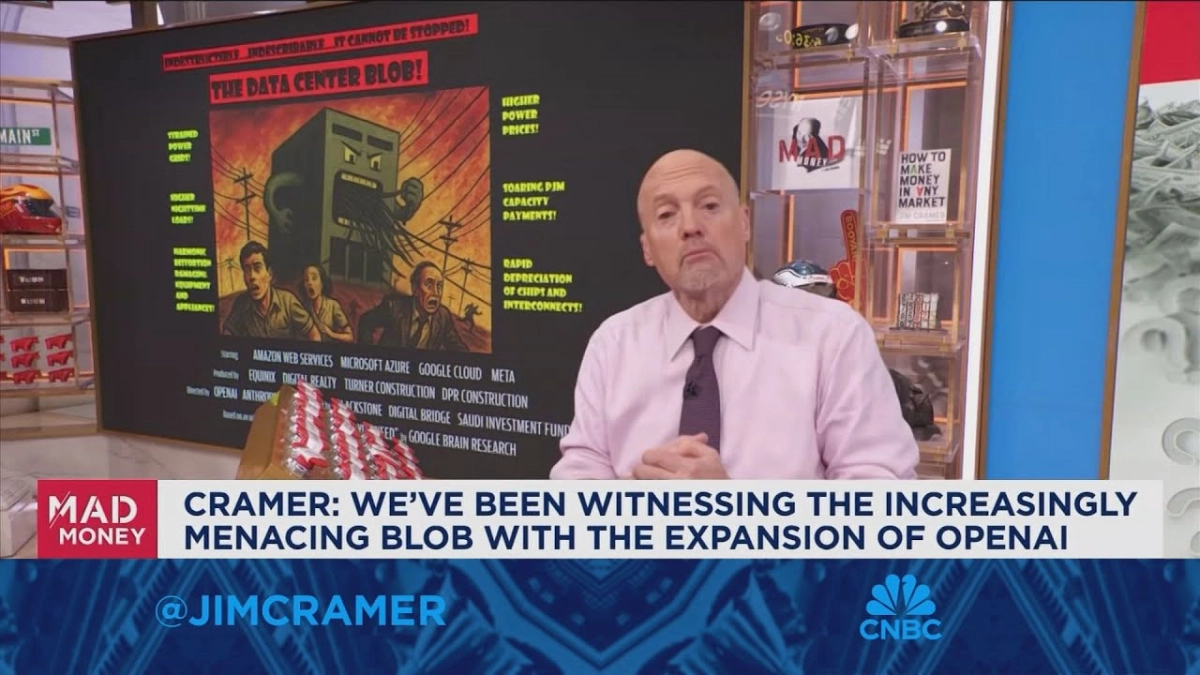
“We’ve been witnessing the increasingly menacing blob, with the expansion of OpenAI,” declared Jim Cramer, host of CNBC’s *Mad Money*, capturing the palpable anxiety permeating Wall Street. His commentary underscored a market grappling with unprecedented challenges, from a protracted government shutdown to the dizzying, and potentially precarious, build-out of artificial intelligence infrastructure. This confluence of factors, Cramer argued, has shifted the investment landscape from one of "magical investing" to a harsh reality dominated by negative headlines and a freezing of rational decision-making.
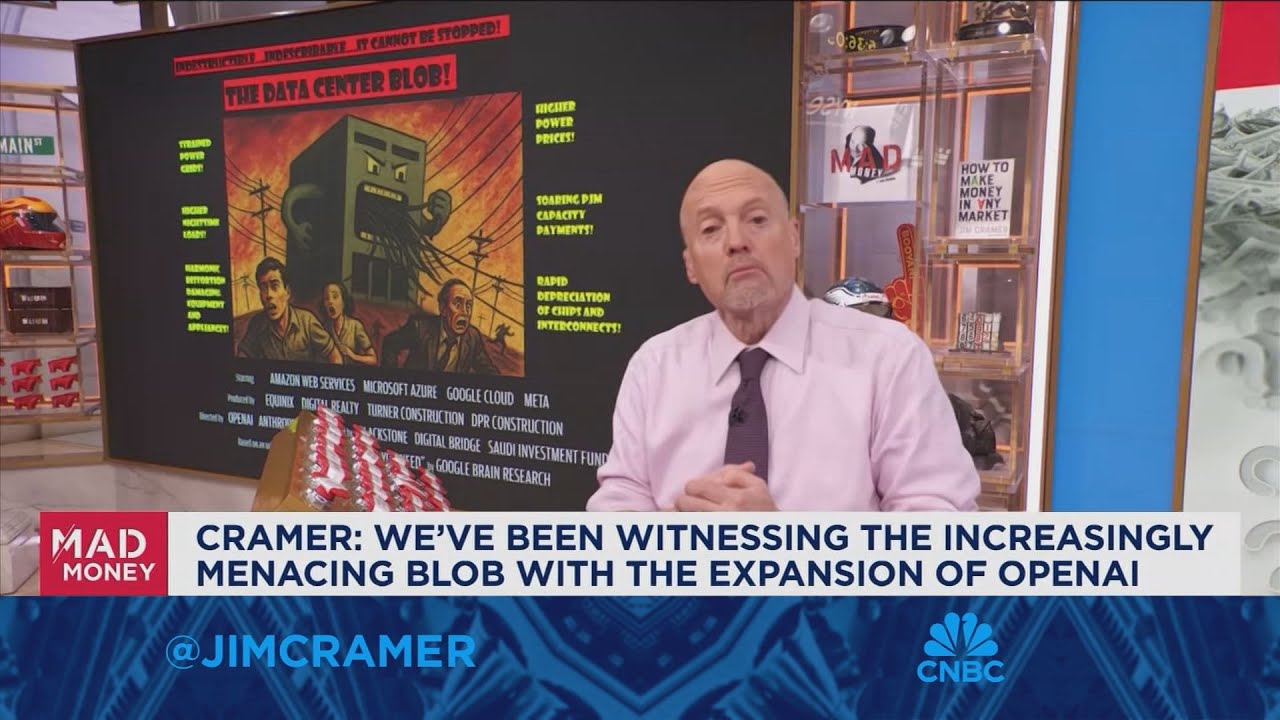
Cramer’s recent segment on *Mad Money* delved into the forces driving current market selling, highlighting a surprising shift in how Wall Street perceives government shutdowns and the burgeoning AI industry. He spoke candidly about the lack of reliable economic data due to the government's prolonged closure, coupled with unsettling trends in the job market and the colossal financial commitments underpinning the AI revolution.
The government shutdown, a recurring theme in U.S. politics, has traditionally been shrugged off by investors. However, this time, Cramer noted a stark difference. “We’ve been very dismissive of this government shutdown on Wall Street… they usually mean nothing to the stock market,” he observed. “Well, it turns out this one is different.” The prolonged closure has starved the market of crucial economic data, leaving investors flying blind. “Nobody knows what the heck is really happening,” Cramer lamented, emphasizing how this vacuum of information breeds uncertainty and paralyzes investment decisions.
This lack of transparency freezes decision-making, compelling investors to act on incomplete, often negative, information.
Further compounding the market’s unease is the unsettling trend in employment. Cramer cited the Challenger, Gray & Christmas report, which revealed that job cuts in October surpassed one million, marking the highest monthly total since 2003. Significantly, companies explicitly attributed these reductions to "cost-cutting, AI in October." This stark data, combined with the "hideous charts" of major payroll processors like ADP, Paychex, and Paycom, paints a grim picture of a contracting job market. “Who the heck wants to hire people in this environment? Certainly not me,” Cramer quipped, underscoring the widespread reluctance to expand payrolls. He asserted that these payroll processor charts "tell the entire story of this economy, better than any numbers that come out of Commerce or Labor."